
-
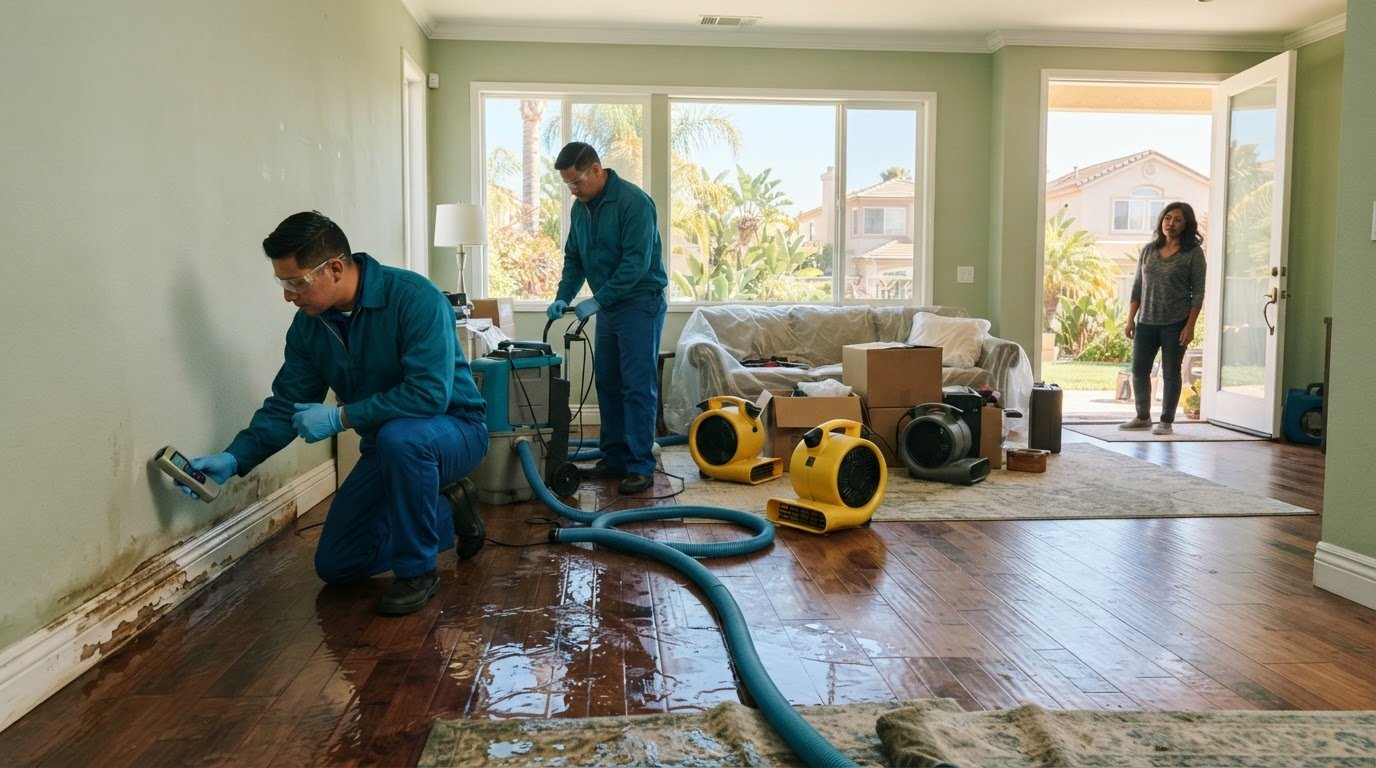 A burst pipe can soak floors and send water into walls before you know how far it has spread. If it’s safe, shut off the water supply and stay clear of standing water near electrical equipment. Then address both parts
 -
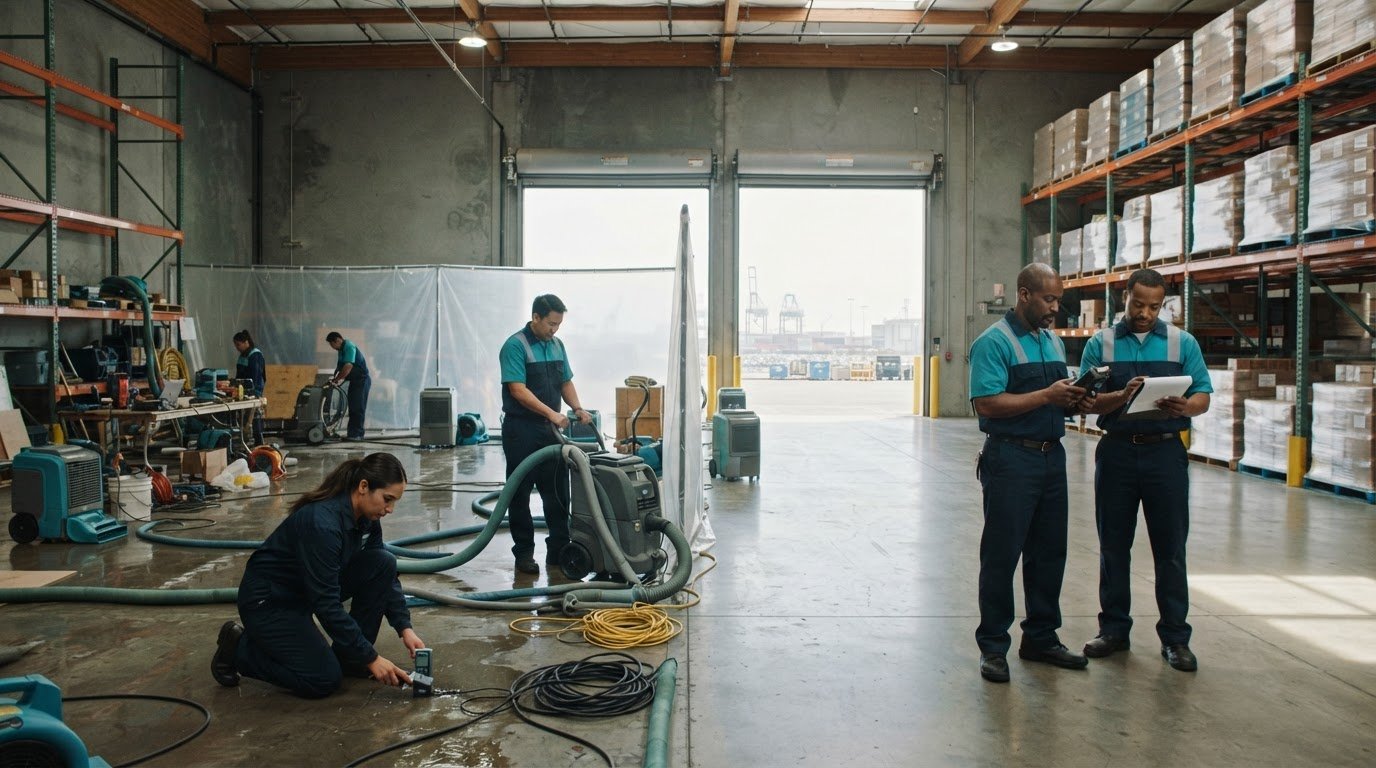 Every hour standing water lingers across an active manufacturing or warehouse floor isn’t just racking up repair bills; it’s threatening your facility’s operational survival. In busy industrial corridors exposed to coastal moisture, securing dependable commercial water damage restoration Wilmington managers
 -
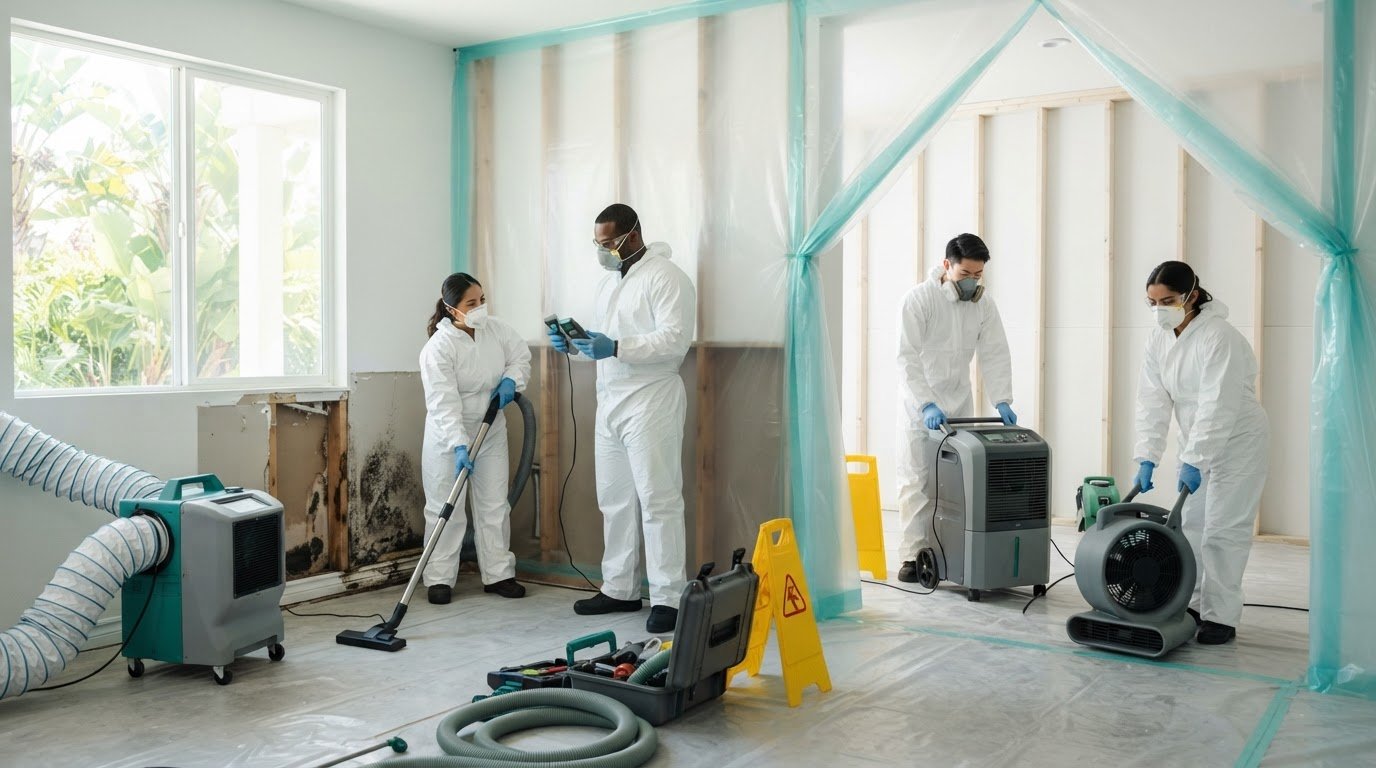 Wiping visible black mold with household bleach doesn’t solve the hazard; it often disperses airborne spores while leaving the primary fungal root system intact behind your walls. When you search for reliable black mold removal near me, you aren’t looking
 -
 Wiping down visible mold with grocery store bleach doesn’t solve structural contamination; it actually introduces excess moisture that drives fungal hyphae deeper into porous framing. When airborne spores threaten your family’s health or tenant safety, superficial fixes only delay the
 -
 Why does opening your windows after a pipe burst often make your Long Beach home wetter instead of drier? In our coastal environment, where morning humidity regularly peaks above 78% during the “June Gloom” season, relying on the ocean breeze
 -
 Did you know that water damage accounts for nearly 30% of all property insurance claims filed by homeowners annually? It is the second most common source of home loss in the country, yet the water damage insurance claim process remains
 -
 Most property owners believe the crisis is over once the standing water is gone, but the real threat to your home’s structural integrity is often just beginning. It’s natural to feel overwhelmed by the sight of a saturated living room
 -
 Did you know that local fire departments in the United States respond to an average of 358,000 home structure fires every year? If you are currently standing among charred remains, the immediate priority is finding a qualified fire restoration company
 -
 Drywall repair is a health and safety procedure first, and a cosmetic fix second. When you discover a damp spot or a bubbling ceiling, it’s natural to feel overwhelmed by the uncertainty of drywall water damage repair costs versus replacement
 -
 Did you know that after major wildfire events, an estimated 13,000 insurance claims can be filed for properties that never saw a single flame, but were devastated by smoke alone? This highlights a difficult truth: the end of a fire
 -
 What if your favorite sofa is actually functioning as a secondary air filter, silently trapping years of microscopic pollutants and allergens deep within its fibers? For many homeowners, the realization that furniture affects respiratory health comes only after persistent pet
 -
 The success of your recovery doesn’t depend on the insurance adjuster’s initial visit, but on the technical precision of the documentation provided within the first 48 hours of an incident. For homeowners managing water damage insurance claims in Long Beach,