
25 Sep Burst Pipe Water Removal in Seal Beach: What to Do Next
A burst pipe can soak floors and send water into walls before you know how far it has spread. If it’s safe, shut off the water supply and stay clear of standing water near electrical equipment. Then address both parts of the problem: a plumber can repair the failed pipe, while a restoration professional can assess and dry affected areas. For burst pipe water removal in Seal Beach, the leak and its effects both need attention.
It’s understandable to feel unsure what to do first, especially if water is still flowing or may be hidden beneath flooring. This guide covers immediate safety steps, when to contact plumbing services and water damage restoration, and what professionals typically assess when they arrive.
You’ll also learn how extraction removes visible water, how moisture checks and structural drying address damp materials beyond the surface, and what information to record. Coastline Environmental Solutions, Inc. provides water damage restoration and plumbing services in Seal Beach. Confirm current availability for your address and ask whether the services can be coordinated for your situation.
Key Takeaways
- Put personal safety first. Shut off the water only if the valve is safely accessible.
- Visible water may not show how far moisture has traveled. Assessment and drying help identify and address affected materials.
- Plumbing repair addresses the failed pipe; restoration addresses water and damage to the property.
- Let the size and location of the spill guide your next step. Stay out of areas with electrical hazards or potentially contaminated water.
- Before contacting a provider, note the leak location, suspected source, affected rooms, safety concerns, and any photos or repair records.
Burst Pipe in Seal Beach? Take These Safe First Steps
Start with safety, not cleanup. Keep people and pets out of rooms with standing water, sagging ceilings, or signs of electrical danger. Don’t step into water if outlets, cords, appliances, or electrical panels may be wet, and don’t touch electrical equipment in or near standing water. If anyone is in immediate danger, leave the property and contact emergency services.
If you can reach a water shutoff without entering a hazardous area, turn off the nearest fixture valve or the home’s main water valve. A fixture valve may be beneath a sink or behind a toilet; the main shutoff may be elsewhere on the property. Don’t search for it through water or try to operate a valve in an unsafe location. Leave that task to qualified responders if access is hazardous.
How can you stop water safely after a pipe bursts?
Once the flow stops, move belongings away from wet areas only if you can do so safely. Take photos of visible damage when doing so won’t delay urgent action, and make a note of when the leak started and what you observed. Don’t use household electrical equipment to remove water from an area that may be electrically unsafe. For background on water damage and restoration, see this Water damage restoration overview.
Who should you call first: a plumber or a restoration company?
A plumber addresses the failed pipe and stops the source. A water damage restoration professional assesses affected areas, extracts standing water, and dries impacted materials. Which call comes first depends on whether water is still flowing and whether the property is safe to enter. If the leak is active, prioritize stopping the source without taking risks, then arrange a restoration assessment as soon as it’s safe. Ask whether plumbing and restoration can be coordinated for your situation. For property owners facing pipe emergencies in Central Florida, you can learn more about Alberto Pro Plumbing to see how professional plumbing teams isolate leaks and repair broken lines.
These services solve different parts of the problem. Repairing the pipe doesn’t remove water already absorbed by flooring or walls, and extraction doesn’t fix the leak. For burst pipe water removal in Seal Beach, consider both the source and the affected structure. Once immediate hazards are addressed, tell the professionals you contact where the leak may have started, which rooms are affected, and what safety concerns you’ve noticed. Don’t delay urgent help to take photos or move belongings.
How Burst Pipe Water Removal and Structural Drying Work
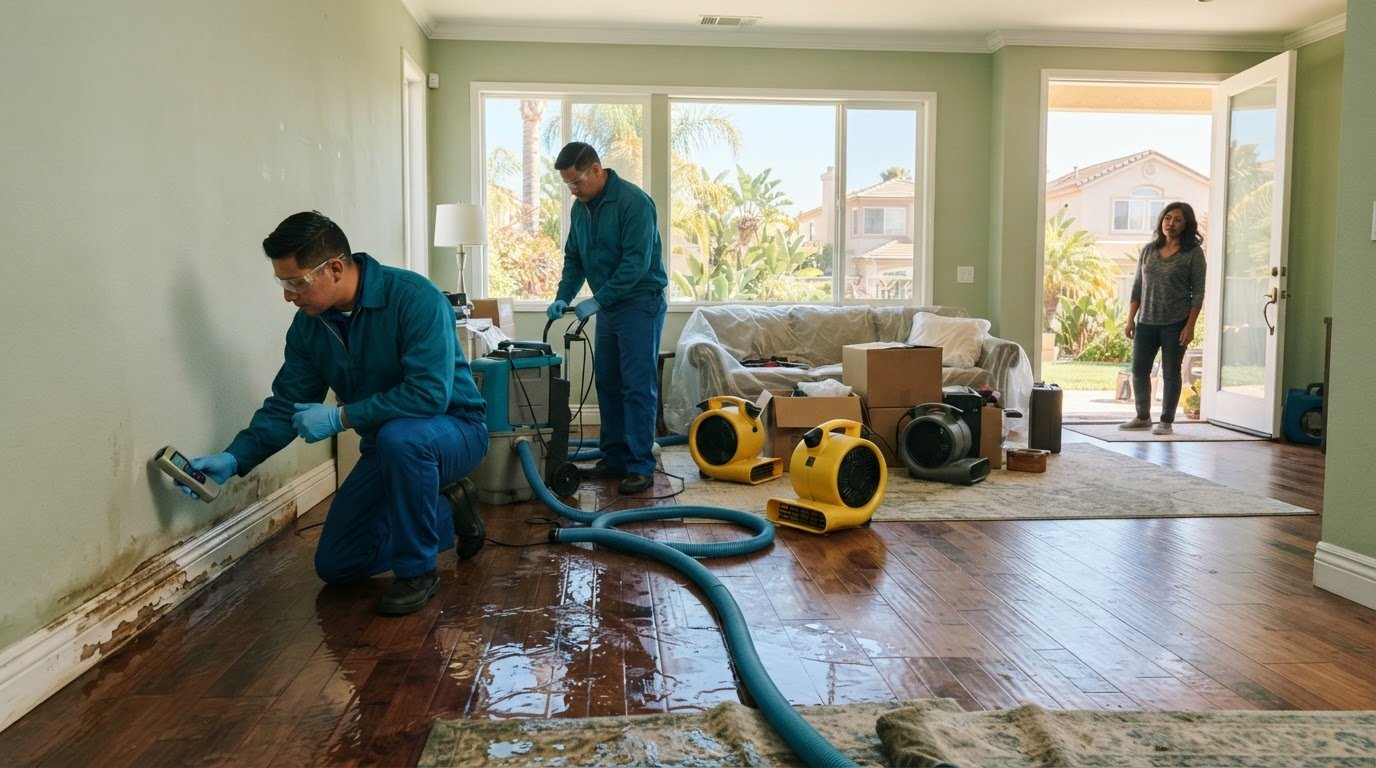
Removing visible water is only the first part of recovery. A professional restoration process typically includes assessing affected areas, extracting standing water, drying materials, and checking moisture again. This sequence helps identify not only what’s wet on the surface, but also where water may have moved into flooring, wall cavities, or other building materials.
Structural drying is the controlled removal of moisture from a building’s materials and enclosed spaces, helping limit ongoing water damage and support restoration. The approach depends on the materials involved, how far the water spread, and the conditions found during assessment.
What happens during a professional water damage assessment?
The assessment starts with the affected rooms and visible conditions. A restoration professional may document wet materials and use moisture detection tools to check areas that look dry but may still hold water. For example, water on a hard floor can seep beneath baseboards or into flooring layers. A clear surface doesn’t confirm that the structure is dry, so assessment findings help determine what needs attention.
Why extraction alone may not finish the job
Extraction equipment removes standing water, but porous materials such as carpet, drywall, and wood can retain moisture. Air movement helps moisture leave wet surfaces, while dehumidification removes moisture from the surrounding air. These methods can support drying, but the setup and progress checks should reflect the property’s materials and moisture conditions rather than follow a one-size-fits-all plan.
Reassessment matters. A restoration professional can check moisture again and adjust the drying approach if damp areas remain. Mold concerns may also call for additional attention; the EPA mold cleanup guidelines explain considerations for cleanup in the home.
For burst pipe water removal in Seal Beach, keep pipe repair separate from water damage restoration: plumbing service addresses the leak, while restoration focuses on water and affected materials. Coastline Environmental Solutions, Inc. provides water extraction, drying, and restoration in Seal Beach. To learn more about its water damage restoration services, review the company’s service information and confirm availability for your address.
DIY Cleanup or Professional Water Removal After a Pipe Burst?
A small spill on an accessible, nonporous floor may be manageable once the leak is stopped and the area is safe. But towels and a mop address only moisture you can see. If water has spread beneath flooring, into walls, or across several rooms, a professional assessment can help determine whether concealed materials are still wet.
Stay out of areas with electrical hazards or contaminated water. Don’t enter standing water if electrical equipment may be affected, and don’t touch or disturb wet materials when the water’s cleanliness is uncertain. Leave unsafe conditions to qualified responders.
When is basic cleanup reasonable, and when is it not?
Use this table as a starting point, not a substitute for safety judgment. If you’re unsure how far water has traveled or whether an area is safe, pause cleanup and seek professional guidance.
| Situation | Practical next step |
|---|---|
| Small spill on a safely accessible hard surface, with the leak stopped and no safety concerns | Blot or mop visible water and keep the area clear while watching for signs of spreading. |
| Water across multiple rooms, beneath flooring, or into walls or ceilings | Arrange a professional assessment to check materials beyond the visible surface. |
| Possible electrical hazard or contaminated water | Don’t enter, clean, or disturb materials. Keep others away and contact qualified responders. |
Can a repaired pipe leave hidden water damage behind?
Yes. Repairing the pipe stops the source, but it doesn’t remove moisture that has already entered flooring, drywall, insulation, or other absorbent materials. A dry-looking surface can conceal dampness behind a finish or below the floor. Towels may help with a small surface spill, but they can’t confirm that concealed areas are dry.
An assessment can help establish what needs drying and whether additional restoration is appropriate. Watch for persistent dampness or musty odors, and seek guidance rather than opening walls or pulling up flooring yourself, especially if contamination or electrical risks are possible. If mold becomes a concern, consider professional advice about mold remediation.

What to Prepare Before Calling for Burst Pipe Water Removal in Seal Beach
A few clear details can help a water-removal professional understand the situation and plan an assessment. Don’t delay urgent safety steps to gather information, and don’t enter an unsafe area to inspect or take photos. Share what you know, even if some details are uncertain.
What information helps a water-removal professional assess the situation?
Before calling, note when you discovered the leak and whether the water source has been shut off. Describe where the pipe appears to have failed, which rooms are affected, and whether you can see standing water or signs of moisture spreading. Mention hazards such as wet electrical equipment or water that may be contaminated.
- Location: The property address and the room or area where the leak started.
- Suspected source: For example, a supply line beneath a sink or a pipe near an appliance, if known.
- Extent: Affected rooms and visible water, along with any suspected wet walls, floors, or ceilings.
- Safety and status: Whether the source is stopped and any conditions that could make access unsafe.
Take photographs of visible damage only when you can do so safely. Keep relevant plumbing repair records, incident notes, and communications together. These details can help you track what happened and support discussions with restoration professionals or your insurer.
What should you ask about the restoration process?
Ask how the provider will assess moisture, explain the proposed scope, and determine which areas need attention. Find out how water extraction, drying, and progress checks will be handled for your property, and how you’ll be updated if the assessment changes the plan. The appropriate work and schedule depend on the conditions found, so don’t assume a fixed timeline before the property is evaluated.
Insurance coverage depends on the policy and circumstances. Contact your insurer to ask what documentation they need and how to submit it; don’t rely on a restoration provider’s assessment as a promise of reimbursement. Keep copies of photos, repair records, and any written scope or updates you receive.
For burst pipe water removal in Seal Beach, prepare to share these details and ask direct questions about assessment, extraction, drying, and follow-up. Coastline Environmental Solutions, Inc. provides water damage restoration in Seal Beach. Contact Coastline about water damage restoration to discuss your situation and confirm service availability for your address.
Choose a Seal Beach Water Removal Team for the Full Recovery
After a pipe is repaired, recovery may still involve water extraction, drying, and restoration of affected materials. A provider who can explain these steps helps you understand what happens beyond removing visible water. Coastline Environmental Solutions, Inc. serves Seal Beach and provides water damage restoration, including extraction, drying, and restoration. Confirm current coverage for your specific address when you contact a provider.
How to evaluate a local water damage restoration provider
Ask how the team will assess affected rooms, identify moisture, remove standing water, and check drying progress. A clear explanation should connect the proposed work to the conditions found in your property rather than assume every burst pipe requires the same approach. Ask how updates will be shared and what follow-up assessment may involve.
Before choosing a provider, confirm service availability for your address and ask any questions you have about credentials and insurance. Verify those details directly rather than relying on assumptions. You can also ask for a written explanation of the proposed scope and clarify how water damage work relates to any separate plumbing repair.
How Coastline supports burst-pipe recovery in Seal Beach
Coastline’s restoration services address water and affected materials: extraction removes standing water, drying targets remaining moisture, and restoration addresses the recovery work that follows. Its plumbing services may be relevant to the failed pipe, but ask whether plumbing repair and restoration can be coordinated for your situation. Mold remediation is also available if it becomes relevant; it isn’t automatically needed for every pipe burst.
For regional context, readers may find a water damage restoration in Long Beach service guide useful when comparing how assessment and recovery are explained. Coastline serves Long Beach, Lakewood, Cerritos, Seal Beach, Huntington Beach, Wilmington, and San Pedro. Confirm that any provider you consider serves your address and can discuss the conditions at your property. Response timing and the work required depend on the situation, so ask directly rather than relying on a general estimate.
If you’re considering burst pipe water removal in Seal Beach, be ready to describe where the leak started, whether it’s stopped, and which rooms or materials appear affected. Contact Coastline to discuss those details and ask whether its services fit your needs. Describe your leak and affected areas to Coastline for a situation-specific conversation.
Move Forward With a Clear Recovery Plan
A burst-pipe incident is easier to manage when each step has a distinct purpose: keep people clear of hazards, stop the water only if the shutoff is safely accessible, and arrange an assessment for moisture that may not be visible. Repairing the pipe addresses the source; extraction and structural drying address water and affected materials. Photos and notes about affected rooms can help keep communication organized. Ask how moisture will be assessed, what extraction and drying involve, and what follow-up checks are planned. Contact your insurer directly about coverage and documentation.
For burst pipe water removal in Seal Beach, consider a local restoration provider and confirm service availability for your address. Coastline Environmental Solutions, Inc. serves Seal Beach and provides water extraction, drying, and restoration, as well as plumbing services and mold remediation when relevant to the situation.
Contact Coastline Environmental Solutions to discuss burst-pipe water removal in Seal Beach and describe the leak, whether its source is stopped, and which areas are affected. A clear conversation is a practical first step toward an organized recovery. Keep safety first as you plan what to do next.
Frequently Asked Questions
What should I do first if a pipe bursts in my Seal Beach home?
First, protect people from hazards and shut off the nearest valve or main water supply only if it’s safely accessible. Stay away from standing water near electrical equipment, and leave unsafe areas. Contact a plumber to address the pipe and a restoration professional if water has spread into the property. For burst pipe water removal in Seal Beach, share what you know about the leak. Take photos only when safe and without delaying urgent action.
Who removes water after a burst pipe: a plumber or a restoration company?
A plumber focuses on stopping or repairing the failed pipe; a water damage restoration company assesses affected areas, extracts water, and dries materials. Some businesses offer both plumbing and restoration services, but ask directly what work they can provide and whether it can be coordinated. Coastline Environmental Solutions, Inc. serves Seal Beach, Long Beach, Lakewood, Cerritos, Huntington Beach, Wilmington, and San Pedro. Confirm service availability for your address.
How quickly should water be removed after a pipe bursts?
Contact a qualified restoration professional as soon as practical after addressing immediate safety concerns. Standing water and moisture retained in building materials can cause further damage, and a surface that looks dry may conceal damp flooring or walls. The appropriate response depends on how much water spread, which materials were affected, and conditions at the property. There isn’t one timeline that fits every incident, so don’t assume a small-looking leak means assessment can wait.
Can I remove burst-pipe water myself?
Limited cleanup may be reasonable for a small amount of clean water in a safe, accessible area. Don’t enter standing water where electrical hazards may be present or where the water’s condition is uncertain. Towels can absorb surface moisture, but they can’t show whether water remains inside walls, beneath flooring, or in other materials. If water has spread, the source is unclear, or safety is uncertain, stop and contact qualified professionals for an assessment.
Does repairing a burst pipe also dry the walls and floors?
No. Pipe repair addresses the source of the leak, but it doesn’t remove water already absorbed by walls, flooring, or other materials. A restoration professional can assess affected areas and determine whether extraction and structural drying are appropriate. The plan depends on how far the water spread, the materials involved, and the moisture found. Ask how the provider will evaluate damp areas and check drying progress before restoration work proceeds.
Will homeowners insurance cover burst-pipe water damage?
Coverage depends on your policy, the cause of the loss, and the specific circumstances, so don’t assume the damage or pipe repair will be covered. Contact your insurer to ask what documentation is needed and how to submit it. When safe, photograph visible damage and keep incident notes, repair records, and work documents. A restoration professional can explain observed conditions and work performed, but the insurer determines coverage under your policy.
Can a burst pipe lead to mold in a Seal Beach property?
It can if moisture remains, though the outcome depends on the amount of water, affected materials, and how the area is dried. Address the leak and have damp materials assessed so hidden moisture isn’t overlooked. If you notice signs of mold or a musty odor after water damage, seek qualified guidance rather than disturbing potentially affected materials yourself. Coastline Environmental Solutions, Inc. offers mold remediation, though not every burst-pipe incident requires that service.
To discuss water damage restoration or plumbing services in Seal Beach, contact Coastline Environmental Solutions with the leak location, whether the water is shut off, and which areas are affected.