26 Jul Comprehensive Fire and Smoke Damage Repair: A Southern California Homeowner’s Guide
What if the most dangerous part of a house fire isn’t the flames you saw, but the invisible chemical footprint left behind in your walls and air ducts? For Southern California homeowners, the aftermath of a fire often feels more overwhelming than the event itself. You’re likely struggling with persistent smoke odors that cling to every surface or worrying about how toxic soot residues might be impacting your family’s health. Professional fire and smoke damage repair requires more than a surface level cleaning; it demands a methodical approach to decontamination and structural stabilization to ensure your home is truly safe again.
We understand that you want your life to return to normal without the fear of hidden damage or lingering toxins like benzene, which research shows can persist at unsafe levels long after the smoke clears. This guide provides the expert insights you need to navigate the complexities of property recovery, from technical soot removal to environmental safety protocols. We’ll examine the essential steps for seamless insurance coordination, full structural restoration, and the advanced methods used to achieve complete odor elimination.
Key Takeaways
- Learn to distinguish between primary flame damage and secondary smoke issues to better prioritize the technical stages of fire and smoke damage repair.
- Understand how fire can disturb hazardous materials like asbestos and lead in older homes, requiring specialized containment and abatement protocols.
- Navigate complex insurance claims with structured documentation and expert coordination to secure the full structural restoration your property deserves.
- Ensure your indoor air quality is truly safe by utilizing professional air duct cleaning and scientific verification methods to remove persistent toxins.
- Follow a methodical recovery roadmap that moves from immediate emergency stabilization to the final, detailed phases of environmental decontamination.
Understanding the Multi-Layered Impact of Fire and Smoke Damage
Professional fire and smoke damage repair is a sophisticated, multi-phase process that extends far beyond simply replacing charred materials. It involves the meticulous cleaning, deodorizing, and structural restoration of a property to return it to a pre-loss condition. When a fire occurs, the damage is rarely contained to the areas touched by flames. Instead, homeowners face a complex hierarchy of destruction that requires a specialized technical response to ensure the building is safe for habitation.
Restoration experts categorize these impacts into primary and secondary damage. Primary damage refers to the direct destruction caused by heat and flames. Secondary damage is often more pervasive, consisting of the smoke, soot, and water used during firefighting efforts. In coastal environments like Seal Beach, this secondary damage is amplified by local atmospheric conditions. High humidity levels common in our coastal cities cause smoke particulates to become heavier and more adhesive. This moisture allows acidic residues to penetrate deeper into porous materials, such as drywall and structural lumber, making the disaster restoration process significantly more complex if intervention is delayed. Immediate action is required to prevent these corrosive elements from causing permanent staining and structural degradation.
The Chemistry of Smoke and Soot Residue
Not all smoke is created equal, and the type of residue left behind dictates the restoration strategy. Restorers must identify the specific chemistry of the soot to select the correct neutralizing agents. Wet smoke results from low-heat, smoldering fires and produces a thick, smeary residue that’s difficult to clean. Dry smoke comes from high-heat fires, leaving a powdery soot that’s easier to remove but travels faster through the home. Protein residues, often from kitchen fires, are nearly invisible but produce an intense, pungent odor that requires specialized chemical deodorization. If left unaddressed, the acidic nature of these residues will cause permanent corrosion on metal fixtures and destroy sensitive electronics within days.
Secondary Water Damage from Firefighting Efforts
The thousands of gallons of water used to extinguish a blaze often create a secondary crisis: rapid mold growth. In the warm Southern California climate, mold can begin to colonize damp surfaces in as little as 24 to 48 hours. This is why effective fire and smoke damage repair must include immediate structural drying and dehumidification. When firefighting water saturates your home, securing 24 hour water damage repair alongside fire restoration is essential to prevent mold from taking hold before structural drying can begin. Coastline utilizes a “total property remediation” approach, which means we don’t just look at the fire. We address the moisture, the air quality, and the structural integrity simultaneously. This integrated workflow prevents the long-term health risks associated with mold while ensuring the home’s foundation remains sound and secure for the future.
The Methodical 5-Step Process for Professional Smoke Restoration
Recovery from a property fire isn’t a matter of chance. It’s the result of a disciplined, chronological workflow designed to stop degradation in its tracks. The fire and smoke damage repair process begins with immediate stabilization to secure the property’s perimeter. This 5-step roadmap ensures every layer of damage, from visible char to microscopic particulates, is addressed systematically. The effectiveness of professional fire and smoke damage repair hinges on these five critical stages:
- Initial Assessment and Emergency Stabilization: Securing the site with board-up and tarping services.
- Detailed Inspection and Damage Categorization: Identifying the specific types of residues and the extent of structural impact.
- Soot and Smoke Residue Removal: Technical extraction of particulates from all interior and exterior surfaces.
- Deep Cleaning and Deodorization: Using advanced technology to neutralize odors at the molecular level.
- Final Restoration and Structural Repairs: Returning the home to its pre-loss condition through expert construction.
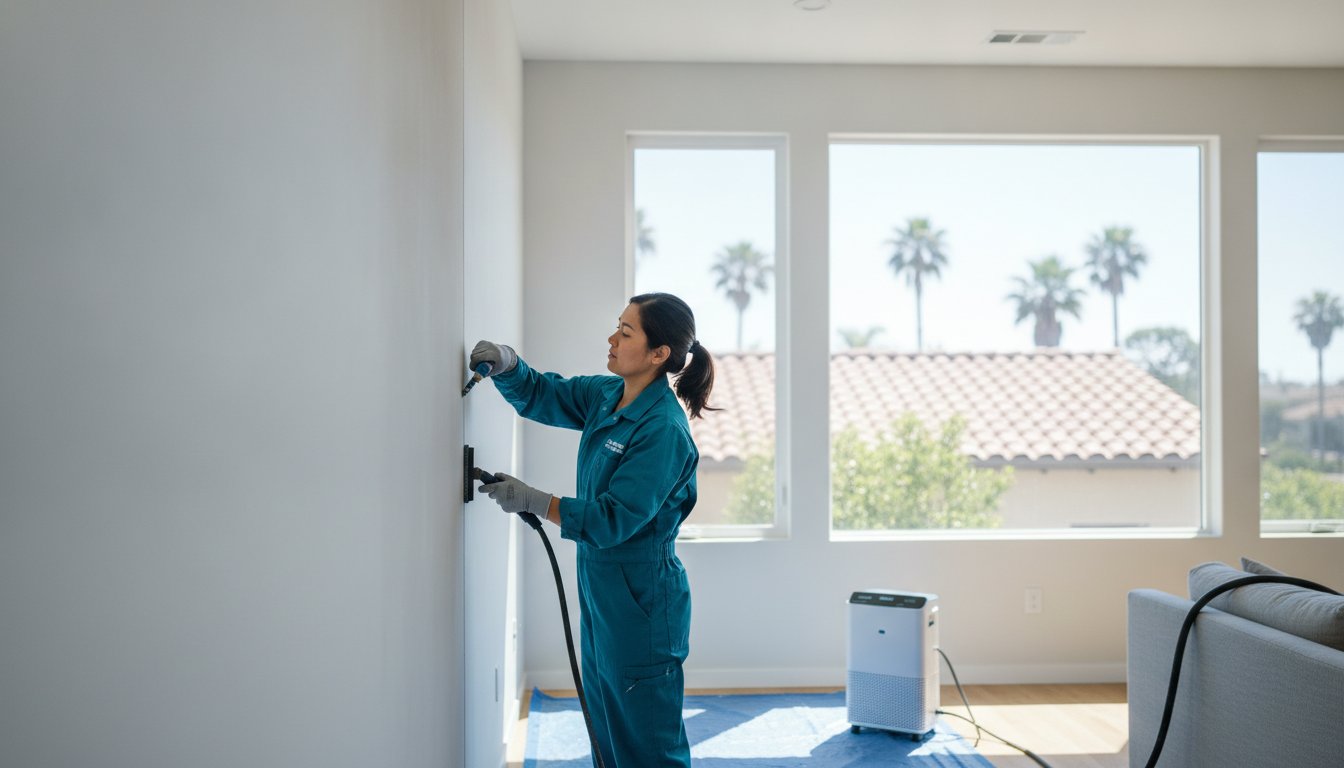
Following stabilization, a detailed inspection categorizes the damage. We distinguish between materials that are salvageable through precision cleaning and those that require full replacement. This categorization is vital for insurance documentation, providing a clear record of the loss for your adjuster. Soot and smoke residue removal involves the use of specialized HEPA vacuums and chemical sponges. This isn’t a standard cleaning task; it’s a technical extraction process that prevents particulates from being driven deeper into the surfaces of your home.
Emergency Board-Up and Structural Stabilization
In coastal cities like Long Beach or Lakewood, securing a compromised structure is the first priority. Broken windows or a pierced roofline invite more than just the elements. They present risks of vandalism and further structural shifting. To mitigate these threats, many homeowners rely on Security Guard Pros for professional on-site protection during the recovery phase. We also implement temporary fencing and heavy-duty roof tarping to create a controlled environment. This allows our technicians to work safely while protecting your remaining assets from the unpredictable Southern California weather.
Thermal Fogging and Ozone Treatments for Odor
Smoke odor isn’t just a smell; it’s a collection of microscopic particles trapped in porous materials. Simply masking these scents with aerosols is ineffective and temporary. We utilize thermal fogging, which mimics the behavior of smoke to reach the same crevices the fire did, neutralizing odors at the molecular level. For deep-seated odors, ozone or hydroxyl generators are employed to break down the chemical bonds of the smoke molecules. As outlined in FEMA’s Guide to Smoke Damage Remediation, professional-grade equipment is essential for ensuring that the indoor environment is truly restored rather than just superficially cleaned. This methodical decontamination is what separates a long-term recovery from a temporary fix.
Managing Environmental Hazards: Asbestos and Lead Post-Fire
Fire damage often uncovers legacy hazards that remained dormant behind your walls for decades. In older Southern California communities like Cerritos or San Pedro, homes built before the late 1970s frequently contain asbestos and lead based materials. When these substances are subjected to high heat, they don’t just burn; they undergo physical changes that make them significantly more dangerous to your family. Integrating environmental safety into fire and smoke damage repair isn’t an optional step. It’s a legal and health necessity. Before any debris is moved or surfaces are scrubbed, a meticulous assessment of these hidden toxins is required to prevent a localized disaster from becoming a long term health crisis.
The primary danger lies in a state called friability. Fire and the subsequent firefighting efforts can cause asbestos containing materials (ACM) to become friable, meaning they easily crumble into microscopic fibers. Once airborne, these fibers are nearly impossible to detect without specialized equipment but can be inhaled, leading to severe respiratory issues. Similarly, charred lead paint on window frames and trim creates toxic dust that settles into the soot. Coastline Environmental Solutions, Inc. treats every restoration project with a meticulous restorer approach, ensuring these hazards are identified and contained before the structural repair begins.
Certified Asbestos Abatement During Restoration
Testing for asbestos is a critical prerequisite for any fire cleanup involving older structures. Local regulations, such as SCAQMD Rule 1403, require a thorough asbestos survey before any demolition or renovation of fire damaged buildings. Failure to comply can result in significant penalties and, more importantly, the accidental release of fibers into your neighborhood. Our team implements strict containment protocols, using heavy duty polyethylene sheeting and negative air pressure machines to isolate the work area. This ensures that every piece of contaminated debris is removed safely according to state and federal standards, protecting both the workers and the property owners. For a deeper understanding of how certified professionals handle hazardous materials in post-fire scenarios, our comprehensive guide to environmental remediation services in Southern California outlines the full scope of regulatory compliance and abatement protocols.
Lead-Safe Work Practices for Fire Damage
Lead paint risks are particularly high in pre-1978 properties during the demolition and soot removal phases. When lead based paint is scorched or disturbed, it releases heavy metal particulates into the indoor environment. We utilize lead safe work practices that center on containment and specialized extraction. This includes the use of industrial grade HEPA vacuuming to capture lead dust at its source and specific disposal methods for contaminated materials. By treating lead and asbestos as integral parts of our fire and smoke damage repair workflow, we provide a comprehensive safety layer that standard cleaning companies simply cannot match. Protecting your family from heavy metal exposure is as vital as restoring the roof over their heads.

Navigating Insurance and Logistics After a Property Fire
Managing the logistics of an insurance claim can feel like a second disaster. It’s a complex, bureaucratic process that demands precision and patience. The foundation of a successful recovery lies in detailed documentation. You must capture high-resolution photos and videos of every room before any fire and smoke damage repair technicians begin their work. This data acts as an irrefutable record for your insurance adjuster, ensuring that the full scope of the damage is recognized and funded. Beyond the building itself, you need to account for every personal item affected by heat, smoke, or water.
We implement a methodical “Pack-Out” service to protect your personal belongings from further degradation. Acidic soot continues to damage surfaces long after the flames are out. By moving your items to a secure, climate-controlled facility, we can perform specialized cleaning and deodorization in a controlled environment. This prevents cross-contamination and allows the structural restoration of your home to proceed more efficiently. Property re-entry timelines depend on the complexity of the damage, but our team provides regular updates to keep you informed of every milestone.
Creating a Comprehensive Contents Inventory
Professional contents restoration can often save cherished heirlooms and expensive upholstery that appear ruined. We use digital inventory systems to track every item, differentiating between those that are restorable and those that are a “total loss.” This transparency is critical for insurance reimbursement. It provides your carrier with an itemized list that streamlines the payout process and ensures nothing is overlooked. Our meticulous restorer approach focuses on salvageable assets, using ultrasonic cleaning and specialized drying techniques to return your belongings to their pre-loss state.
Coordinating with Local Southern California Adjusters
Effective communication with insurance companies requires a steady hand and technical expertise. We work directly with Southern California adjusters to align on the scope of work from day one. Having a professional restorer present during the adjuster’s walkthrough is vital; we identify hidden structural issues and environmental hazards that an untrained eye might miss. For properties that experienced significant water volume during firefighting, we also coordinate Water Damage Restoration Long Beach for hybrid loss claims. If you’re overwhelmed by the claim process, contact Coastline Environmental Solutions to help manage the logistics of your recovery.
Ensuring Long-Term Safety: Indoor Air Quality and Verification
Visual restoration is merely the first phase of a truly successful recovery. While the walls may look pristine and the furniture may be back in place, the most persistent threats after a fire are often microscopic. True safety is invisible. Ensuring the long term safety of your home requires a shift in focus from what you can see to what you breathe. This final stage of fire and smoke damage repair centers on environmental verification, ensuring that every trace of toxic particulate and chemical residue has been eradicated from the indoor environment.
Post-Fire HVAC and Ductwork Decontamination
Your HVAC system serves as the lungs of your home, but during a fire, it often acts as a distribution network for contaminants. Smoke particulates are drawn into the return vents and circulated through every room, settling inside the ductwork where they can linger for years. Standard cleaning is insufficient for this level of infiltration. We utilize specialized agitation brushes and high powered HEPA filtered vacuums to physically remove soot from the interior surfaces of the ducts. Beyond the ductwork, our technicians meticulously clean the evaporator coils and blower motors where oily residues tend to accumulate. Replacing all filters with high efficiency alternatives is a non-negotiable step to prevent the return of smoke odors once the system is reactivated.
Final IAQ Testing and Safety Certification
Scientific verification is the only way to confirm a property is truly safe for re-entry. Many restoration companies stop at visual cleanliness, but Coastline integrates indoor air quality testing as a final clearance protocol for every fire and smoke damage repair project. The U.S. Environmental Protection Agency states that indoor air quality can be 2 to 5 times worse than outdoor air quality, a figure that often spikes significantly in homes affected by smoke. This testing process involves monitoring for Volatile Organic Compounds (VOCs) and fine particulate matter that may have been released during the fire. By collecting and analyzing air samples, we provide homeowners with data backed results that prove the air quality has returned to healthy levels. This objective evidence offers peace of mind that goes far beyond a simple smell test.
The final walkthrough concludes our commitment to your family’s health. We verify that all clearance protocols have been met and that the home is free of the lingering toxins often associated with post fire environments. Restoring the health of your home is a technical challenge that requires a steady, expert hand. We don’t just fix the damage; we restore the environment. If you are ready to ensure your property is genuinely safe, Contact Coastline Environmental Solutions for a Professional Fire Damage Assessment.
Restoring Your Home and Peace of Mind
Recovering from a fire requires more than just structural repairs; it demands a meticulous commitment to environmental safety and scientific verification. By following a methodical restoration roadmap, you can address both visible soot and the invisible toxins that compromise your family’s health. Identifying legacy hazards like asbestos and ensuring total HVAC decontamination are the only ways to achieve a true return to normalcy after a disaster.
As part of your overall property recovery, you might also consider revitalizing your outdoor space with sustainable, drought-tolerant landscaping. For homeowners looking to enhance their curb appeal while staying climate-conscious, Nu Scape Designs offers expert guidance on low-maintenance plants perfect for the Southern California region.
Since 1985, Coastline Environmental Solutions has served as a steady hand for Southern California homeowners. Our team of licensed environmental abatement specialists provides a comprehensive approach to fire and smoke damage repair, integrating advanced IAQ testing with structural restoration. We remain dedicated to your safety with a 24/7 emergency response to stabilize your property immediately.
You don’t have to navigate the complexities of insurance claims and toxic decontamination alone. When you’re ready to secure your property’s future, Get Expert Fire and Smoke Restoration Help in Long Beach. We’re here to guide you through every step of the recovery process with precision and care.
Frequently Asked Questions
How long does fire and smoke damage repair usually take?
Timelines for fire and smoke damage repair depend on the severity of the incident and the size of the property. A localized kitchen fire might require only a few days of intensive cleaning, while a major house fire involving structural reconstruction can take several weeks or months. We provide a comprehensive project schedule after our initial assessment to help you plan your return to the property.
Can I stay in my home while smoke damage is being repaired?
It’s generally not recommended to stay in the home if there’s significant smoke or soot infiltration. Fine particulates and Volatile Organic Compounds (VOCs) released during a fire pose serious respiratory risks, especially for children and the elderly. Additionally, industrial deodorization equipment like ozone generators requires the building to be vacant to ensure the safety of all occupants during the treatment process.
Does my homeowners insurance cover smoke odor removal?
Most standard homeowners insurance policies cover professional smoke odor removal as a secondary form of fire damage. Since smoke is a direct result of the fire event, the costs for technical cleaning and molecular deodorization are typically included in your coverage. We work directly with your insurance adjuster to provide the necessary documentation and technical data to ensure these specialized services are approved.
Why does the smoke smell come back even after I cleaned the walls?
Smoke odors often return because microscopic particulates remain trapped deep inside porous materials like drywall, insulation, and wood framing. Surface cleaning isn’t enough to reach these hidden layers where odor molecules continue to off-gas. Professional fire and smoke damage repair utilizes advanced technology like thermal fogging or hydroxyl generators to neutralize these particles at the molecular level, ensuring the smell is eliminated permanently.
What is the difference between soot and ash, and are they dangerous?
Ash is the powdery remain of burnt organic matter, while soot is a fine, oily particulate composed of carbon and chemical byproducts. Both are hazardous if inhaled or touched. Soot is particularly dangerous because it’s often acidic and contains toxic residues from burnt plastics and synthetic materials. These substances can cause severe skin irritation and long term respiratory distress if they aren’t professionally removed.
Is it safe to clean fire damage myself with a pressure washer?
You should never use a pressure washer for interior fire damage restoration. High pressure water drives acidic soot and chemical residues deeper into porous surfaces, making them nearly impossible to remove later. This method also introduces excessive moisture into the structure, which can trigger rapid mold growth within 48 hours. Professional extraction uses dry cleaning sponges and HEPA vacuums to remove particulates without causing further damage.
How do I know if my fire-damaged home has asbestos risks?
Properties built before the late 1970s have a high probability of containing asbestos in materials like ceiling tiles, flooring, or insulation. When these materials are scorched or disturbed during a fire, they release toxic fibers into the air. The only way to confirm the risk is through professional laboratory testing conducted by certified environmental specialists before any restoration or debris removal begins. Learning more about the full scope of environmental remediation services available in Southern California can help you understand what to expect from a certified abatement team.
What should I do in the first 24 hours after a house fire?
Your first priority is ensuring the fire department has declared the structure safe to enter. Once cleared, contact your insurance company to start the claim and call a professional restorer for emergency board-up and stabilization. Don’t attempt to clean surfaces or turn on the HVAC system yourself, as this can spread toxic soot and drive contaminants deeper into the home’s mechanical systems. If firefighting efforts have left standing water or saturated materials, arranging 24 hour water damage repair services simultaneously is critical to preventing mold growth before it takes hold.