
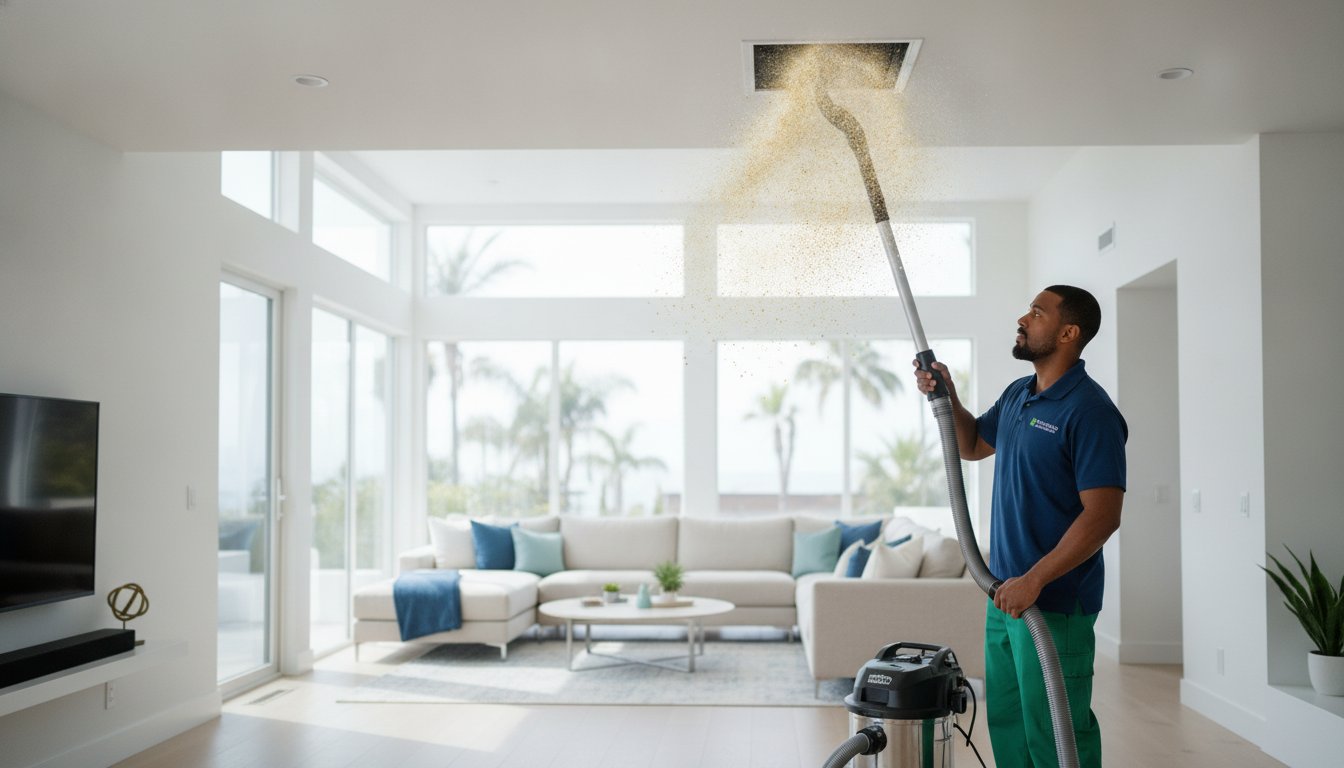
03 Aug HVAC Duct Cleaning for Allergies: A Guide to Cleaner Air
Did you know that the air inside your home can be two to five times more polluted than the air outside? For the 50 million Americans who suffer from allergies, this isn’t just a statistic; it’s a daily struggle with sneezing, itchy eyes, and persistent respiratory irritation. You’ve likely spent hours dusting furniture and searching for answers online, only to find conflicting advice that leaves you wondering if your ventilation system is actually the culprit. It’s frustrating to feel like your own home is working against your health.
We understand that you’re looking for a methodical solution rather than a temporary fix. This guide will show you how professional HVAC duct cleaning for allergies serves as a surgical intervention to remove deep-seated contaminants. You’ll discover how a technical source removal approach targets hidden allergens and learn actionable steps to improve your home’s environment. We’ll walk through the professional cleaning process and establish a maintenance plan to ensure your air remains clean for the long term.
Key Takeaways
- Identify the specific warning signs that your ventilation system is recirculating trapped pollen and dander throughout your home.
- Understand how professional HVAC duct cleaning for allergies uses negative pressure and HEPA-filtered containment to achieve thorough source removal.
- Learn why upgrading to MERV 11 or 13 filters is a critical step in preventing future allergen buildup within your ductwork.
- Discover why professional air quality testing is essential to identify specific triggers and ensure the safety of your remediation process.
Understanding the Link Between HVAC Systems and Seasonal Allergies
Your HVAC system functions as the primary respiratory system for your property. It draws air through return vents, regulates temperature, and redistributes it into your living spaces. When outdoor pollen counts rise, these microscopic particles inevitably enter your home and become trapped in a continuous cycle of recirculation. This is why many homeowners find that HVAC duct cleaning for allergies becomes a necessary intervention; without physical removal, these triggers simply move from one room to another. Indoor air can be two to five times more polluted than outdoor air, which means your ventilation system may be concentrating the very allergens you are trying to avoid.
The return air vent plays a critical role in this process. While it is designed to pull air back to the air handler for conditioning, it also acts as a vacuum for heavy particulates like dust, pet hair, and dander. Understanding Indoor Air Quality is the first step in recognizing why standard fiberglass filters often fall short. Most basic filters are engineered to protect the mechanical components of the HVAC equipment from large debris. They are not fine enough to capture microscopic pollen or mold spores, allowing these irritants to pass through the filter and settle deep within your ductwork.
Common Indoor Allergens in Southern California
Residents in Lakewood and Cerritos face the unique challenge of Santa Ana winds. These high-pressure weather events drive massive amounts of desert dust and regional pollen into building envelopes, where they settle in the ventilation system. In coastal cities like Long Beach, higher humidity levels create a different set of risks. Moisture often accumulates within the ductwork, allowing mold spores to proliferate in the dark, cool environment of the metal channels. Additionally, industrial particulates and salt air can combine with household dust to create a heavy, sticky residue that standard airflow cannot dislodge.
How Ductwork Acts as an “Allergen Reservoir”
Ductwork serves as a reservoir for allergens due to its physical design. Over time, heavy particulates like skin cells and pet dander settle in low-flow sections of the system. This buildup, frequently described as “bio-nesting,” provides a stable environment for dust mites to thrive. Gravity causes these materials to collect in horizontal runs and corners where air velocity is lowest. When the furnace or air conditioner cycles on, the resulting mechanical vibration dislodges these settled materials. This sends a concentrated wave of allergens into your breathing zone, making HVAC duct cleaning for allergies an essential step for long-term respiratory relief.
5 Signs Your HVAC Ducts Need Cleaning to Relieve Allergy Symptoms
Identifying the need for professional intervention requires a methodical assessment of your home environment. While many homeowners follow a calendar-based maintenance schedule, those suffering from chronic respiratory irritation must look for specific indicators that their ventilation system is actively harboring triggers. The EPA Guidance on Duct Cleaning suggests that while routine cleaning is not always mandatory, certain environmental conditions and physical symptoms make it a logical step for health preservation.
Pay close attention to these five primary indicators:
- Symptom Spikes: Notice if your sneezing, coughing, or itchy eyes worsen immediately after the heater or air conditioner cycles on. This suggests that the initial blast of air is dislodging concentrated particulates.
- Visual Accumulation: Examine your supply and return registers. If you see a “furry” texture or thick mats of dust on the grill covers, the internal ductwork is likely heavily coated.
- Filtration Lines: Look for dark, soot-like streaks on carpets near walls or under doors. This “ghosting” occurs when the system forces dust-laden air through small gaps, using the carpet as a secondary filter.
- Dusting Frequency: Monitor how quickly dust returns to flat surfaces. If a thick layer appears within 24 to 48 hours of a deep clean, your HVAC system is likely recirculating an internal reservoir of debris.
- Persistent Odors: Identify “dirty sock” or musty smells emanating from the vents. These scents often indicate biological growth or decaying organic matter trapped within the lines.
Visual Cues and Physical Indicators
You don’t need specialized tools to perform an initial inspection. Remove a floor or wall register and use a smartphone with the flash enabled to take a photo as far into the duct as possible. You are looking for more than just a light film of dust. Thick, clumpy deposits or spotting that suggests mold growth are clear signals that HVAC duct cleaning for allergies is necessary to restore a safe breathing environment. If you find evidence of biological growth, professional indoor air quality testing can help identify the specific spores present before the cleaning begins.
Evaluating Airflow and Health Patterns
A simple “white sheet test” can provide immediate clarity. Secure a clean, damp white sheet over a supply vent using painter’s tape and run the system for one hour. Any gray or black discoloration on the fabric confirms that the system is discharging particulates into your living space. Combine this with a health log; if your symptoms vanish when you leave the house but return within thirty minutes of arriving home, the source of your irritation is almost certainly contained within your walls. Uneven airflow between rooms can also indicate that debris blockages are forcing the system to work harder, further concentrating allergens in specific areas.
How Professional Source Removal Cleaning Works
Professional restoration relies on a technical, methodical workflow to ensure that contaminants are fully extracted from your property. For homeowners seeking HVAC duct cleaning for allergies, the industry standard is “source removal.” This process ensures that particulates are physically pulled out of the building envelope rather than merely shifted within the ventilation runs. A successful intervention requires specialized equipment and a structured approach to prevent cross-contamination during the project.
The process begins by establishing negative pressure throughout the ventilation system. Technicians connect a high-powered vacuum collection device to the main supply or return trunk. This creates a powerful suction that pulls air toward a central containment unit. While the vacuum provides the necessary pull, technicians clean individual components, including the blower motor and evaporator coils. These areas are critical because they often harbor the highest concentrations of biological growth and fine dust. The project concludes with a final inspection and the professional sealing of any access points used during the extraction.
The Technology Behind HEPA Filtration
HEPA (High-Efficiency Particulate Air) filtration is the cornerstone of a safe cleaning process. These filters are engineered to capture 99.97% of particles as small as 0.3 microns. For allergy sufferers in Huntington Beach, this level of precision is vital. Using a standard “shop vac” or non-HEPA system is dangerous; these units often exhaust microscopic allergens back into your living space through the vacuum’s filter. Industrial negative air machines ensure that every particle dislodged during the cleaning is trapped within a sealed system, maintaining the integrity of your indoor environment.
Agitation and Extraction: More Than Just a Vacuum
While negative pressure provides the extraction force, mechanical agitation is what actually dislodges stuck particulates. Technicians utilize pneumatic whips, motorized brushes, and air snakes to scrub the interior walls of the ductwork. This step is essential because gravity and humidity cause allergens like pet dander and skin cells to bond to the metal surfaces over time. HVAC duct cleaning for allergies is only effective when these “bio-nesting” materials are physically scrubbed loose. This source removal method is the only process approved by the National Air Duct Cleaners Association (NADCA) for achieving a truly decontaminated system. By cleaning every internal surface, technicians ensure that the entire system provides a clean path for conditioned air.

A Homeowner’s Checklist for Maintaining Clean Indoor Air
Professional cleaning serves as a critical reset for your property, but long-term respiratory relief requires a disciplined maintenance strategy. You must address the environmental factors that contribute to allergen accumulation to prevent the system from returning to its previous state. Implementing a few technical upgrades and routine checks will ensure your ventilation remains a source of clean air rather than a reservoir for triggers.
Seal the gaps in your system to prevent bypass contamination. Many residential systems pull air from unconditioned attics or crawlspaces through small leaks in the ductwork joints. This “pulling” effect introduces raw dust, insulation fibers, and outdoor pollutants directly into the air stream, bypassing your filters entirely. Using professional-grade mastic or foil tape on accessible joints can significantly reduce the volume of allergens entering your home from these hidden spaces.
High-MERV Filtration and Filter Schedules
Upgrading your filtration system is the most effective way to protect your investment after an HVAC duct cleaning for allergies. The MERV (Minimum Efficiency Reporting Value) scale is a standardized rating system that defines a filter’s ability to capture particulates ranging from 0.3 to 10 microns in size. While basic fiberglass filters are designed only to protect the furnace components from large debris, pleated filters rated MERV 11 or 13 are dense enough to trap microscopic pollen, pet dander, and smoke. You should avoid MERV 16 filters unless your system is specifically designed for them. These high-density filters are often too restrictive for older residential blowers, which can lead to reduced airflow and mechanical strain. Commit to a strict replacement schedule every 60 to 90 days to maintain peak efficiency.
Controlling Humidity to Prevent Mold Spores
Coastal humidity in Seal Beach and Huntington Beach often fluctuates, making indoor moisture control a primary concern for allergy sufferers. Use a digital hygrometer to monitor your home’s air; you should maintain a range between 30% and 50% to discourage the growth of mold and dust mites. Your air conditioner’s condensate drainage system is a common failure point that leads to hidden moisture buildup. If the drain line becomes sluggish or clogged, water can back up into the ductwork and create a breeding ground for biological contaminants. Ensure your bathroom and kitchen fans are vented to the exterior to prevent localized humidity spikes at the source.
If you aren’t sure whether your current filtration and humidity controls are sufficient, a professional indoor air quality testing session can provide the data you need to make informed upgrades.
Why Professional Air Quality Testing is the First Step
Professional air quality testing (IAQ) provides the empirical data required to develop an effective remediation plan. It’s about data, not guesswork. Before beginning any HVAC duct cleaning for allergies, it’s vital to understand exactly what is circulating through your home. Testing identifies specific concentrations of volatile organic compounds (VOCs), pet dander, and pollen levels, allowing for a targeted response. This methodical approach ensures that you aren’t just paying for a surface-level service but are addressing the specific biological or chemical triggers affecting your health.
Using data to justify the need for deep cleaning helps distinguish between simple dust accumulation and a more serious environmental hazard. A detailed IAQ report serves as a diagnostic tool, revealing whether your symptoms are caused by common seasonal pollen or something more insidious. This baseline is essential for measuring the success of the cleaning process and ensuring that the air you breathe meets safety standards after the project is complete.
Detecting Hidden Mold and Hazardous Materials
Ductwork in older Lakewood properties built before 1980 often contains materials that require specialized handling. The risk of disturbing asbestos in duct insulation or register boots is a serious concern. For property owners managing older buildings, a professional asbestos inspection for commercial buildings can provide the regulatory compliance documentation needed before any mechanical work begins. Mechanical agitation without prior testing can release these microscopic fibers into your living space, creating a significant health hazard. Similarly, if your ventilation system has a chronic moisture problem, a standard HVAC duct cleaning for allergies won’t be sufficient. Deep-seated growth requires a specialized toxic mold remediation protocol to ensure the spores are safely contained and eliminated. Professional testing provides a “clearance” baseline, giving you confidence that the environment is truly restored.
The Coastline Environmental Solutions, Inc. Approach in Long Beach
Coastline Environmental Solutions, Inc. utilizes a disciplined “challenge-action-resolution” methodology that prioritizes the safety of your property and its occupants. Our team begins by identifying the unique environmental challenges of your home, whether it’s coastal humidity or industrial particulates. If our technicians discover active leaks or saturated insulation during the inspection, we can seamlessly integrate water damage restoration Long Beach services to stop the moisture source. This comprehensive approach ensures that we don’t just treat the symptoms but solve the underlying problem. The goal at Coastline Environmental Solutions, Inc. is to provide an organized resolution that returns your home to a state of normalcy, allowing your family to breathe freely again.
Restoring the Health of Your Home Environment
Achieving lasting relief from indoor triggers requires more than a superficial sweep of your vents. It demands a methodical approach that combines technical source removal with a rigorous maintenance strategy. By addressing the “lungs” of your home, you can break the cycle of allergen recirculation and create a sanctuary where your family can breathe freely. You’ve learned that a clean system is only the beginning; ongoing vigilance is what keeps the air safe.
As certified environmental remediation experts serving Southern California since 1985, we’ve seen how professional HVAC duct cleaning for allergies transforms indoor environments. Our specialized HEPA-filtered source removal equipment ensures that contaminants are fully extracted without cross-contamination. Remember that long-term air quality depends on high-MERV filtration and moisture control, but the process must always begin with an accurate diagnosis of your home’s unique triggers.
Don’t leave your respiratory health to chance or conflicting online advice. Schedule your professional Indoor Air Quality assessment today and take the first step toward a meticulously restored home. We are here to provide the technical expertise you need to return your living space to a state of total normalcy and safety.
Frequently Asked Questions
Will air duct cleaning really help my allergies?
Professional cleaning provides significant relief by physically removing the accumulated triggers that recirculate through your home. When you invest in HVAC duct cleaning for allergies, you are eliminating the internal reservoir of pollen, pet dander, and dust mites that standard filters miss. This intervention reduces the overall particulate load in your breathing zone, which typically leads to a noticeable decrease in chronic respiratory irritation and nighttime sneezing.
How often should I have my ducts cleaned if I have pets?
The National Air Duct Cleaners Association recommends a cleaning frequency of every two to three years for households with pets. While a standard home might wait five years, animal hair and dander accumulate much faster in the return vents and on the evaporator coils. This accelerated buildup can restrict airflow and concentrate allergens, making more frequent maintenance essential for maintaining a healthy indoor environment in multi-pet homes.
Can air duct cleaning make my allergies worse?
Cleaning only poses a risk if it’s performed incorrectly using inadequate equipment or “bait and switch” methods. If a technician fails to establish negative pressure or uses a non-HEPA vacuum, they may simply stir up settled dust and exhaust it back into your living space. This is why HVAC duct cleaning for allergies must utilize professional source removal techniques and high-efficiency filtration to ensure that every dislodged particle is fully contained and extracted.
What is the best type of air filter for allergy sufferers?
High-efficiency pleated filters with a MERV rating between 11 and 13 are the most effective choice for capturing microscopic irritants. ASHRAE recommends these ratings because they trap a high percentage of small particles without causing excessive airflow resistance. While MERV 16 filters exist, they’re often too restrictive for residential blowers; they can strain your system and reduce efficiency. Stick to a 60 to 90 day replacement schedule to ensure peak performance.
How much does professional HVAC duct cleaning usually cost?
The total investment for a professional cleaning depends on several technical factors, including the total square footage of the property and the number of supply and return registers. Technicians also consider the accessibility of the main trunk lines and whether additional services, such as blower motor or coil decontamination, are required. It’s best to request a detailed estimate based on a physical inspection to ensure the quote covers the entire system from source to return.
What are the signs of mold growing in my air ducts?
Visible spotting on your vent covers or a persistent musty odor when the air cycles on are the most common indicators of biological growth. You might also notice that your allergy symptoms worsen specifically during periods of high humidity. Because mold requires moisture to thrive, any blockage in your AC condensate drain can lead to standing water in the ductwork. If you suspect growth, professional testing is necessary to confirm the species and extent.
Does air duct cleaning remove odors as well as allergens?
Yes, the process effectively neutralizes odors by removing the decaying organic matter that produces the smell. Dust is largely composed of skin cells and pet dander, which can develop a “dirty sock” scent when exposed to humidity. By scrubbing the duct walls and extracting this “bio-nesting” material, you are removing the root cause of the odor. This results in a fresher-smelling home that is also free from the particulates that trigger your respiratory symptoms.
Should I clean my ducts after a home renovation in Long Beach?
You should always schedule a professional cleaning following any major construction or remodeling project. Renovation dust is extremely fine and heavy; it often contains drywall particulates, sawdust, and masonry fragments that easily bypass standard construction filters. In Long Beach homes, these materials can settle deep within the ventilation runs and recirculate for months. A post-renovation extraction ensures that your newly remodeled space isn’t being contaminated by hidden construction debris.