
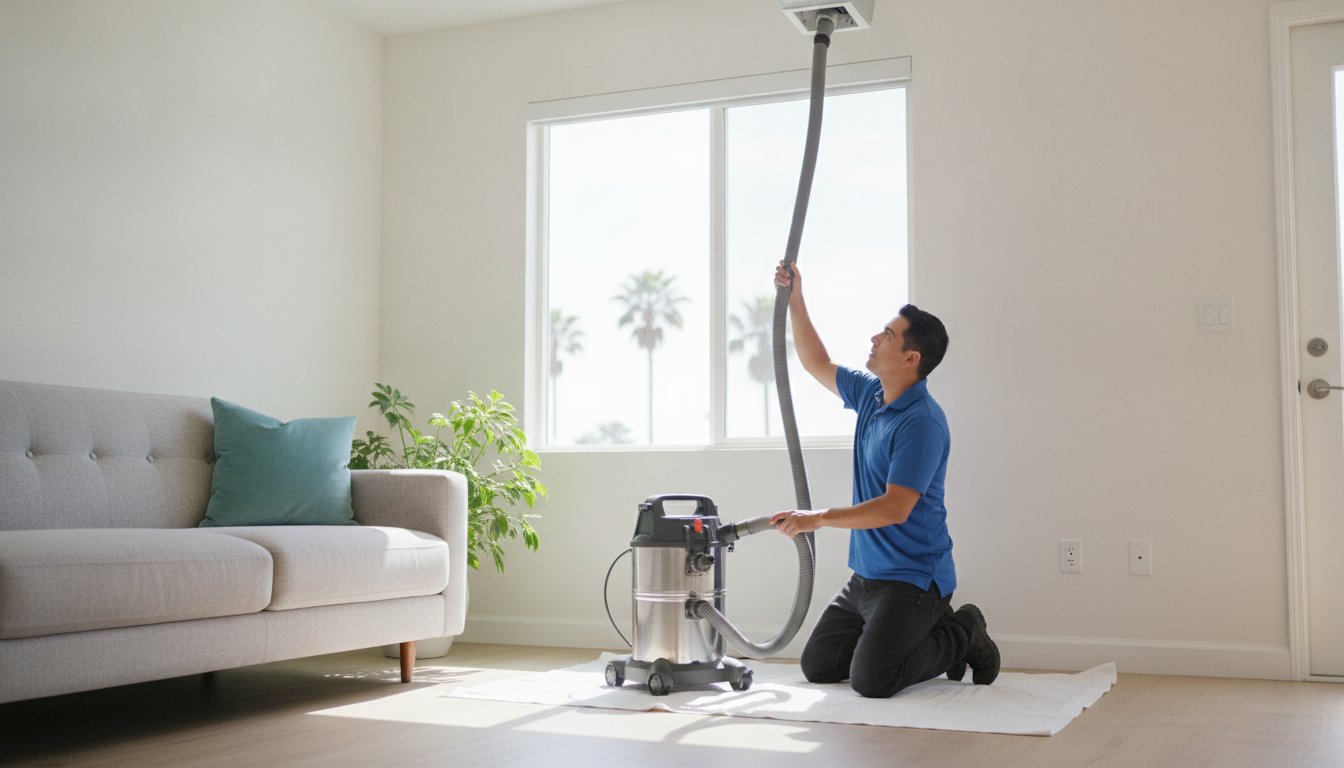
11 Sep Long Beach Air Duct Cleaning: Mold Prevention Guide
Could your home’s cooling system be the primary source of those persistent, musty odors you can’t seem to trace? In the humid coastal environment of Long Beach, your HVAC vents do more than circulate air; they often trap the moisture and organic debris that mold requires to thrive. You’ve likely noticed the signs already, whether it’s a spike in your monthly energy bills or family members experiencing unexplained allergy symptoms whenever the AC kicks on. It’s a common concern for local homeowners who want to ensure their indoor environment remains a safe, healthy sanctuary.
Investing in professional air duct cleaning for mold prevention long beach is a critical defense strategy in 2026. This guide details how specialized source removal eliminates the microbial “food” hidden within your ductwork, preventing high humidity from turning dust into a full-scale colony. We will walk through the technical process of decontamination, the importance of meeting the latest California energy efficiency standards, and how a methodical cleaning approach restores both your system’s performance and your peace of mind. By addressing these hidden vulnerabilities, you can maintain a home that is as clean as it is comfortable.
Key Takeaways
- Understand why the Long Beach marine layer and coastal humidity create a high-risk environment for microbial growth within residential HVAC systems.
- Learn how “bio-nesting” occurs in dark, damp areas like evaporator coils and why certain duct materials are more susceptible to colonization than others.
- Discover how professional air duct cleaning for mold prevention long beach utilizes HEPA-filtered negative pressure to eliminate the organic debris that fuels mold.
- Identify the specific “red flag” symptoms that signal a need for immediate maintenance and why spring is the optimal season for proactive duct care.
- Explore how a methodical, science-based approach to indoor air quality can improve system efficiency while ensuring a safe, allergen-free environment.
The Link Between Coastal Humidity and Mold in Long Beach Air Ducts
Coastal living in Long Beach offers scenic views but presents specific challenges for indoor air quality. The city’s proximity to the Pacific Ocean creates a high-humidity environment where the marine layer often lingers well into the afternoon. This persistent moisture finds its way into your home’s HVAC system, where it settles on cool surfaces within the ductwork. When combined with the organic debris found in every home, these damp conditions transform air vents into ideal incubators for fungal growth. It’s a localized problem that requires a localized solution.
Long Beach Climate Factors and IAQ
Residents in zip codes like 90802 experience average morning humidity levels that frequently exceed 70 percent. This moisture is often trapped indoors during “June Gloom” periods, where heavy cloud cover prevents natural evaporation. Salt-laden air also plays a role; it can accelerate the corrosion of metal duct components, creating pitted surfaces that trap moisture and spores more effectively than smooth, clean metal. Routine air duct cleaning for mold prevention long beach is necessary because standard ventilation cannot overcome these localized environmental pressures. Without intervention, condensation builds up during Southern California’s hot summer months, providing the final ingredient needed for a mold colony to activate.
The Anatomy of a Mold Outbreak in Your Vents
Mold doesn’t appear out of nowhere. It requires a specific combination of spores, a food source, and water. Your air ducts provide a microbial buffet consisting of accumulated household dust, skin cells, and pet dander. For a comprehensive overview of indoor mold and its behavior, it’s helpful to understand that spores are omnipresent but remain dormant until they find moisture. The progression follows a predictable, methodical path:
- Settlement: Spores enter through open windows or on clothing and settle in the dust layer of the vents.
- Germination: High humidity or HVAC condensation provides the water needed for the spores to activate.
- Colonization: The fungi consume the organic dust, spreading through the dark, protected environment of the flex ducts or rigid metal lines.
Standard air filters aren’t a complete solution. They might catch larger particles, but microscopic spores and fine dust still bypass the edges or pass through the mesh. Once these materials settle past the filter, they’re out of reach for typical homeowner maintenance. Professional-grade source removal is the only way to break this cycle before it impacts the air you breathe. It’s about removing the food source so the mold has nowhere to grow.
How HVAC Systems Become Breeding Grounds for Microbial Growth
Your home’s HVAC system is designed to regulate temperature, but its internal components often provide the exact conditions necessary for microbial colonization. Inside the dark, secluded recesses of the air handler and ductwork, three critical factors converge: lack of light, consistent moisture, and a steady supply of organic food in the form of household dust. In 2026, maintaining indoor air quality requires a technical understanding of how these systems facilitate “bio-nesting.” This is a process where mold and bacteria don’t just sit on the surface but actually anchor themselves into the porous substrate of your ventilation system.
The Evaporator Coil and Drain Pan Risk
The cooling process naturally generates moisture through condensation as warm air passes over the cold evaporator coils. Under normal operation, this water should flow into a drain pan and exit through a condensate line. However, if these lines become slightly restricted by debris, standing water accumulates. This creates a high-risk zone for microbial growth. According to EPA guidance on duct cleaning, if you have insulated air ducts and the insulation gets wet or moldy, it cannot be effectively cleaned and must be replaced. Professional air duct cleaning for mold prevention long beach focuses heavily on these moisture hubs to ensure that the source of the problem is eradicated rather than simply masked.
Flex Duct Vulnerabilities in Southern California Homes
Many Long Beach residences utilize flexible ductwork, which consists of a thin plastic liner, fiberglass insulation, and an outer foil jacket. While cost-effective, these ducts are more susceptible to bio-nesting than traditional rigid metal. The internal ridges of flex ducts trap significantly more debris, providing a larger surface area for mold to attach. In attic-based systems, the extreme temperature differential between the hot attic air and the cooled air inside the duct can lead to “sweating.” If the outer jacket is punctured, moisture intrusion follows. Over time, the internal insulation can break down, creating a porous harbor for spores that is difficult to reach without industrial-grade equipment.
The most common indicator of this biological activity is the “dirty sock” smell, a sharp, musty odor that occurs when the system begins its cooling cycle. This scent is caused by volatile organic compounds released by active colonies. When these colonies reach a certain maturity, they can experience “blow-off,” where spores are physically detached by the airflow and distributed into your living spaces. If you notice these odors or see visible staining around your registers, it’s wise to request a professional system assessment to verify your ductwork’s integrity. Proactive maintenance ensures these spores don’t become a permanent fixture in your indoor environment.
The Role of Professional Air Duct Cleaning in Mold Prevention
Professional intervention focuses on the physical extraction of contaminants rather than simply masking odors. This process, known as source removal, is the only industry-recognized method for truly preventing mold colonization in residential HVAC systems. Effective air duct cleaning for mold prevention long beach requires a combination of mechanical agitation and high-volume airflow to ensure that every square inch of the internal duct surface is restored to a like-new condition. It isn’t merely about removing visible dust; it’s about eliminating the microscopic environment that allows spores to take root.
Source Removal vs. Encapsulation
Some services suggest “encapsulation” or antimicrobial sprays as a primary solution. However, applying coatings or biocides over existing dust and debris is ineffective and potentially hazardous. If the organic “food source” remains, mold can grow underneath the coating or eventually break through. According to the EPA’s A Brief Guide to Mold, Moisture, and Your Home, moisture control is the key to mold control; therefore, cleaning must start with the physical removal of the damp particulate matter where spores thrive. Coastline’s methodical approach prioritizes a debris-free surface, ensuring that any subsequent treatments actually reach the duct material itself.
Advanced IAQ Technology for Duct Maintenance
Modern restoration science relies on specialized equipment to handle the complexities of indoor air quality. The process begins by connecting a high-powered HEPA vacuum system to the main trunk line, which creates a state of continuous negative pressure. This ensures that as dust and microbial biofilms are dislodged, they’re pulled directly into a sealed filtration unit rather than being released into your living rooms. Technicians utilize robotic cameras to navigate tight bends and attic runs, identifying hidden clusters that a standard visual inspection might miss.
To break up stubborn deposits, various agitation tools, such as motorized brushes and pneumatic whips, are deployed through the vents. Throughout this multi-step sequence, the entire system is sealed to maintain containment. This meticulous attention to detail prevents cross-contamination and provides a verifiable result that a standard vacuum can’t match. By choosing a comprehensive air duct cleaning for mold prevention long beach, you ensure that the microbial “buffet” described in previous sections is entirely eliminated. Once the cleaning is complete, a final post-cleaning inspection confirms the system is ready for safe operation.

When to Schedule Duct Cleaning: A Maintenance Checklist for SoCal Homeowners
Timing is a critical factor in maintaining a healthy indoor environment. In Long Beach, the cycle of coastal humidity and seasonal heat dictates a more proactive approach than in drier inland regions. While general guidelines from the National Air Duct Cleaners Association suggest a professional cleaning every three to five years, your specific home environment might require more frequent attention. Air duct cleaning for mold prevention long beach is most effective when treated as a methodical, preventative measure. By identifying early warning signs, you can stop microbial growth before it affects your family’s health or compromises your system’s efficiency, especially since 2026 California regulations now mandate a maximum duct leakage of only 5% of total airflow.
Home renovations are a primary, yet often overlooked, trigger for HVAC issues. Construction projects generate massive amounts of fine drywall dust and sawdust. These particles are highly organic and provide an immediate food source for mold. If your property has undergone remodeling recently, your HVAC system has likely inhaled these materials. Scheduling a cleaning immediately after construction prevents these particulates from settling into the damp areas of your system where they can fuel a microbial outbreak.
Before committing to a service, it’s often wise to conduct professional indoor air quality testing. This methodical assessment identifies the specific types of spores present and their concentration levels. It allows for a more targeted cleaning approach and ensures that the maintenance plan addresses the actual biological load of the home. This data-driven approach removes the guesswork from property maintenance.
Signs You Need Immediate Duct Cleaning
Some symptoms indicate that your system has already crossed the threshold from simple dust accumulation to active contamination. You should look for these red flags immediately:
- Visible Growth: Dark spotting or fuzzy patches appearing on supply registers or around the edges of return vents.
- Respiratory Flare-ups: Family members experiencing increased sneezing, coughing, or itchy eyes specifically when the air conditioning is running.
- Pest Activity: Evidence of rodents or insects inside the vents; their waste products are highly organic and rapidly trigger mold growth.
Pre-Preventative Maintenance Steps
Consistent homeowner maintenance extends the life of your cleaning service and reduces the risk of moisture accumulation. You don’t have to wait for a professional to take the first steps toward a cleaner system:
- Filter Management: Check and replace your HVAC filters every 30 days during the peak Southern California summer heat.
- Humidity Control: Ensure your dryer vent is properly sealed and exhausted outdoors; a leaking dryer vent can significantly increase indoor humidity.
- Remediation: If active growth is already visible on the duct surfaces, you may need to schedule a professional toxic mold remediation to ensure the spores are safely contained during the removal process.
Maintaining a clean system is an ongoing commitment to your home’s structural and environmental health. If you’ve noticed any of these red flags or have recently finished a home project, it’s time to act. Contact Coastline Environmental Solutions today to schedule your comprehensive duct inspection and ensure your air remains safe.
Coastline Environmental Solutions: Methodical Duct Cleaning and IAQ Support
Coastline Environmental Solutions has operated as a dependable local guardian for Southern California property owners since 1985. Our team combines over three decades of field experience with modern environmental science to deliver results that exceed standard maintenance. When performing air duct cleaning for mold prevention long beach, we apply the same rigorous standards required for hazardous material abatement. This methodical approach ensures that we don’t just move dust around; we eliminate the biological triggers that compromise your home’s safety. Our background in complex environmental crises allows us to provide a level of precision that general HVAC contractors simply cannot match.
Comprehensive Restoration and Cleaning Services
We understand that air quality is often tied to the structural integrity of the property. For this reason, we frequently integrate our ventilation services with water damage restoration in Long Beach to address the root causes of moisture intrusion. Our technicians strictly adhere to IICRC standards, ensuring that every cleaning project follows a documented sequence of containment, agitation, and extraction. We develop customized maintenance plans specifically for coastal properties in Signal Hill and Seal Beach, where the salt air and high humidity require more frequent system evaluations. This comprehensive care model focuses on long term health rather than a quick, superficial fix.
The Coastline Difference: Expert Remediation Skills
Our identity as a “meticulous restorer” is rooted in our specialized knowledge of hazardous materials. Because we handle toxic mold remediation and asbestos abatement, we possess a deep understanding of particle behavior and cross-contamination risks. This expertise is vital during the duct cleaning process, as it allows us to identify subtle signs of microbial activity that others might overlook. We use industrial-grade HEPA filtration and specialized containment barriers to protect your living environment throughout the service. In 2026, we continue to utilize advanced technology to verify our results, offering industrial hygiene testing to provide empirical proof of a cleaner environment.
Serving Long Beach, Huntington Beach, and San Pedro for over 40 years has given us a unique perspective on the local climate’s impact on building materials. We’ve mastered the complexities of the Southern California marine layer and its relationship with indoor fungal growth. This local commitment means we are invested in the outcome of every project, treating your property with the same care we would our own. The Coastline guarantee is simple: a safer, cleaner, and more efficient indoor environment for your family. We provide the steady hand and technical mastery needed to return your home to a state of total normalcy and health.
Secure Your Home’s Air Quality Today
Maintaining a mold-free HVAC system in Long Beach requires a methodical approach that addresses the unique challenges of our coastal climate. We’ve explored how the local marine layer creates a high-risk environment for microbial growth and why professional source removal remains the only industry-standard solution. By identifying red flag symptoms early and utilizing advanced IAQ technology, you can ensure your home remains a safe sanctuary for your family. This proactive care is the most effective way to prevent biological contaminants from compromising your indoor air.
Coastline Environmental Solutions has been a dependable local guardian, serving Long Beach and Southern California since 1985. As certified mold remediation and environmental abatement specialists, we bring technical mastery to every project we undertake. Whether you need comprehensive indoor air quality testing or professional air duct cleaning for mold prevention long beach, our team is dedicated to restoring your property to a state of total health and normalcy. You shouldn’t have to worry about the air your family breathes.
Breathe easier; schedule your professional air duct cleaning with Coastline Environmental Solutions today. You deserve the peace of mind that comes from a clean, efficient, and meticulously maintained ventilation system.
Frequently Asked Questions
Does air duct cleaning really help prevent mold in Long Beach?
Professional air duct cleaning for mold prevention long beach is highly effective because it eliminates the organic particulate matter that serves as a food source for fungal colonies. In our coastal environment, moisture from the marine layer often infiltrates HVAC systems, providing the final ingredient needed for mold to flourish. By physically extracting dust, skin cells, and pet dander through source removal, you remove the substrate required for microbial life to take root in your ventilation.
How often should I have my air ducts cleaned in a coastal environment?
While general industry standards suggest cleaning every three to five years, properties in coastal cities like Seal Beach or Huntington Beach often require more frequent maintenance. The higher humidity levels in these areas accelerate the accumulation of damp debris within the ducts. For most Long Beach homeowners, a professional inspection every two to three years is recommended to ensure that moisture hasn’t turned accumulated dust into a biological hazard that compromises your indoor air.
Can I tell if there is mold in my ducts without a professional?
You can often identify early warning signs through sensory observation, such as a persistent musty odor when the air conditioning activates. Look for dark, fuzzy spotting around the supply registers or return vents, as this often indicates active colonization. If family members experience unexplained respiratory flare-ups specifically while indoors, it’s a strong indicator that you should seek a professional assessment to verify the presence of hidden microbial growth within the system’s dark recesses.
Will duct cleaning release mold spores into my home?
A professional cleaning should never release spores into your living space if the technician utilizes proper containment protocols. Coastline uses high-powered HEPA-filtered vacuum systems to create a state of negative pressure throughout the ductwork. This ensures that all dislodged particulates and spores are pulled directly into a sealed collection unit rather than being blown into your rooms. This methodical approach protects your indoor environment in Wilmington and San Pedro throughout the entire cleaning sequence.
What is the difference between air duct cleaning and mold remediation?
Air duct cleaning is a preventative maintenance service focused on removing dust and debris before a problem starts. Mold remediation is a specialized environmental service required when active, potentially toxic growth is already present. Remediation involves strict containment barriers, specialized antimicrobial treatments, and often the replacement of porous materials like flex duct insulation. As certified specialists since 1985, we can determine which level of service your property actually requires during our initial inspection.
How long does a professional air duct cleaning service take?
A thorough, professional air duct cleaning for mold prevention long beach for a standard single-family home in Lakewood or Cerritos typically takes between three and five hours. This duration allows for a methodical process that includes sealing all registers, connecting the negative pressure system, and using mechanical agitation tools to dislodge stubborn debris. The total time depends on the number of vents, the accessibility of the air handler, and whether you have a single or multi-zone HVAC configuration.
Does a dirty air duct affect my energy bills in Southern California?
Clogged air ducts significantly impact your energy efficiency by restricting the airflow your HVAC system needs to operate. When debris builds up, the blower motor must work harder and run longer to reach your desired thermostat setting, leading to higher monthly utility costs. With the 2026 California Building Energy Efficiency Standards focusing on tighter duct leakage limits, maintaining clean, unobstructed vents is essential for keeping your Southern California energy bills manageable and your system running at peak performance.
Is it worth cleaning air ducts if I have a high-quality air filter?
Even the highest-quality HEPA filters cannot prevent all debris from entering your ductwork over time. Microscopic spores and fine particulates can bypass filter seals or enter the system through leaks in the return air ducts located in attics or crawlspaces. Once these materials settle past the filter, they remain in the system until physically removed. Routine cleaning ensures that the areas downstream of your filter remain clean and free from the organic buffet that fuels mold growth.