
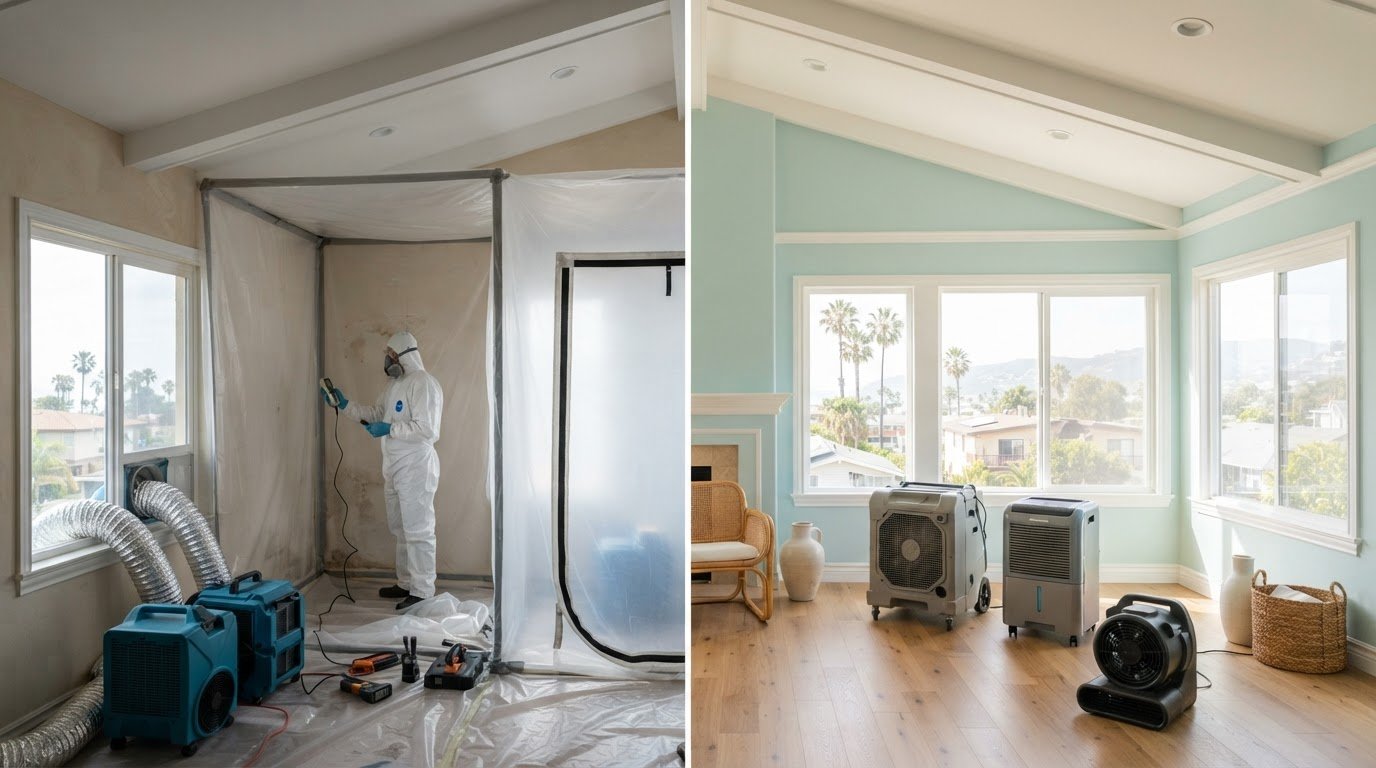
26 Sep Mold Remediation Process Step by Step: What to Expect in 2026
Removing visible mold isn’t the whole job. If the moisture source remains, mold can return. Understanding the mold remediation process step by step means looking beyond what you can see and asking what may be affected, what needs cleaning or removal, and how the work could affect occupants and belongings.
Professional remediation typically follows a planned sequence: assess the affected areas, control the work zone, remove or clean materials, dry the space, and check that the moisture problem has been addressed. The right scope depends on conditions at your property, so the contractor should explain how the assessment leads to the proposed work.
This guide walks through each stage and gives you practical questions about containment, safety measures, moisture control, and recommended testing. It also explains what to compare in contractors’ plans, including how they intend to investigate water intrusion and reduce the risk of recurrence. With a clearer picture of the process, you can discuss your situation with a local contractor in Long Beach, Lakewood, Cerritos, Seal Beach, Huntington Beach, Wilmington, or San Pedro.
Key Takeaways
- The mold remediation process step by step addresses visible growth and the moisture conditions that can allow it to return.
- Sharing water damage history and areas of concern helps a contractor assess affected materials and possible moisture pathways.
- Ask how the proposed containment and safety measures will limit dust and debris beyond the work area.
- Compare plans for cleaning, drying, debris disposal, occupant access, and checking the work before remediation begins.
- Discuss whether indoor air quality testing would answer a specific question about your property.
What the Mold Remediation Process Step by Step Actually Involves
Professional mold remediation addresses mold growth and the moisture conditions that support it. The goal isn’t simply to make a stain disappear. Wiping visible growth, painting over it, or masking an odor may leave the underlying moisture and affected materials untouched. A thorough plan considers what needs cleaning or removal and how the water source will be identified and addressed.
The mold remediation process step by step can vary by property. A small area on a nonporous surface may need a different response than growth involving damp drywall, insulation, or a concealed leak. The affected materials, location, moisture history, and assessment findings all help determine the scope. For a general overview of indoor mold and remediation approaches, see Indoor mold remediation.
Mold removal, cleanup, and moisture correction: how they differ
Removal and cleaning address affected materials and surfaces. Moisture correction addresses the condition that allowed growth to develop. These are connected but distinct parts of property recovery. For example, cleaning a damp area won’t resolve an active plumbing leak. Porous or concealed materials may need case specific evaluation to determine whether they can be cleaned or should be removed. For an example of how professional remediation services handle both residential and commercial buildings, check out ABC Mould Cleaning Solutions. The right response depends on the assessment.
When a Long Beach property may need a professional assessment
Persistent visible growth, recurring dampness, or a substantial affected area can be reasons to seek professional advice. Avoid disturbing suspected mold while deciding what to do, since scraping or pulling at materials may spread dust and debris. Instead, note where the concern appears and share any known leaks or water events with the contractor. Coastline Environmental Solutions, Inc. provides mold remediation in Long Beach and nearby communities.
This guide describes typical stages, not a guaranteed sequence for every property. A contractor’s proposed plan should explain how assessment findings connect to the recommended work, including material removal, cleaning, and moisture source correction. If water intrusion is involved, ask how it will be addressed as part of the overall response. Indoor air quality testing is a separate service you can discuss when appropriate.
Step 1: How Professionals Assess Mold and Find the Moisture Source
A useful assessment looks beyond the visible patch. Before recommending removal or containment, a professional needs to understand where growth appears, what materials may be affected, and what could be supplying moisture. This first stage connects the observed problem to a practical work plan instead of treating a stain in isolation.
What an initial mold assessment should establish
The contractor should ask about the property’s history and inspect the areas of concern. Share any known leaks, flooding, condensation, plumbing issues, or previous repairs, including when and where they occurred. The assessment should identify affected locations and materials that may need further evaluation, then explain how those findings shape decisions about containment, removal, and restoration.
Ask what the inspection has and hasn’t established. Moisture measurements can help assess conditions in building materials, but they’re one tool, not a guarantee that every hidden issue has been found. Testing also isn’t automatically necessary for every project. Ask whether it would answer a specific question or change the proposed scope. Coastline Environmental Solutions, Inc. offers indoor air quality testing as a separate service to discuss when appropriate.
How remediation teams investigate moisture in local properties
Possible moisture pathways include a plumbing leak, water entering around a roof or window, or condensation associated with ventilation conditions. A professional may combine visual inspection with moisture meter readings in relevant areas. Neither method should be treated as a stand alone diagnosis. Readings need to be interpreted alongside the building materials, visible conditions, and property history.
For example, a damp area near a window may warrant checking for water intrusion, while moisture near plumbing may prompt questions about a past or active leak. The assessment should explain the suspected source and what remains uncertain. If water intrusion is part of your property’s history, ask how water damage restoration may fit into the response. The U.S. Environmental Protection Agency also outlines basic mold cleanup steps, including attention to moisture problems.
Before work begins, request a clear explanation of how the inspection findings support the proposed scope. That makes it easier to compare plans and understand what needs further evaluation. For a local assessment, you can ask about mold remediation in Long Beach and nearby communities.
Steps 2 and 3: Containment, Safety, and Mold Removal
After the assessment defines the work area, containment and removal help manage the project while limiting the spread of dust and debris. The approach should match the affected materials, project scope, and conditions at the property. Since one setup won’t fit every home or business, ask the contractor how the work area and nearby occupied spaces will be protected.
How containment helps manage a remediation work area
Depending on the job, a team may use barriers to separate the work area and control who enters it. Some projects may call for additional measures, such as HEPA filtration or negative air pressure, but these aren’t automatic requirements for every situation. Ask which methods are included in the proposed scope, why they’re appropriate, and how the team intends to limit dust and debris moving into adjacent rooms.
Workers may use protective equipment suited to the task and site conditions. Ask what precautions are planned, whether occupants can remain in nearby areas, and which spaces or belongings need to be kept clear. Mold exposure concerns vary, and the National Institute of Environmental Health Sciences provides an overview of the health effects of mold.
What happens to affected building materials
Material decisions depend on condition, the extent of growth, and the professional assessment. Some surfaces may be suitable for cleaning. Materials that are damaged or can’t be adequately restored may need removal. Ask the contractor to identify what they propose to clean or remove and explain why. For more context on removal and safety, see this toxic mold remediation guide.
Household bleach or a surface treatment alone shouldn’t be assumed to resolve every mold problem. A visible patch may not show the full extent of affected material, and cleaning without addressing the conditions behind the growth may leave the underlying issue unresolved. The mold remediation process step by step should make clear how containment, material treatment, and moisture correction fit together.
Before work starts, ask for a plain language explanation of access restrictions, protection for adjacent areas, and debris handling. These questions help you understand the plan without assuming every project requires the same equipment or removal method. If you’re considering professional mold remediation in Long Beach, contact Coastline Environmental Solutions, Inc.

Steps 4 and 5: Cleaning, Drying, and Checking the Work
Once removal is complete, the team addresses remediation debris and cleans remaining affected surfaces as specified in the project scope. Ask what materials and areas will be cleaned, how debris will be removed, and whether any part of the original plan changed after work began. A clear account of these tasks helps you understand what was completed and what may still need repair.
How drying and moisture control support long term results
Cleaning alone doesn’t resolve damp conditions. Drying goals and equipment depend on the materials and property conditions, so ask how the team will monitor progress and explain when the area is ready for the next stage. Confirm whether the identified moisture source has been corrected or assigned for repair. No single drying timeline applies to every property.
This is where the mold remediation process step by step should connect cleanup to the water issue identified during assessment. If a leak or other intrusion remains unresolved, discuss who will address it and how that work fits with remediation. Ask the contractor to explain any monitoring results used to support drying decisions rather than relying on an assumed schedule.
When post remediation assessment or air testing may be discussed
A completion check may include a review of the work area, but visual inspection or testing shouldn’t be presented as a universal guarantee that all mold is absent. Whether additional assessment or air testing is appropriate depends on the project circumstances and relevant guidance. Ask who sets the completion criteria, what the check includes, and what findings or documentation you’ll receive.
Useful closeout records may describe the work performed, materials removed or cleaned, moisture source status, and any remaining repairs or recommendations. If testing is proposed, ask what question it is intended to answer and how results will be explained. Coastline Environmental Solutions, Inc. offers indoor air quality testing as a separate service. Discuss whether it fits your situation.
Before considering the project complete, make sure you understand what was addressed and what follow up remains. To discuss mold remediation and moisture concerns for a Long Beach property, contact Coastline Environmental Solutions, Inc.
How to Prepare for Mold Remediation in Long Beach and Nearby Communities
Preparing a few details can make it easier to explain your concerns and evaluate the proposed work. Before the assessment, gather information that helps the contractor understand what has happened and where to look. Don’t disturb suspected mold to document it. Note its location and describe what you’ve observed.
- Write down affected rooms, visible changes, and when you first noticed them.
- Record known leaks, flooding, condensation, plumbing issues, or past repairs, including approximate dates if you know them.
- Share any recurring dampness or changes you’ve noticed since earlier water damage.
- List questions about the work area, household access, and what happens after cleanup.
Use the mold remediation process step by step as a framework for discussing the plan, not as a promise that every property follows an identical sequence. Timelines and disruption can vary with assessment findings, affected materials, and repair needs. Ask what could change the schedule or scope and how those changes will be communicated.
Questions to ask before work begins
Request a written or clearly explained scope that identifies the areas and materials included, along with anything excluded or awaiting further evaluation. Ask how the work area will be contained, who can access it, and how debris will be handled. Clarify how the plan addresses the moisture source, what drying or monitoring is expected, and what completion checks or documentation you’ll receive.
If a leak or other water intrusion needs separate repair, ask who will handle it and how that work will coordinate with remediation. Clear answers help you compare proposals based on the tasks and reasoning, not just the description of visible cleanup.
When to contact a local remediation provider
Consider professional advice if growth keeps returning, the moisture source is unclear, or the affected area raises concerns. A local assessment can help determine what needs attention and what further evaluation may be appropriate, without assuming in advance what the property requires.
Coastline Environmental Solutions provides mold remediation in Long Beach and nearby communities, including Lakewood, Cerritos, Seal Beach, Huntington Beach, Wilmington, and San Pedro. If you’re ready to discuss the concern and possible next steps, contact Coastline about mold remediation.
Take the Next Step Toward a Clear Remediation Plan
A thorough response is about more than removing visible mold. The mold remediation process step by step starts with assessing affected areas and possible moisture sources, then uses a project specific plan for containment, cleaning or removal, drying, and checking the work. Ask how the contractor will address water intrusion, explain any limits to the proposed scope, and document what’s complete or still needs attention.
These details can help you compare proposals and understand what to expect for your property. Timelines and disruption depend on the conditions found, the materials involved, and any repairs required. Ask for a clear explanation rather than assuming every project follows the same schedule.
Coastline Environmental Solutions reports serving property owners since 1985 and offers mold remediation and water damage restoration in Long Beach and nearby communities, including Lakewood, Cerritos, Seal Beach, Huntington Beach, Wilmington, and San Pedro. If you’re ready to discuss the concerns at your property, contact Coastline to discuss mold remediation for your property.
Frequently Asked Questions
What are the steps in the mold remediation process?
The mold remediation process step by step typically begins with assessing visible growth, affected materials, and possible moisture sources. The plan may then include containment, removal or cleaning of affected materials, debris handling, drying, and a check of the completed work. The exact sequence and scope depend on site conditions. Ask the contractor what each step covers, how water intrusion will be addressed, and what documentation you’ll receive.
How long does mold remediation take?
Mold remediation can take different amounts of time depending on the affected area, materials, moisture conditions, and any repairs needed. A limited cleanup may involve less work than a project that requires opening building materials, drying concealed areas, or coordinating a leak repair. Ask the contractor to explain the expected sequence, what could change the schedule, and how progress will be communicated. A site assessment is needed before discussing a reliable project specific timeline.
Can I stay in my home during mold remediation?
Whether you can remain at home depends on the work area, containment plan, project scope, and access restrictions. Ask which rooms will be affected, whether household members can use adjacent areas, and what precautions are planned to limit dust and debris beyond the work zone. If occupants have particular health concerns, raise them before work begins so the project team can explain how those concerns relate to the proposed plan.
Does mold remediation always require air testing?
No, air testing isn’t automatically necessary for every remediation project. Whether it’s appropriate depends on the situation and whether testing would answer a specific question or inform a decision. Ask who will determine the completion criteria and whether testing is being recommended as a separate service. Coastline Environmental Solutions offers indoor air quality testing in its local service area, including Long Beach and nearby communities.
What happens if the moisture source is not fixed?
If the moisture source remains, damp conditions may continue and mold can return or persist. Cleaning or removing affected material alone may not resolve an active leak, water intrusion, or recurring condensation. Ask the contractor to identify the suspected source, explain whether it falls within the remediation scope, and clarify who will handle any separate repair. Confirm how the moisture issue and drying status will be documented before considering the work complete.
Can I remove mold myself instead of hiring a professional?
Some small areas of surface mold on suitable materials may be manageable to clean, but a professional assessment can be prudent if growth keeps returning, the moisture source is unclear, or affected materials may extend beyond what’s visible. Avoid disturbing suspected mold before deciding how to proceed. If you’re in Long Beach, Lakewood, Cerritos, Seal Beach, Huntington Beach, Wilmington, or San Pedro, a local remediation provider can discuss the conditions and possible next steps.
Will mold remediation remove every trace of mold from a building?
No remediation plan should be understood as a guarantee that every mold spore or trace will be absent from a building. The practical goal is to address affected areas and materials identified in the project scope, manage remediation debris, and correct the moisture conditions that supported growth. Ask what completion checks will be performed, what they can establish, and whether further assessment or testing is appropriate for your property.