10 Oct Safe Lead Based Paint Removal: The 2026 Homeowner’s Guide to Abatement
Scraping lead paint can turn a contained hazard into airborne dust that spreads through your home. Safe lead based paint removal means controlling that dust with careful containment, specialized filtration, and thorough cleanup, not simply stripping paint from a wall.
If you’re concerned about exposure or unsure which EPA rules apply, start with a measured, safety-first plan. The EPA’s updated dust-lead standards took effect on January 12, 2026, making post-abatement clearance an important way to confirm that treated areas meet current requirements. Professional abatement can help manage the risks of disturbing paint in older homes and identify the work needed.
This guide explains how to identify potential lead hazards, distinguish renovation rules from abatement, and understand the process from containment through clearance. You’ll also learn what can affect project scope and why controlled methods matter. Coastline Environmental Solutions, Inc. provides lead abatement and indoor air quality testing for homeowners in Long Beach, Lakewood, Cerritos, Seal Beach, Huntington Beach, Wilmington, and San Pedro.
Key Takeaways
- Learn why paint in older Southern California homes can present hidden hazards, and which signs may warrant a professional assessment.
- Understand why sweeping or standard vacuuming can spread lead dust, and why safe lead based paint removal requires controlled work practices.
- Compare permanent abatement with interim controls, including when encapsulation may be appropriate.
- See how a professional abatement project is organized, from inspection and baseline testing to containment and cleanup.
- Know which qualifications and project-plan details help demonstrate that lead work is being handled responsibly.
The Hidden Risks of Lead-Based Paint in Southern California
Lead was added to paint for qualities such as durability, faster drying, and strong color. Lead-based paint was widely used in homes before federal restrictions took effect in 1978. In older Long Beach properties, the concern isn’t only whether lead paint is present. Age, moisture, and everyday wear can cause paint to deteriorate, creating dust and chips that people may unknowingly breathe in or swallow.
Children under six face particular risk because their developing bodies are more vulnerable to lead exposure, and hand-to-mouth behavior can bring contaminated dust into contact with them. Lead can also harm a developing fetus, so pregnant women should avoid disturbing suspect paint and take potential exposure seriously. Common exposure pathways include:
- Lead dust: Fine particles can settle on floors, windowsills, toys, and other surfaces, often without being visible.
- Paint chips: Peeling or flaking paint can be swallowed by young children or crushed into smaller particles.
- Contaminated soil: Exterior paint debris can collect near a home’s foundation and mix with soil.
Identifying Lead Hazards in Pre-1978 Properties
Check painted window sills, door frames, and exterior trim, especially where surfaces rub, are handled often, or show peeling, cracking, or chalking. Intact paint that remains firmly attached is less likely to release lead dust during ordinary use, but it can become hazardous if scraped, sanded, or disturbed during repairs. Appearance alone can’t confirm whether paint contains lead. Testing can help establish whether a hazard is present.
Under EPA standards effective January 12, 2026, any detectable lead dust on surfaces such as floors or windowsills, when reported by an EPA-accredited laboratory, constitutes a lead hazard for risk-assessment purposes.
Why Long Beach and San Pedro Homes Are High-Risk
Historic neighborhoods in Long Beach and San Pedro include Victorian and Craftsman-style homes built during eras when lead paint was common. Coastal air and persistent moisture can contribute to paint deterioration, particularly where water reaches exterior trim or older coatings have weakened. Windows deserve special attention because repeated opening and closing creates friction that can wear painted surfaces and release dust into rooms.
Dust may settle out of sight on nearby floors and furnishings, so a quick visual check can’t establish whether indoor spaces are clear. In older local properties, indoor air quality testing can help assess environmental conditions and inform next steps. Understanding lead abatement also helps explain why controlling exposure involves more than removing visible paint. Safe lead based paint removal starts by identifying deteriorating paint and preventing dust or debris from spreading.
Understanding Professional Lead Abatement vs. DIY Removal
Lead dust is easy to spread and difficult to see. Sweeping can lift settled particles into the air, while an ordinary household vacuum may release fine dust back into a room if it lacks suitable filtration and containment. A clean-looking floor doesn’t prove that lead has been removed. Safe lead based paint removal relies on controlled work practices that keep particles from migrating into living areas.
The EPA’s dust-lead hazard standard reflects this concern: as of January 12, 2026, any detectable lead dust on surfaces such as floors or windowsills, when reported by an EPA-accredited laboratory, constitutes a hazard for risk-assessment purposes. HUD explains health risks and approaches to managing lead hazards in HUD’s Lead-Based Paint Information.
The Danger of Lead Dust and Micro-Particles
Fine dust can settle into carpet pile, upholstery, and floor gaps, then become airborne again when people walk through or clean the area. Contaminated textiles need careful handling and appropriate hazard controls. For example, professional area rug cleaning addresses rug care, but suspected lead contamination requires suitable controls. Painting over damaged or friction-worn paint may not last: the coating can crack or peel, leaving the underlying hazard in place if the surface is disturbed.
How Professional Controls Reduce Spread
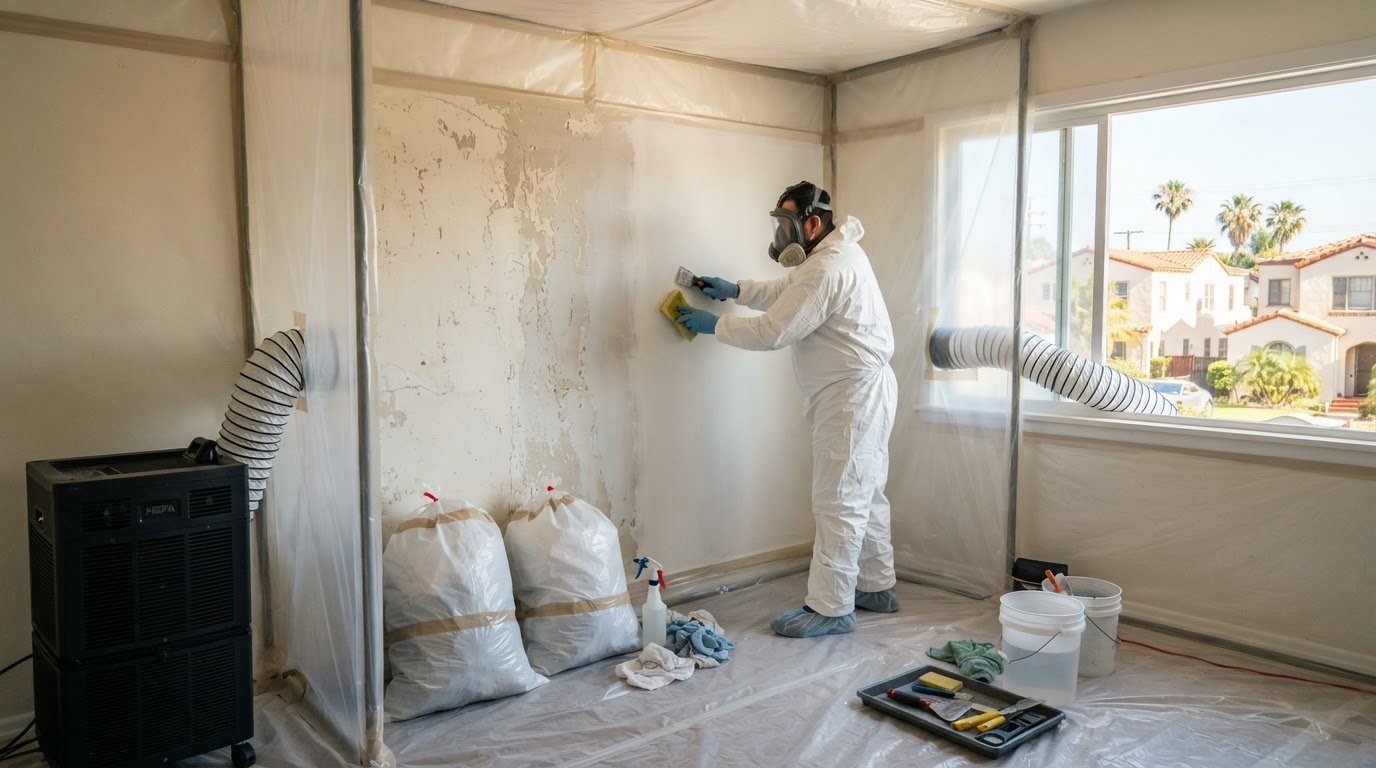
Professionals combine equipment with containment rather than relying on a household vacuum or plastic sheeting alone. HEPA-filtered vacuums capture fine particles during cleanup, while negative air machines help maintain airflow into the contained work area and filter exhaust. Barriers, controlled work zones, protective equipment, and careful waste handling help limit dust movement into adjacent rooms or ventilation pathways.
A gap in containment can allow debris to travel beyond the surface being treated. Dust may lodge in furnishings or collect near HVAC registers. Once lead particles spread, cleanup becomes more complex than the original paint work. Professional lead abatement coordinates the work area, protective measures, and cleanup as parts of one process.
Common DIY Mistakes That Increase Exposure
Dry sanding and high-temperature heat methods can generate hazardous dust or fumes. EPA’s Renovation, Repair and Painting (RRP) Rule restricts certain unsafe practices, including open-flame burning and high-heat removal, and requires lead-safe work practices for covered paid renovation work in pre-1978 housing and child-occupied facilities. The rule’s requirements depend on the work and setting. Inadequate protective equipment or incomplete barriers can add to exposure risk.
Before disturbing suspect paint, pause work and keep children and pregnant household members away from the area. Coastline Environmental Solutions provides professional lead abatement to help protect the home while the hazard is addressed. Learn more at Coastline Environmental Solutions.
Comparing Safe Lead Management Strategies
The right approach depends on the painted surface’s condition, how it’s used, and whether the goal is to control exposure or eliminate a hazard from a component. Renovation and abatement aren’t interchangeable. Renovation may involve repairing or updating a space, while lead abatement is work specifically intended to permanently eliminate a lead-based paint hazard. Either type of work can disturb paint, so the plan must address containment and safe handling.
Options range from interim controls, which reduce exposure but need ongoing attention, to removing or isolating affected materials. An assessment helps match the method to the surface and project requirements. Public funding programs, contracts, or property requirements may specify particular controls or documentation, so the selected method should align with those terms rather than assume one strategy suits every home.
Full Abatement: Removing the Hazard
Full abatement aims to permanently eliminate the hazard from the treated component. Depending on the material and site conditions, this may involve removing lead paint down to the substrate under controlled conditions, or removing and replacing the affected component. Paint removal involves more than stripping a surface: the work area, debris, and cleanup must be managed to prevent lead dust from spreading.
This approach may suit extensively deteriorated paint, components that are difficult to maintain, or project requirements calling for permanent hazard elimination. In Lakewood or Cerritos, a record of completed abatement can help explain the work during a future sale, but it doesn’t guarantee a higher resale price or replace required disclosures. Keep records of the work and any clearance results to document the condition of treated areas.
Encapsulation, Enclosure, and Interim Controls
Encapsulation uses a specialized coating designed to bond with and cover lead paint. It may suit a stable, well-adhered surface that isn’t exposed to impact, moisture, or frequent friction. It’s a poor fit for peeling paint, damp areas, or moving surfaces such as window tracks. Standard latex paint isn’t automatically a lead encapsulant. The product must be intended for that use and suitable for the surface. Encapsulated areas also need periodic monitoring for damage or separation.
Enclosure covers the painted surface with a barrier, such as drywall indoors or siding outside. It can limit contact while leaving lead paint in place, so later repairs or demolition must account for the concealed material. Interim controls, including careful maintenance and targeted repairs, reduce exposure in the short term but don’t remove the underlying hazard. They work only when surfaces remain managed and monitored.
When Replacement Makes Sense
For deteriorated or high-friction windows and doors, replacing the affected component can be a durable way to remove that source of lead paint. It can be a strong long-term option, but surrounding materials may also need assessment and controlled handling. During broader renovations, coordinating lead work with professional asbestos removal can help organize hazardous-material controls when both hazards are present. Safe lead based paint removal means choosing a method that addresses the actual condition, not just covering what’s visible.

The Step-by-Step Professional Abatement Process
Professional abatement follows a planned sequence: assess conditions, isolate the work area, control dust during removal, then clean and verify the space. The exact plan depends on the building and affected materials. Each phase matters because incomplete controls can let lead debris travel beyond the surface being treated.
- Inspect and establish a baseline. The team reviews the affected surfaces and work area, identifies potential pathways for dust to spread, and determines what testing is appropriate. Indoor air quality testing can help document conditions, but it doesn’t replace post-work dust-wipe clearance testing.
- Contain the area. Workers isolate the work zone with barriers and seal openings that could allow dust to migrate. HVAC vents in or near the work area are sealed, and the system may be shut off during work to limit air movement through the home.
- Remove or treat paint using controlled methods. Depending on the material and project plan, this can include wet scraping or chemical stripping. The aim is to limit airborne dust while collecting paint and debris as work proceeds.
- Clean and verify. Crews use HEPA-filtered equipment and wet cleaning methods, followed by a visual review and dust-wipe sampling where required for clearance.
Containment and HEPA Filtration
Heavy plastic sheeting, sometimes specified at 6 mil for a particular job, can cover floors and isolate surfaces. Appropriate materials depend on the work plan. Sticky pads at the entry can catch debris from footwear, but they don’t replace protective barriers or careful movement in and out. A HEPA-filtered air scrubber draws air through high-efficiency filters to capture airborne particles. When configured for the work zone, it can support negative pressure to help keep dust from escaping.
Post-Removal Verification and Clearance
A dust-wipe sample is collected by wiping a defined surface area with a prescribed wipe, then sending the sample to an EPA-accredited laboratory for analysis. It checks for residual lead dust, not just whether the painted surface looks clean. Under federal standards effective January 12, 2026, post-abatement clearance levels are 5 µg/ft² for floors, 40 µg/ft² for interior window sills, and 100 µg/ft² for window troughs.
Clearance sampling is required when applicable abatement standards, contracts, or programs call for it. An independent, appropriately certified clearance professional provides a separate assessment of the finished work. In California, lead clearance inspections require relevant certification. Keep the report with your property records to document sampled results and any follow-up work. If results don’t meet applicable levels, additional cleaning and retesting may be needed before the area is considered cleared.
Coastline Environmental Solutions provides lead abatement from assessment through verification. Request professional lead abatement.
Choosing a Certified Lead Abatement Contractor in Long Beach
Lead work calls for more than general renovation experience. In California, people performing lead hazard evaluations, preparing abatement plans, carrying out abatement, or conducting clearance inspections need the relevant California Department of Public Health certification. Firms performing covered renovation work also have EPA Lead-Safe Certified Firm requirements. These credentials address different types of work and roles, so safe lead based paint removal begins with understanding the project and applicable qualifications.
Local requirements matter, too. Long Beach, Huntington Beach, and Seal Beach may have different permitting or building-code considerations depending on the property and work. A detailed written scope should identify the surfaces involved, how the work area will be contained, how debris will be handled and disposed of, and what testing or clearance documentation is planned. A clear plan sets expectations for the work sequence and gives everyone a shared reference during the project.
- Confirm qualifications: Match the relevant CDPH certification to the work being performed and identify applicable EPA requirements.
- Review the scope: Look for clear descriptions of work areas, containment, dust control, waste handling, cleanup, and verification.
- Understand local coordination: Older homes may need project planning that accounts for existing materials, access, and applicable local rules.
A Methodical Approach to Safety
Coastline Environmental Solutions, Inc. provides hazardous-material services in Long Beach, Lakewood, Cerritos, Seal Beach, Huntington Beach, Wilmington, and San Pedro. A careful project starts by identifying the concern, then planning containment and removal around the property, and documenting the work and next steps. This method helps homeowners make informed decisions while keeping the practical goal in view: controlling the hazard and restoring safe use of the space.
Lead concerns can surface during other repairs. If flooding affects older painted materials, water restoration needs to be coordinated with lead assessment and controlled handling so suspected paint isn’t disturbed unintentionally. Coastline provides water damage restoration alongside lead abatement, with each concern addressed according to the work needed at the property.
Preparing for an Inspection
An assessment may begin with a visual review of painted surfaces and project conditions. X-ray fluorescence (XRF) testing is one method used to check for lead in paint. The appropriate evaluation depends on the property and the question being answered. Before the visit, note peeling or damaged areas, planned renovations, and any locations of concern. Keep children and pets away from visibly deteriorated paint, and avoid scraping or sanding it before assessment.
For a pre-1978 home, a professional consultation can clarify the assessment, containment, removal, and verification steps relevant to your project. Coastline Environmental Solutions provides certified lead abatement and indoor air quality testing for homeowners across Long Beach, Lakewood, Cerritos, Seal Beach, Huntington Beach, Wilmington, and San Pedro.
Take the Next Step Toward a Safer Home
Protecting your home starts with a clear plan, not a rushed decision. If you suspect lead paint or are preparing to renovate an older property, arrange an assessment before disturbing painted surfaces. A defined path from evaluation to controlled work and verification can help you make informed choices and move forward with greater confidence.
Coastline Environmental Solutions, Inc. provides lead abatement for homeowners in Long Beach, Lakewood, Cerritos, Seal Beach, Huntington Beach, Wilmington, and San Pedro. For safe lead based paint removal, professional guidance can turn uncertainty into a practical plan tailored to your property.
Contact Coastline Environmental Solutions, Inc. to discuss lead abatement for your home and plan the next steps. A careful plan is a practical place to begin.
Frequently Asked Questions
Is it safe to live in the house during lead paint removal?
It depends on the work area, containment, and how the home is laid out. A contained project may allow residents to remain in unaffected parts of the house, while extensive work or shared ventilation may make temporary relocation safer. Follow the project-specific access instructions, especially if children or pregnant people live there. Don’t enter the work zone or move barriers, even briefly.
How much does professional lead abatement cost per square foot?
There isn’t one reliable per-square-foot figure for every project. An estimate depends on the affected surface area, paint condition, access, removal or control method, containment needs, and cleanup and testing requirements. A small window project and work across multiple rooms can have very different scopes. A written estimate should separate the work stages and identify included testing or documentation.
Can I just paint over lead-based paint to make it safe?
Not reliably. A new coat may temporarily cover sound, well-adhered paint, but ordinary paint isn’t necessarily a lead encapsulant, and it won’t stabilize peeling or moisture-damaged surfaces. If paint is rubbed by a door or window, the coating can wear again. Have the surface assessed before covering it, and keep treatment records so future repairs don’t disturb concealed lead paint unknowingly.
What is the difference between lead-safe renovation and lead abatement?
Lead-safe renovation focuses on controlling lead dust while paid repair or remodeling work disturbs painted surfaces. Lead abatement is specifically intended to eliminate a lead hazard, using an approved strategy such as removal, enclosure, or encapsulation. A kitchen remodel may require lead-safe work practices without removing every lead-painted component. The project goal and applicable rules determine which approach is needed.
How do I know if my Long Beach home has lead paint?
A home’s age can indicate whether testing is sensible, but appearance alone can’t confirm lead. In Long Beach and nearby communities, arrange an evaluation of painted components before renovation, particularly in older homes with original windows, trim, or doors. A qualified lead inspector can use XRF testing to assess paint, while laboratory analysis can answer specific sampling questions. Keep the results with the property records.
What happens if lead paint is disturbed during a remodel?
Stop the work and keep people and pets away from the affected area. Don’t sweep, use a household vacuum, or carry dusty tools and materials through the home. Secure the area and determine whether lead-safe controls or additional assessment are needed before work resumes. If dust may have reached adjoining rooms, testing can help define the cleanup area.
Does insurance cover the cost of lead paint removal?
Coverage depends on the policy, the reason the paint work is needed, and any applicable exclusions or endorsements. A policy may treat maintenance or planned renovations differently from damage associated with a covered event, so don’t assume abatement is included or excluded. Review the policy language and document the condition, cause, and proposed work. Keep inspection findings and written estimates together for any coverage review.
What is clearance testing and why is it necessary?
Clearance testing checks whether lead dust remains after abatement by collecting wipe samples from specified surfaces for laboratory analysis. It provides measurable evidence beyond a visual inspection, which can’t detect invisible residue. Under EPA standards effective January 12, 2026, post-abatement clearance levels are 5 µg/ft² for floors, 40 µg/ft² for interior window sills, and 100 µg/ft² for window troughs. Retain the report with your home records.