
09 Aug Mold Remediation in Orange County: The Professional Guide to Safe Removal
In California, visible mold isn’t just a common household nuisance; under Senate Bill 655, it’s a legal condition that renders a property substandard. When you discover a dark patch on the drywall or a persistent, musty odor, it’s natural to feel a sense of urgency mixed with anxiety. You’re likely concerned about the health of your family and the structural integrity of your investment, especially when many “quick fixes” fail to address the underlying moisture. For residents and property owners seeking mold remediation orange county services, or expert solutions across Southern California, the search shouldn’t feel like a gamble with your safety or your wallet.
This guide provides the professional clarity you need to navigate the restoration process with confidence. We’ll outline the essential steps of professional mold remediation, highlighting what to look for in a trusted specialist like Coastline Environmental Solutions, Inc., serving Orange County and surrounding areas. We’ll also explain why independent certifications are the true gold standard in a state that doesn’t issue formal mold licenses. By the end, you’ll understand how to identify a meticulous specialist who can resolve the root cause of moisture and provide a certified clearance report to ensure your home is truly safe again. We’ll show you how a methodical, science-based approach can return your property to normalcy with minimal disruption to your daily life.
Key Takeaways
- The technical protocol for mold remediation for Orange County properties involves establishing physical containment and negative air pressure to prevent spore migration.
- Successful restoration requires identifying and resolving the moisture source, especially in the high-humidity coastal climates of Huntington Beach and Seal Beach.
- Utilizing an independent professional for indoor air quality testing provides an objective, certified clearance report before you reoccupy the treated space.
- Navigating insurance coverage effectively depends on distinguishing between sudden water damage and long-term seepage within your specific policy.
- Selecting a specialist with IICRC certifications and decades of local experience ensures a thorough, long-term solution rather than a temporary fix.
Understanding Mold Challenges in Orange County Properties
Many residents believe Southern California’s arid climate naturally prevents microbial growth. This misconception often allows colonies to thrive undetected behind walls and under floorboards. Professional mold remediation orange county requires more than just scrubbing a surface; it’s a methodical hazardous material management protocol. True remediation involves the scientific process of physical removal and source identification rather than a superficial cleaning. Understanding Indoor Mold is the first step toward protecting your property from structural damage and health risks. It’s a discipline that demands strict containment and advanced filtration to ensure that spores don’t migrate to unaffected areas of the home.
The Coastal Humidity Factor
Living near the ocean introduces environmental challenges that differ significantly from inland regions. In cities like Huntington Beach and Seal Beach, the daily marine layer keeps outdoor humidity high, which frequently pushes indoor levels above 60 percent. This moisture creates a perfect breeding ground for spores on porous surfaces like drywall and insulation. Beachfront properties often experience heavy condensation on window frames and within wall cavities where air circulation is limited. Because these issues aren’t always visible, indoor air quality testing becomes a vital diagnostic tool to confirm if your home’s humidity is fueling a hidden problem. It provides the data necessary to adjust your climate control strategy and prevent a recurrence.
Slab Leaks and Hidden Water Intrusion
Orange County homes, particularly those built on concrete foundations, are uniquely vulnerable to slab leaks. These pinhole failures in copper piping release moisture directly into the foundation, where it wicks up into flooring and baseboards. In older neighborhoods across Long Beach, aging plumbing systems are a frequent source of sudden failures. Once a pipe bursts or a leak begins, mold can begin to colonize within a 48-hour window. This rapid onset makes immediate water damage restoration Long Beach services essential. When dealing with mold remediation orange county residents often find that HVAC systems are a hidden culprit too. Condensation from poorly maintained coils or blocked drain lines can saturate nearby building materials, creating an isolated ecosystem for mold to grow undisturbed. Understanding the health risks of mold from water leak exposure is critical, as even a slow drip behind a wall can trigger respiratory distress and other serious symptoms within days. Addressing these moisture sources is the only way to ensure a long-term solution for your property.
The Professional Mold Remediation Protocol: Step-by-Step
Executing effective mold remediation orange county properties require is a high-stakes engineering project that follows strict IICRC S520 standards. It’s a methodical process designed to protect the rest of your home while surgically removing the contamination. The protocol begins with professional assessment and moisture mapping. Technicians use thermal imaging and moisture meters to find exactly where water is hiding. Without this data, any cleanup effort is likely to fail as the root cause remains unaddressed. Once the perimeter is defined, the physical work moves through a series of controlled phases to ensure total recovery.
Containment and Negative Air Pressure
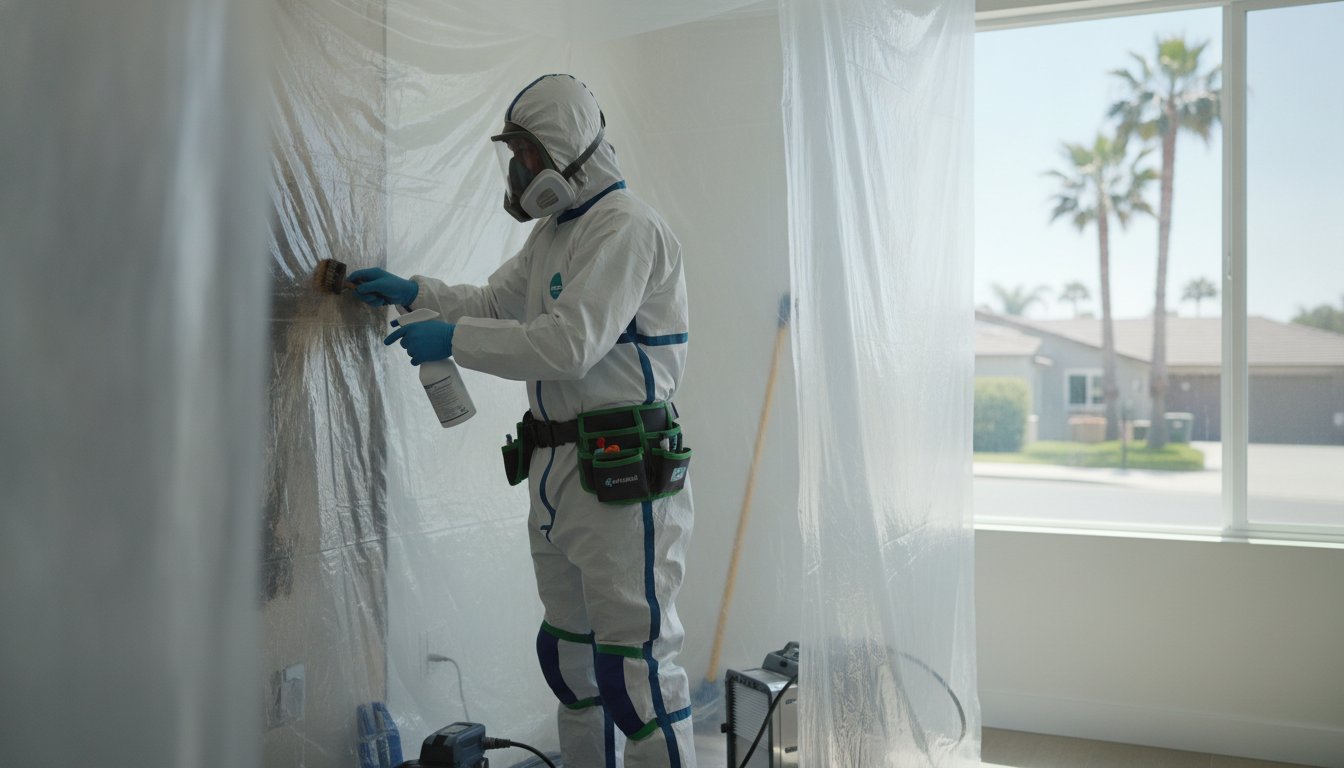
Technicians establish physical containment zones using 6-mil polyethylene sheeting to isolate the work area. This barrier prevents cross-contamination by keeping microscopic spores from drifting into unaffected rooms. Inside this zone, HEPA-filtered air scrubbers work continuously to capture airborne particles and refresh the air. Negative air pressure is a critical safety standard in IICRC S520 remediation that ensures air only flows into the containment zone, never out. This containment strategy aligns with the EPA Mold Cleanup Guidelines, which emphasize that controlling the spread of spores is just as important as the removal itself.
Following containment, the team utilizes HEPA filtration to scrub the environment before and during the physical removal of materials. This step is vital for maintaining indoor air quality and protecting the technicians and residents alike. If you’ve discovered a sudden growth after a leak, choosing a certified restoration partner ensures these technical barriers are managed correctly from day one.
Safe Removal of Contaminated Materials
The remediation team must distinguish between porous, semi-porous, and non-porous materials to determine what can be saved. Non-porous items like metal and glass are typically cleaned and sanitized. However, porous materials such as drywall, insulation, and carpeting act like a sponge for mold roots. These must be meticulously removed and bagged within the containment zone. For example, resolving mold behind bathroom tiles requires professional removal of the substrate because the mold often thrives in the moisture-damaged drywall or mortar bed behind the ceramic surface.
We adhere to a “Source Removal” philosophy because it’s the only way to ensure long-term safety. Some contractors might suggest fogging or “air washing” as a standalone fix, but these are never permanent solutions. Dead mold spores can still cause health issues and will return if the physical colony isn’t extracted. After the removal, the remaining structural elements undergo antimicrobial treatment and intensive structural drying to ensure the environment is no longer hospitable to microbial growth.
Evaluating Remediation Companies: Testing vs. Full-Service
Homeowners often face a difficult choice between hiring an independent tester or a full-service restoration firm. Some industry voices argue that using separate companies for assessment and cleanup prevents a conflict of interest. While this separation provides an extra layer of oversight, it can also create significant delays during a plumbing emergency. A full-service partner can transition immediately from moisture mapping to structural drying, which is vital when a pipe burst occurs in Huntington Beach or Seal Beach. Regardless of the business model you choose, every technician must adhere to CDC Mold Safety Recommendations to ensure that personal protective equipment and containment protocols are never compromised.
When selecting a provider for mold remediation orange county, local heritage and technical certifications are the best indicators of reliability. Look for firms that hold the Applied Microbial Remediation Technician (AMRT) designation from the IICRC. Since California does not issue state-specific mold licenses, these independent certifications are the only way to verify a contractor’s expertise. A company with over 40 years of local experience in the Long Beach area understands the specific building codes and coastal moisture patterns that affect your property. This longevity suggests a “meticulous restorer” mindset that prioritizes long-term safety over a quick, superficial fix.
How to Read a Mold Lab Report
A professional mold assessment results in a laboratory report that can be confusing for many property owners. The most important data point is the comparison between indoor spore counts and the outdoor baseline sample. If indoor concentrations of common spores are significantly higher than the air outside, it indicates an active growth source within the building. Technicians also look for “marker” species such as Stachybotrys or Chaetomium. These specific types of mold are heavy and sticky; they don’t usually appear in air samples unless there’s a chronic moisture problem nearby. A final clearance test is a mandatory step to prove the environment is safe for re-occupancy. To fully understand what these results mean for your property, reviewing the homeowner’s checklist for mold inspection and testing can help you interpret air sample data and laboratory analysis with confidence.
Questions to Ask Your OC Remediation Specialist
Before signing a contract, you should ask several targeted questions to verify the provider’s methodical approach. A dependable specialist will always provide a written scope of work that mirrors IICRC S520 standards. You should ask how they handle hidden mold discovered during the demolition phase, as microbial growth often extends further than the initial thermal imaging suggests. Additionally, verify if they can coordinate directly with your insurance adjuster. Managing a water damage claim is complex, and a seasoned professional can provide the documentation and moisture logs required to justify the remediation costs to your carrier.

Homeowner Preparation and Insurance Navigation
Preparing for mold remediation orange county services involves more than just clearing the calendar. It requires a collaborative effort to ensure the work area is accessible and the rest of your property remains protected. While the technical team handles the containment and removal, your role in preparing the environment can significantly influence the project’s efficiency. This phase is often where homeowners feel the most stress, particularly when balancing property access with daily routines and insurance requirements. A methodical approach to preparation ensures that the transition from discovery to restoration is as seamless as possible.
Preparing Your Home for Containment
Technicians need a clear, unobstructed path from the entrance of your home to the affected area. This “clean path” allows the team to move equipment and waste bags without the risk of tracking spores into unaffected rooms. You should remove any personal items, furniture, or wall hangings within five to ten feet of the workspace. If the mold is in a kitchen or bathroom, clear out cabinets and countertops completely. It’s also vital to manage your HVAC system; the unit must remain off during the setup and removal phases to prevent spores from being pulled into the ductwork and distributed throughout the house.
Temporary relocation is a common concern for residents in Huntington Beach and Seal Beach. While small, contained jobs may allow you to stay in the home, larger projects that involve the kitchen or the only bathroom often necessitate vacating the property for a few days. We recommend making these arrangements early to avoid last-minute disruptions. If you’re unsure about the scope of your specific project, contact Coastline Environmental Solutions for a detailed walkthrough of the expected timeline and site requirements.
Navigating the Insurance Maze
Insurance coverage for mold is often a point of confusion. Most standard California homeowners’ policies cover mold if it’s the direct result of a “sudden and accidental” water discharge, such as a burst pipe. However, they frequently exclude “gradual seepage” or mold caused by long-term maintenance issues. Documentation is the most powerful tool you have during this process. You’ll need a comprehensive “Proof of Loss” statement, which includes moisture logs, infrared photos, and a detailed scope of work. Because toxic mold remediation involves higher liability and specialized protocols, your carrier may assign an environmental adjuster to the case.
For those in rental properties, the context changes slightly. Under California Senate Bill 655, landlords are legally required to address visible mold that exceeds minor surface growth. If you suspect a problem in your rental, provide written notice to the property manager immediately. Coastline assists both homeowners and tenants by providing the scientific documentation required to justify the necessity of the cleanup to adjusters and property owners alike. This meticulous record-keeping ensures that the financial aspect of the recovery is handled with the same precision as the physical removal.
Why Coastline Environmental Solutions is the OC Choice
Coastline Environmental Solutions, Inc. has acted as a steady hand for Southern California property owners since 1985. With over 40 years of local experience, we’ve mastered the technical complexities of mold remediation orange county properties require to remain safe and habitable. Our approach is characterized by a “meticulous restorer” philosophy; we don’t just treat the visible symptoms of microbial growth. We utilize advanced technology, such as thermal imaging, to locate hidden moisture behind walls and under floorboards. Our teams deploy professional-grade HEPA scrubbers to purify the air and prevent cross-contamination. This commitment to precision ensures that every project meets the highest standards of environmental safety and hazardous material disposal.
Choosing a local expert means working with a partner who understands the specific environmental pressures of the region. From the high-humidity coastal zones of Huntington Beach and Seal Beach to the aging infrastructure in older residential neighborhoods, we provide a tailored response to every moisture challenge. We maintain a 24-hour emergency response for water damage because we know that stopping a leak immediately is the most effective way to prevent a large-scale mold problem. Our goal is always a return to normalcy with the documented proof of a successful clearance report.
A Legacy of Trust in Southern California
Our deep roots in the Long Beach, Lakewood, and Cerritos communities have allowed us to build a reputation based on reliability and technical expertise. We understand how local building codes and coastal weather patterns, such as the persistent marine layer, influence indoor moisture levels. Unlike general handymen who may lack specialized equipment or IICRC certifications, our team follows a rigorous, science-based protocol for every job. We never cut corners on safety because we know that a “quick fix” often leads to more expensive structural repairs in the future. This long-term dedication to property health is why we’re the preferred choice for homeowners who prioritize thoroughness.
Beyond Mold: Comprehensive Property Health
True property restoration requires a holistic view of the building’s environment. We integrate services like air duct cleaning to ensure that microscopic spores don’t linger in your ventilation system long after the physical remediation is complete. Our background in plumbing services also allows us to identify and repair the root cause of water intrusion, such as slab leaks or aging pipe systems, before they can fuel new mold colonies. This synergy between detection, repair, and restoration provides a comprehensive solution that protects both your investment and your family’s health. We manage the entire lifecycle of the recovery, from the initial leak detection to the final reconstruction of the affected space.
Schedule your professional mold assessment with Coastline Environmental Solutions, Inc. today to restore your property’s safety with a team you can trust.
Restoring Your Property’s Safety and Value
Professional mold remediation orange county requires a methodical approach that prioritizes long-term property health over temporary fixes. By understanding the unique environmental challenges of Southern California, from coastal humidity to hidden slab leaks, you’ve taken the first step toward a successful recovery. True restoration isn’t just about cleaning a surface; it’s about identifying the moisture source and following strict IICRC protocols to ensure your home is structurally sound and safe for your family. Whether you’re navigating an insurance claim or preparing for a site assessment, having a certified partner ensures every technical detail is managed with precision.
Coastline Environmental Solutions has provided this level of meticulous care to the community since 1985. As Certified Environmental Specialists, we’re dedicated to helping you return to normalcy with confidence. Our team offers a 24/7 emergency response for water damage that leads to mold, ensuring that your property is protected at any hour. Don’t let a moisture problem compromise your investment or your peace of mind. We’re here to act as your dependable local guardian throughout the entire restoration process.
Get a Professional Mold Remediation Estimate from Coastline Environmental Solutions and start the journey toward a healthy, mold-free environment today.
Frequently Asked Questions
How much does mold remediation typically cost in Orange County?
Costs for mold remediation orange county properties depend on the scale of the contamination and the accessibility of the moisture source. Factors such as the type of building materials affected, the size of the containment zone, and the duration of structural drying required will influence the final scope. Every project is unique; a professional assessment provides the technical data needed to determine the specific engineering controls and filtration levels required for your property.
Can I stay in my home during the mold remediation process?
Your ability to remain in the residence depends on the location and severity of the microbial growth. Small projects isolated by professional containment barriers often allow residents to stay in unaffected areas of the home. However, if the remediation impacts essential spaces like the kitchen or the primary bathroom, temporary relocation is usually necessary. Technicians prioritize safety by using negative air pressure to ensure spores don’t migrate during the removal phase.
Is black mold more common in coastal Orange County cities?
Coastal cities like Huntington Beach and Seal Beach experience persistent marine layers that frequently maintain indoor humidity levels above 60 percent. These environmental conditions specifically support the growth of moisture-heavy species like Stachybotrys chartarum, which is often referred to as black mold. Under California Senate Bill 655, any visible growth in a dwelling renders it substandard. Professional remediation is essential in these high-humidity zones to address both the mold and the underlying moisture.
Will insurance cover mold removal if it was caused by a slab leak?
Insurance coverage typically depends on whether the water intrusion was a sudden and accidental event. Most policies cover mold remediation if it results from a documented slab leak or a sudden pipe burst that was addressed immediately. If the damage is attributed to long-term seepage or a lack of maintenance, the claim may be denied. Providing your adjuster with professional moisture logs and infrared imagery is vital to documenting the sudden nature of the leak.
How long does the average mold remediation project take?
Most professional projects are completed within three to seven days. The initial phase involves establishing containment and the physical removal of contaminated materials, which typically takes 48 to 72 hours. The remaining time is dedicated to intensive structural drying and antimicrobial treatments to ensure moisture levels are below the threshold for future growth. If reconstruction is necessary to replace drywall or flooring, the timeline will extend based on the complexity of the repairs.
What is the difference between mold removal and mold remediation?
Mold removal is the simple act of cleaning or extracting visible growth from a surface. Mold remediation is a comprehensive scientific protocol that addresses the entire indoor environment. This methodical process includes moisture mapping to find the root cause, establishing physical containment zones, and utilizing HEPA air scrubbing to capture microscopic spores. True remediation ensures the problem won’t return by restoring the property to a dry, balanced state through verified technical standards.
Can I use a dehumidifier to kill mold myself?
A dehumidifier cannot kill mold or remove existing spores from your property. While these devices are effective at lowering humidity to prevent new growth, they don’t address the physical colony or the root moisture source hiding behind walls. Dead mold spores remain allergenic and can continue to impact indoor air quality. Professional extraction under strict containment is the only way to safely remove the contamination and ensure the environment is truly restored.
Do I need a mold inspection before I start remediation?
A professional inspection is essential to define the technical scope of work and identify hidden moisture drivers. Technicians use thermal imaging and moisture meters to map water intrusion that isn’t visible to the naked eye. This data ensures that the remediation plan is targeted and efficient. Since California doesn’t issue state licenses for mold, look for specialists with IICRC certifications to provide an authoritative assessment before any physical mold remediation orange county work begins. Following a structured mold inspection and testing checklist ensures you gather the right documentation and ask the right questions before committing to a remediation plan.