
13 Aug Commercial Air Duct Cleaning: The Business Owner’s Guide to Southern California IAQ (2026)
California buildings generate 25% of the state’s total greenhouse gas emissions, a reality that has pushed the 2026 Title 24 updates to the forefront of facility management. If you manage a property in Long Beach or Los Angeles, you likely view your HVAC system as a constant overhead drain rather than a strategic asset. However, neglecting commercial air duct cleaning does more than just circulate dust; it compromises your compliance with new duct leakage standards that now limit airflow loss to a maximum of 5%.
You’re right to worry about the hidden costs of poor indoor air quality, from employee absenteeism linked to Sick Building Syndrome to the 10 to 25% price hike on new A2L-compliant equipment. This guide provides a clear roadmap for navigating these technical shifts while protecting your bottom line. We’ll examine the latest NADCA 2025 standards, explain how professional HVAC hygiene reduces energy consumption, and detail the specific steps required to ensure your Southern California facility meets the state’s rigorous health and safety benchmarks for 2026.
Key Takeaways
- Understand how unique regional environmental factors like wildfire soot and coastal humidity necessitate a specialized approach to HVAC maintenance in Southern California.
- Learn why professional commercial air duct cleaning requires advanced negative pressure containment and source removal rather than simple surface dusting.
- Identify the specific hygiene protocols required for high-stakes environments, including sterile healthcare clinics and high-volume restaurant kitchens.
- Discover how to verify contractor credentials, such as NADCA certification and hazardous material licenses, to ensure regulatory compliance and safety.
- Explore the synergy between indoor air quality testing and duct maintenance to improve employee health and reduce long-term operational costs.
The Critical Need for Commercial Air Duct Cleaning in Southern California
Professional commercial air duct cleaning is far more than a routine janitorial task; it is a specialized environmental restoration process. In a commercial setting, this involves the methodical removal of accumulated particulate matter, microbial growth, and chemical residues from the entire HVAC ductwork, including air handlers, cooling coils, and internal plenums. When these systems are neglected, they become reservoirs for pollutants that are continuously recirculated throughout the building. For Southern California facility managers, maintaining these systems is a baseline requirement for operational safety and mechanical efficiency.
Local Environmental Challenges: From Huntington Beach to San Pedro
Facilities located between Huntington Beach and the Port of San Pedro face a unique set of atmospheric stressors. Coastal humidity and salt air are a constant presence. Salt is highly corrosive and, once pulled into the HVAC system, it can degrade internal components and sensitive heat exchangers. This moisture also creates a high-risk environment for microbial growth within dark, unconditioned plenum spaces.
Wildfire season adds another layer of complexity. Microscopic soot and ash from regional fires are pulled into commercial intakes, settling deep within the system. Unlike standard dust, this soot is often greasy and acidic. It clings to the interior of the ductwork for years, acting as a persistent source of odors and allergens long after the smoke has cleared. Standard filtration often fails to capture these fine particulates, making deep system cleaning the only effective resolution. Property managers who also oversee residential units in the region may find it useful to understand safe dust removal from vents as a first line of defense between professional service intervals.
The Business Case for Improved Indoor Air Quality (IAQ)
Protecting your facility’s indoor air quality is a strategic move for long-term asset management. In environments with sensitive inventory or high-end electronics, dust infiltration can lead to hardware overheating or product contamination. Maintaining a clean environment prevents these costly disruptions.
There is also a growing regulatory focus on commercial environments. Many modern commercial leases in California now include specific clauses regarding the maintenance of healthy indoor environments. Regular IAQ testing and duct hygiene ensure you remain in compliance with these health and safety standards. This proactive approach reduces the risk of liability and ensures that your facility remains a safe, attractive space for both employees and tenants.
The Professional HVAC Cleaning Methodology: Beyond Surface Dusting
Professional commercial air duct cleaning follows a rigorous, multi-stage protocol that prioritizes containment and technical thoroughness. Unlike residential systems, commercial HVAC infrastructures are complex, often spanning multiple zones and large-scale air handling units. The process begins with a comprehensive system inspection and IAQ baseline testing to identify specific contaminants and structural vulnerabilities. This initial diagnostic phase ensures that the cleaning plan is tailored to the specific debris load of your facility, whether that includes industrial dust or coastal salt deposits.
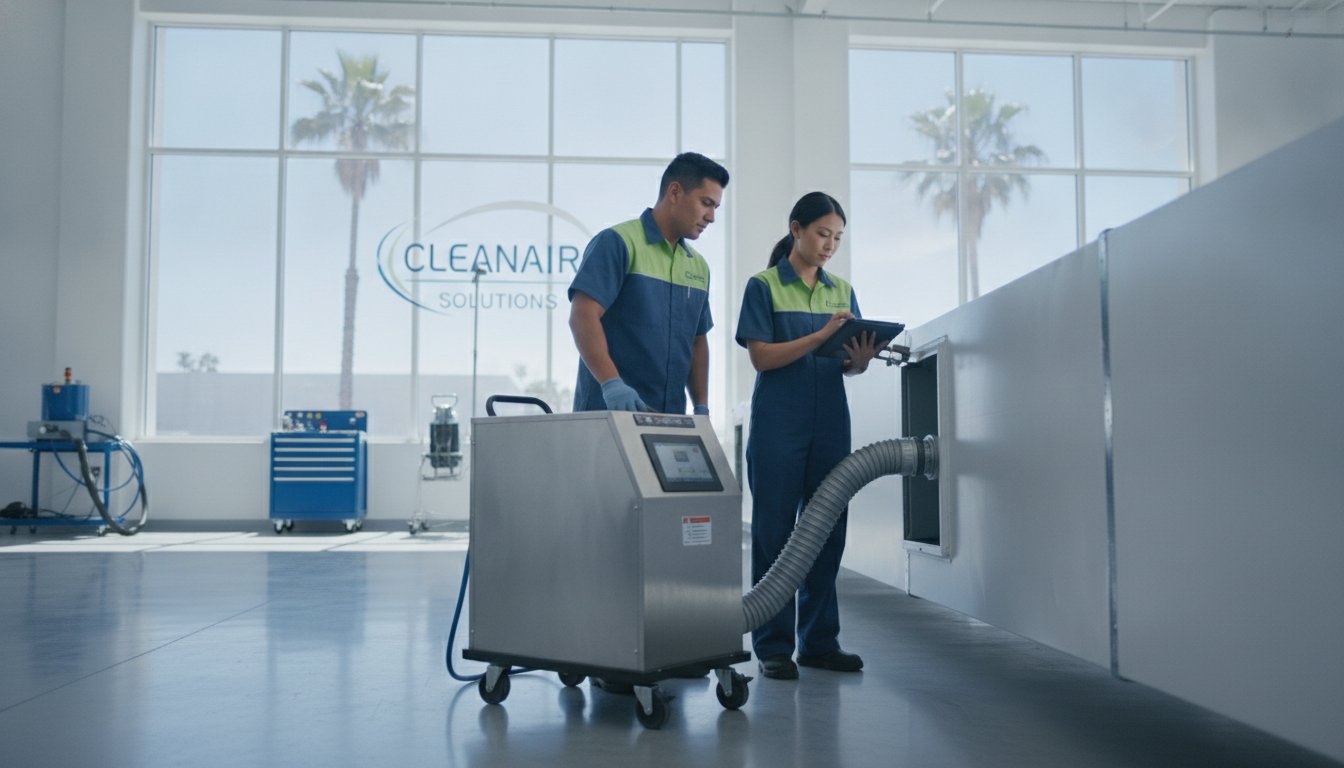
Establishing negative pressure is the next critical safeguard in the restoration sequence. By connecting high-powered vacuum units to the main trunk lines, technicians ensure that the entire system is under constant suction. This prevents cross-contamination, as all dislodged debris is pulled directly into a sealed filtration system rather than drifting into occupied office spaces. Once containment is verified, mechanical agitation involves the use of specialized brushes, air whips, and compressed air tools snaked through the ductwork to physically dislodge soot and microbial colonies. All captured material passes through high-volume HEPA filtration to trap microscopic particulates before the system is sanitized and verified for cleanliness.
Advanced Technology: HEPA Filtration and Negative Pressure
Standard shop-vacs or portable vacuums lack the static pressure and filtration capacity to handle the volume of a commercial facility. Without industrial-grade negative air machines, the agitation process would simply push dust into your workspace. These machines are essential for maintaining the health standards outlined in guidance from the EPA. True HEPA filtration is defined as a system capable of capturing 99.97% of all particles that are 0.3 microns or larger in diameter. This level of precision ensures that even the finest wildfire soot and allergens are permanently removed from your building’s environment.
Cleaning More Than Just the Vents
A common mistake in facility maintenance is focusing solely on visible registers. To achieve genuine efficiency gains, the cleaning must extend to cooling coils, air handlers, and plenums. When coils are caked with dust, thermal transfer is inhibited, forcing the system to run longer to reach target temperatures. Thorough cleaning of these internal components restores the system’s mechanical integrity and improves overall airflow. This is particularly vital for facilities where occupants suffer from sensitivities, as detailed in our guide on HVAC duct cleaning for allergies.
If your Southern California facility requires a technical, documented approach to air hygiene, our team at Coastline Environmental Solutions can provide a detailed indoor air quality testing assessment to begin the restoration process.
Industry-Specific Requirements: Tailoring HVAC Hygiene to Your Facility
Every facility has a unique environmental footprint. A manufacturing plant in Lakewood faces different challenges than a medical clinic in Long Beach. Effective commercial air duct cleaning must be tailored to these specific operational demands to ensure safety, regulatory compliance, and mechanical longevity. A “one size fits all” approach often misses the subtle contaminants that compromise specific industries, from chemical residues in labs to organic particulates in food service environments.
In retail and office spaces, the primary concern is often high-traffic dust and the aesthetic maintenance of visible supply vents. While these might seem like surface-level issues, accumulated dust in office plenums can trigger allergies and reduce employee morale. Conversely, industrial and manufacturing sites require the removal of heavy particulates and chemical residues. These substances can pose combustion risks or long-term health hazards if they’re allowed to settle and recirculate through the building’s ventilation system. Our methodical approach ensures that these specialized pollutants are contained and removed without disrupting your production schedule.
High-Stakes Environments: Medical and Laboratory Needs
Healthcare facilities operate under the most stringent sterile environment protocols. Adhering to ASHRAE standards is a requirement for patient safety and institutional accreditation. In these settings, the focus is on eliminating microscopic pathogens that standard cleaning might miss. This often involves an integrated indoor air quality testing protocol to verify that particulate counts remain within acceptable clinical limits. Mold and bacteria testing are essential components of the hygiene process for surgical centers and diagnostic labs. In these environments, even minor contamination can compromise patient outcomes or research integrity.
Hospitality and Multi-Unit Logistics
Managing air hygiene in hospitality and multi-unit housing requires a high degree of logistical coordination. In hotels and apartment complexes, we schedule services in phases to ensure minimal disruption to guests and residents. A critical but often overlooked link in these buildings is the connection between dryer vent cleaning and fire prevention. Clogged dryer ducts in centralized laundry rooms are a leading cause of structure fires in multi-unit housing. We prioritize these high-risk areas to protect both property and lives.
Restaurants face their own specific hurdles, particularly managing grease vapor that migrates from kitchen exhausts into the general HVAC system. In coastal areas like Seal Beach and Long Beach, the combination of grease and salt air creates a stubborn, sticky residue. This buildup requires specialized degreasing agents and mechanical agitation to prevent fire hazards. Maintaining a sanitary environment is essential for both staff health and meeting local health department codes. By addressing these industry-specific needs, we provide a thorough solution that goes beyond simple maintenance.

Key Factors to Consider When Choosing a Commercial Duct Cleaning Partner
Selecting a partner for commercial air duct cleaning is a critical decision that directly impacts your facility’s safety and your company’s liability. Many providers offer low-cost estimates that often result in “blow and go” services. In these scenarios, technicians only clean visible vents while leaving the main trunk lines and air handlers contaminated. To avoid these scams, you must verify that a contractor holds a current certification from the National Air Duct Cleaners Association (NADCA). This certification ensures they follow the 2025 ACR Standard for source removal, which is the industry benchmark for quality and completeness. Additionally, confirm the company is fully insured and bonded to protect your commercial assets against accidental damage during the cleaning process.
Transparency in quoting is another hallmark of a professional provider. A reputable firm provides a detailed scope of work that includes the entire HVAC system, not just the ductwork. If a quote seems suspiciously low, it likely lacks the necessary containment and agitation steps required for a thorough result. Demand a clear breakdown of the methodology and the specific equipment used to ensure you aren’t paying for a superficial service that fails to improve your indoor air quality.
The Importance of Environmental Certifications
Older commercial buildings in Long Beach and Signal Hill often contain hazardous materials that require specialized handling. If a standard duct cleaner disturbs asbestos-containing insulation or lead-based coatings, it can trigger a massive legal and health crisis for your business. This is why an asbestos license is vital for contractors working in these environments. You can learn more about these requirements in our Commercial Asbestos Inspection: SoCal Compliance Guide. Furthermore, mold remediation expertise is essential. Technicians who understand microbial growth can identify and neutralize spores during the cleaning process, preventing them from spreading throughout the building.
Logistics and Business Continuity
A professional partner understands that your business cannot stop for maintenance. When evaluating contractors, ask about their experience with after-hours or phased scheduling to minimize operational downtime. The use of proper containment barriers, such as Zip-walls and HEPA-filtered negative air machines, is non-negotiable for keeping your workspace clean during the service. Finally, evaluate the thoroughness of their post-cleaning report. A comprehensive document should include before-and-after photography and a verification of the system’s mechanical integrity.
If you are ready to ensure your facility meets the highest standards of hygiene and safety, contact our team to schedule a professional air duct cleaning assessment for your Southern California property.
Coastline Environmental Solutions: Professional Duct Hygiene in Long Beach
Since 1985, Coastline Environmental Solutions has operated as a dependable local guardian for commercial properties across Southern California. Our 35+ years of experience in the restoration industry provides us with a technical perspective that standard maintenance companies simply lack. We don’t view commercial air duct cleaning as a standalone janitorial task; we treat it as a critical component of environmental hygiene. Our team has deep roots in Long Beach, Signal Hill, and Lakewood, giving us a unique understanding of the local pollutants, from coastal salt air to the industrial particulates common in our regional hubs.
Our methodical approach integrates indoor air quality testing with deep system cleaning to provide a verifiable baseline of health for your facility. We maintain a strict commitment to environmental responsibility and regulatory compliance, ensuring that every project meets or exceeds state standards for safety and efficiency. This integrated strategy allows us to identify hidden issues before they become costly emergencies, protecting both your employees and your mechanical assets. By choosing a partner with a legacy of local service, you ensure your property is managed by experts who are as invested in the community as you are.
The Coastline Difference: An Environmental Perspective
The primary distinction at Coastline is our background in complex environmental remediation. We don’t just clean dust. Our IICRC-trained technicians are equipped to identify and remediate environmental hazards like mold, asbestos, and lead that often hide within aging HVAC systems. This restoration-first mindset ensures a more thorough decontamination process, as we understand how microscopic spores and hazardous fibers behave under airflow. Business owners have direct access to our senior project managers for complex commercial bids, ensuring that every technical detail is addressed from the initial inspection to the final verification. This high-level oversight is essential for maintaining business continuity during large-scale projects.
Next Steps for Your Facility
Protecting your building’s air quality requires a proactive strategy rather than a reactive fix. The first step in our process is a comprehensive on-site HVAC hygiene assessment. During this visit, we evaluate the specific load on your system and identify any immediate environmental risks. We then customize a maintenance schedule that fits the unique operational demands of your building, whether you manage a high-traffic retail center or a sensitive clinical laboratory. Taking control of your facility’s environment starts with a professional evaluation of your current air hygiene standards.
Ready to protect your team and optimize your system’s performance? Schedule your commercial air duct cleaning consultation with Coastline today to secure a cleaner, safer environment for your Southern California facility.
Securing Your Facility’s Environmental Future
Maintaining a healthy commercial environment in Southern California requires more than a standard maintenance checklist. It demands a technical understanding of how coastal humidity, wildfire soot, and regional energy standards impact your HVAC system. By prioritizing commercial air duct cleaning, you protect your employees from health risks while ensuring your facility remains compliant with the latest Title 24 energy efficiency mandates. This proactive approach reduces monthly operational costs and prevents the accumulation of hazardous particulates that compromise your indoor air quality.
Coastline Environmental Solutions has served as the dependable local guardian for Long Beach business owners since 1985. As certified environmental remediation experts, we provide the methodical, thorough care needed to handle complex property stressors. We’re also available for 24/7 emergency restoration support should a crisis arise. Taking these steps today ensures your building remains a safe, efficient, and productive space for years to come.
Ready to optimize your building’s health? Request a Free Commercial Air Duct Cleaning Quote and let our team restore your system to peak performance.
Frequently Asked Questions
How often should commercial air ducts be cleaned in Southern California?
Commercial buildings in Southern California should undergo a professional inspection every 2 to 3 years, with full cleaning performed every 3 to 5 years depending on the facility type. High-traffic retail spaces or medical clinics often require more frequent maintenance. Local environmental factors like seasonal wildfire ash and coastal humidity can accelerate debris buildup, making regular monitoring essential for maintaining air hygiene standards and system longevity.
Will commercial air duct cleaning disrupt my business operations?
Professional cleaning doesn’t have to interrupt your daily workflow. Most reputable contractors offer after-hours service or weekend scheduling to ensure business continuity. By utilizing a phased approach, technicians can isolate specific zones of a building, allowing your employees to remain productive in other areas while the HVAC system is being serviced. This methodical coordination ensures a return to normalcy with minimal operational downtime.
Can professional duct cleaning really lower my building’s energy bills?
Yes, commercial air duct cleaning can significantly reduce utility costs by restoring the system’s mechanical efficiency. When cooling coils and plenums are clogged with dust, the HVAC unit must run longer and work harder to maintain target temperatures. Removing this restrictive debris improves airflow and thermal transfer, which lowers energy consumption and extends the lifespan of expensive rooftop units and air handlers.
What is the difference between residential and commercial duct cleaning?
The primary differences lie in the scale of the infrastructure and the specialized equipment required. Commercial systems involve complex layouts, large-scale air handling units, and extensive trunk lines that residential tools can’t effectively reach. Additionally, commercial projects require more stringent containment protocols and higher-volume negative pressure machines to prevent cross-contamination across large office floors or industrial workspaces during the cleaning process.
Is it necessary to clean the air ducts after a commercial renovation?
It’s highly recommended to clean your ducts immediately following any commercial renovation or construction project. Fine particulates like drywall dust, sawdust, and masonry debris are easily pulled into the return air vents, where they settle deep within the system. If left unaddressed, these materials will recirculate throughout the newly renovated space, potentially damaging sensitive electronics and compromising the health of your building’s occupants.
How do I know if my building’s air ducts contain mold or asbestos?
You can’t safely identify these hazards through visual inspection alone. Professional indoor air quality testing and material sampling are required to confirm the presence of mold spores or asbestos-containing materials. Because these substances pose significant health risks, it’s vital to hire a firm with specialized environmental remediation licenses. They have the technical expertise to detect and contain these hazards without spreading them through the ventilation system.
What certifications should a commercial air duct cleaning company have?
A qualified provider should hold a certification from the National Air Duct Cleaners Association (NADCA), specifically the Air System Cleaning Specialist designation. This ensures they follow the ACR industry standard. For Southern California buildings, it’s equally important to verify that the team has IICRC training and the necessary state licenses for asbestos and lead abatement, ensuring they can handle any environmental complexities discovered during the process.
Does duct cleaning help with employee allergies and respiratory issues?
Removing accumulated allergens and pathogens from your HVAC system directly improves the health of your workforce. Ductwork often acts as a reservoir for pollen, dust mites, and microbial growth that trigger respiratory issues and Sick Building Syndrome. By eliminating these triggers at the source, you can reduce employee absenteeism and create a more comfortable, productive environment for everyone in the facility. Facility managers responsible for mixed-use or residential properties may also benefit from reviewing our guidance on effective dust removal from vents to address surface-level buildup between professional cleanings.