
08 Sep Cost of Mold Remediation in Long Beach: Antimicrobial Guide (2026)
Paying for mold removal twice is a choice rather than an inevitability, yet many homeowners in our coastal climate face a recurrence just months after a professional cleaning. If you’re currently researching the cost of mold remediation in Long Beach, you’ve likely encountered a confusing range of quotes and technical jargon that does little to ease your concerns about indoor air quality. It’s stressful to worry about whether a treatment is safe for your pets or if the spores will simply return with the next marine layer.
We’ve designed this guide to provide a transparent look at the 2026 pricing landscape and explain why antimicrobial treatments are the essential final step for permanent property safety. You’ll gain a clear understanding of the specific factors that drive local remediation expenses, the safety standards of modern industrial biocides, and the methodical process required to ensure your home remains a healthy environment. By focusing on IICRC standards and precision removal, we’ll show you how to move from a state of property emergency to a feeling of organized, long term resolution.
Key Takeaways
- Understanding the cost of mold remediation in Long Beach requires evaluating the depth of structural penetration and the specific square footage of affected materials.
- Identify how the unique Long Beach marine layer creates high-humidity conditions that demand extended structural drying times to prevent rapid regrowth.
- Learn why household bleach is ineffective for structural mold and how professional antimicrobial treatments prevent the “wicking effect” on porous surfaces.
- Explore the methodical five-step remediation process, starting with source identification and professional containment to isolate the work zone.
- Gain confidence in long-term property safety by prioritizing IICRC standards and precision physical removal over quick-fix chemical sprays.
Understanding the Cost of Mold Remediation in Long Beach
Professional mold remediation is far more than a simple surface cleaning. It is a methodical, multi-stage recovery process that involves containment, physical removal, and antimicrobial protection. When homeowners evaluate the cost of mold remediation in Long Beach, they are often looking at a specialized technical response designed to restore property safety and air quality. This process is governed by strict IICRC standards to ensure that the root cause of the issue is addressed rather than just the visible symptoms.
Several baseline factors influence the final quote for a project. The total square footage of affected material is the most obvious driver, but the complexity of the project often hinges on the degree of structural penetration. Before starting, it is helpful to understand What is Mold? and how its biological nature allows it to root into organic materials like drywall or wood. Surface cleaning might appear cheaper initially, but failed DIY attempts often lead to recurring costs and deeper structural damage, making professional intervention a more stable financial choice. Antimicrobial remediation is the application of registered agents to inhibit future microbial growth after physical removal.
Why Professional Remediation Costs Vary
The environment where the mold is located significantly impacts labor hours. Remediation in a confined crawlspace or a cramped attic requires specialized PPE and difficult maneuvering, which increases the time required compared to an open living room. Additionally, the type of material dictates the strategy. Non-porous surfaces like concrete can often be cleaned and treated, while porous materials like drywall or insulation usually require full removal and replacement. The final quote accounts for the use of advanced technology, including:
- HEPA-filtered air scrubbers to capture airborne spores.
- Negative air machines to prevent cross-contamination.
- Industrial-grade HEPA vacuums for final surface cleaning.
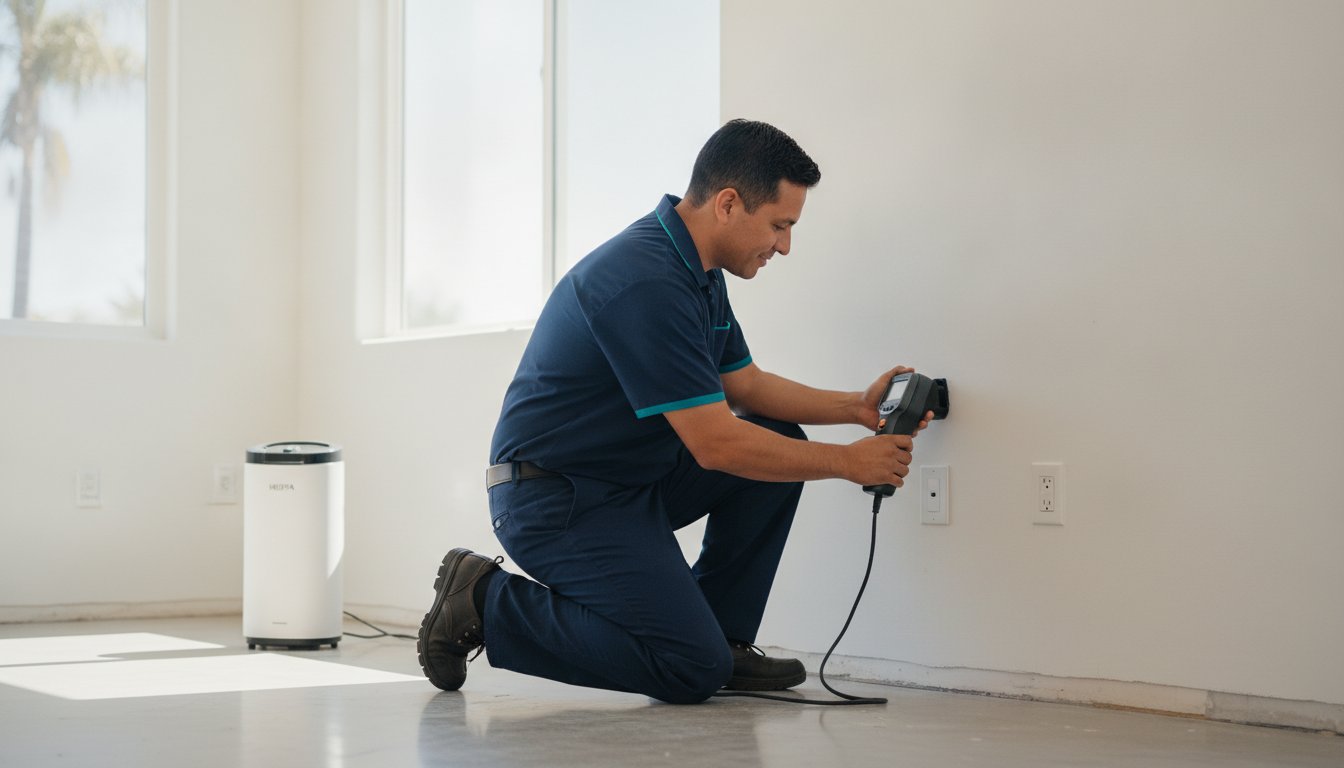
- Moisture meters and thermal imaging to confirm structural dryness.
Antimicrobials: A Cost-Effective Insurance Policy
Integrating an antimicrobial stage into the project is a strategic investment in prevention. While it represents a small percentage of the total cost of mold remediation in Long Beach, it serves as an insurance policy against the humid coastal climate. Professional-grade biostatic coatings differ from simple disinfectants because they remain active on the surface, creating a barrier that resists future colonization. These treatments must meet current 2026 EPA registration requirements for industrial biocides to ensure they are both safe for indoor use and effective against resilient strains. This provides long-term peace of mind, ensuring that the moisture-heavy marine layer doesn’t trigger a secondary outbreak once the restoration team completes the job.
Local Factors Influencing Long Beach Remediation Prices
Long Beach presents a unique set of environmental variables that directly impact the cost of mold remediation in Long Beach. Unlike inland cities where the air is typically dry, our coastal location is defined by the “marine layer.” This persistent morning fog and high ambient humidity create an environment where mold can thrive even after a surface cleaning. When moisture levels remain high in the air, the physical removal of mold is only half the battle. The local climate essentially forces a more rigorous approach to structural drying and environmental stabilization.
The Role of Coastal Humidity and Drying
Reaching a “dry standard” in a coastal home is more labor-intensive than in a desert climate. High ambient humidity means that standard ventilation isn’t enough to evaporate moisture from porous building materials. We often require industrial-grade dehumidification and high-velocity air movers to pull moisture from deep within the wall cavities. Because mold is a symptom of moisture, professional water damage restoration Long Beach is often the necessary first step before remediation can begin. Technicians use moisture mapping, including infrared cameras, to verify that the source of the intrusion is completely eliminated. Following the EPA Mold Cleanup Guidelines ensures that these moisture issues are handled according to federal safety standards.
Historic Homes and Lead/Asbestos Complications
Long Beach is home to beautiful historic districts, from the Craftsman bungalows of Rose Park to the Spanish Colonial Revivals in Belmont Heights. While these homes have character, they also have older building materials like lath and plaster. Remediation in these settings is more complex than in modern builds with standard drywall. If a home was built before 1978, there’s a high probability of encountering lead paint or asbestos-containing materials during the demolition phase of a mold project.
When mold removal requires cutting into walls, we must account for these hazardous materials. Discovering these elements changes the project scope, as it requires specialized containment and disposal protocols mandated by Los Angeles County. If you’re dealing with a property from the mid-20th century or earlier, it’s vital to work with a team certified in both mold and asbestos removal. This dual-threat approach ensures that one safety hazard isn’t replaced by another during the cleanup. For those managing older coastal properties, consulting a local remediation expert can help clarify the specific regulatory requirements for your neighborhood’s architectural style.
The Science of Professional Antimicrobials vs. Cheap Bleach
Household bleach is often the first tool homeowners reach for when they spot a dark patch on a wall, but it’s a fundamental error in structural restoration. Bleach is approximately 90% water. When you apply it to porous materials like wood or drywall, the chlorine remains on the surface while the water content is pulled deep into the material via the wicking effect. This moisture actually feeds the mold’s root system, or hyphae, leading to a more aggressive return once the surface appears white. Professional remediation utilizes industrial surfactants instead. These chemicals break the surface tension of the liquid, allowing the antimicrobial agents to penetrate deep into the wood grain where the mold colony actually lives.
The cost of mold remediation in Long Beach includes these specialized formulations because they’re the only way to ensure the job is done correctly the first time. According to research on the Cost of Mold Remediation, professional-grade chemicals are a standard part of a successful project. These agents are EPA-registered and formulated with low volatile organic compounds (VOCs), ensuring they’re safe for homes with children and pets while remaining lethal to fungal colonies. The cost of mold remediation in Long Beach reflects the precision of these technical steps, moving beyond the “quick fix” mentality of DIY solutions.
Biocides vs. Fungistatic Coatings
A methodical restoration plan uses a two-tiered chemical approach. First, biocides act as knockdown agents. They’re applied during the cleaning phase to neutralize active growth on contact. Once the material is physically cleaned, we apply fungistatic coatings. These aren’t just cleaners; they’re molecular barriers that bond to the surface. They create a hostile environment that prevents new spores from taking root, even if moisture levels temporarily rise. This dual-layer protection is a cornerstone of modern 2026 EPA standards for property restoration.
Why Dead Spores Still Cost You Your Health
A common misconception is that “killing” mold is the same as removing the threat. Dead mold spores are still allergenic and can contain mycotoxins that trigger respiratory issues. This is why “spray-and-walk-away” services are insufficient. Professional indoor air quality testing often reveals high spore counts even after a surface has been chemically treated. True safety requires physical removal through HEPA vacuuming and damp wiping. This process captures the microscopic debris that chemicals alone can’t eliminate, providing a return to a healthy living environment for your family.

The 5-Step Methodical Remediation Framework
A professional restoration project follows a structured sequence to ensure the environment is returned to a pre-loss condition. When you invest in the cost of mold remediation in Long Beach, you aren’t just paying for labor; you’re paying for a controlled, technical process that eliminates the hazard and prevents its return. This framework is designed to move your property from a state of emergency to a verified state of safety through five distinct phases.
- Step 1: Source Identification. We stop the water intrusion that feeds the colony. Whether it’s a pinhole plumbing leak or a failure in the roof’s flashing, the moisture source must be neutralized first.
- Step 2: Containment. We use 6-mil poly-sheeting and negative air pressure to isolate the work zone. This ensures that disturbed spores don’t migrate into unaffected areas of your home.
- Step 3: Physical Removal. This is the labor-intensive “tear-out” phase. We remove contaminated porous materials, such as drywall and insulation, that cannot be salvaged according to IICRC standards.
- Step 4: Antimicrobial Sanitization. After the bulk removal, we apply EPA-registered antimicrobial agents to all remaining structural surfaces. This treats the wood grain and prevents secondary growth.
- Step 5: Clearance Testing. A third-party professional conducts air and surface sampling to verify that the mold levels in the work zone are lower than or equal to the outdoor environment.
Negative Air Pressure and Air Scrubbing
Coastline ensures that mold spores don’t migrate to other parts of your Long Beach home by maintaining strict containment protocols. We set up HEPA air scrubbers that cycle the air within the containment zone multiple times per hour, capturing microscopic particles as small as 0.3 microns. This technical setup remains active throughout the antimicrobial application phase to scrub the air of any lingering debris. Containment is the most critical factor in preventing remediation failure, as it prevents the “spore bloom” that often occurs during DIY demolition. If you suspect a hidden issue, you should schedule a professional inspection before disturbing any surfaces.
The Final Clearance: Proving the Job is Done
The final deliverable of a professional remediation project is a successful clearance test. This “clearance letter” is a vital document for your property value and insurance claims, proving that the home is legally and scientifically safe for habitation. We prioritize third-party indoor air quality testing to avoid any conflict of interest, ensuring that an independent expert validates our work. A successful test confirms that the cost of mold remediation in Long Beach has resulted in a permanent solution rather than a temporary fix. This methodical verification provides the definitive peace of mind that your indoor air quality is fully restored.
Coastline Environmental: Long Beach’s Steady Hand Since 1985
Founded in 1985, Coastline Environmental Solutions, Inc. has spent four decades acting as a dependable local guardian for property owners in Southern California. We understand that discovering mold is a high-stakes emergency that requires more than just a quick fix. Our team serves Long Beach, Lakewood, Cerritos, and Seal Beach with a methodical approach designed to return your property to a healthy, pre-loss condition. By positioning ourselves as a steady hand during property crises, we ensure that every project follows a clear challenge-action-resolution flow. This precision is especially vital when calculating the cost of mold remediation in Long Beach, as it ensures you’re paying for a permanent solution rather than a temporary surface treatment.
Our unique strength lies in our dual expertise. We combine advanced plumbing detection with certified toxic mold remediation. Because mold is almost always a byproduct of a moisture failure, our ability to identify the plumbing source while simultaneously handling the hazardous abatement provides a seamless recovery path. This synergy reduces the stress of managing multiple contractors. It ensures that the root cause of the moisture is completely neutralized before the restoration begins.
Expert Environmental Abatement in Southern California
Our extensive history in the region has given us deep insight into local property types. We’ve handled everything from historic beach bungalows in Belmont Shore to modern high-rise commercial spaces downtown. Each building type has specific climate triggers that we account for in our remediation plans. Our 24/7 emergency response for water-related issues is a critical component of our service. By responding immediately to a flood or leak, we can often prevent minor moisture problems from evolving into major mold expenses, helping you manage the overall cost of mold remediation in Long Beach.
Schedule Your Professional Assessment
The most effective way to save on restoration is to act quickly. Mold can begin to develop within 24 to 48 hours of water exposure. A professional assessment provides a transparent, no-surprises cost estimate by identifying the exact scope of the contamination before work begins. This methodical inspection ensures that we account for every detail, from air scrubbing requirements to structural drying needs. It’s the only way to ensure the safety of your indoor air quality. Contact Coastline Environmental Solutions, Inc. for a methodical mold assessment in Long Beach today.
Restoring Safety and Air Quality to Your Coastal Property
Securing your home against mold is a methodical process that requires more than just a quick fix. By understanding the cost of mold remediation in Long Beach, you can make an informed decision that prioritizes long term safety over temporary surface cleaning. Effective restoration relies on the precision of physical removal and the application of industrial grade antimicrobials to combat our unique coastal humidity. Identifying the underlying moisture source remains the most critical step in ensuring that once the mold is gone; it stays gone.
Since 1985, our team has acted as a steady hand for homeowners in Long Beach, Huntington Beach, and Seal Beach. We provide 24/7 emergency response to ensure that water damage doesn’t turn into a structural crisis. Our certified experts are dedicated to a thorough, technical recovery that restores your peace of mind and your home’s air quality. Protect your property with professional mold remediation from Coastline Environmental Solutions. You don’t have to navigate property restoration alone; a permanent solution is well within reach.
Frequently Asked Questions
Do antimicrobial treatments kill mold permanently?
Antimicrobial treatments inhibit future growth but are not a substitute for moisture control. These agents create a hostile environment for spores after the physical removal phase is complete. If the underlying water intrusion isn’t resolved, mold can eventually return. Professional remediation focuses on stopping the water source first, then uses these registered agents to provide a long lasting barrier against new colonies in our humid coastal environment.
Is it safe to stay in my Long Beach home during antimicrobial treatment?
Most homeowners can remain in their properties because we utilize strict containment protocols and negative air pressure. We isolate the work zone with heavy poly sheeting to prevent spores and chemicals from migrating to living areas. However, if you have severe respiratory sensitivities or young children, you might choose to leave during the active application phase. Our low VOC industrial biocides are selected for their safety and efficacy in residential settings.
What is the average cost of mold remediation in Long Beach?
The cost of mold remediation in Long Beach fluctuates based on the degree of structural penetration and the specific type of building materials involved. Professional quotes account for the labor required to set up negative air containment and the duration of the drying phase. Because every home in our coastal region faces different humidity challenges, a methodical inspection is necessary to define the project scope. This ensures that the restoration plan addresses the triggers unique to your neighborhood.
Does insurance cover the cost of antimicrobial mold treatment?
Coverage depends entirely on your specific insurance policy and the root cause of the moisture intrusion. Many policies cover remediation if the mold resulted from a sudden, accidental water discharge like a burst pipe. However, mold caused by long term neglect or high humidity might be excluded. We recommend reviewing your mold endorsement or fungi coverage limits. We provide the detailed documentation and clearance letters often required by adjusters to process these claims.
How long does the professional antimicrobial application take to dry?
Most professional antimicrobial coatings are dry to the touch within two to four hours after application. However, a full cure typically takes twenty four hours depending on the ambient humidity levels in the home. In our coastal climate, we often use industrial dehumidifiers to accelerate this process and ensure the structural materials reach the required dry standard. We don’t remove containment until the surfaces are completely dry and air quality tests are finalized.
Can I buy professional-grade mold antimicrobials at a hardware store?
Consumer products found at local hardware stores are typically general disinfectants rather than industrial grade fungistatic coatings. Professional grade agents are concentrated formulas registered with the EPA specifically for structural remediation. These chemicals require specialized training and PPE to apply safely and effectively. Using the wrong product can lead to the wicking effect mentioned earlier, where moisture penetrates deeper into the wood grain while the active ingredients stay on the surface.
What is the difference between a disinfectant and a fungistatic coating?
A disinfectant is designed to neutralize active microbes on contact during the initial cleaning phase. In contrast, a fungistatic coating is a biostatic barrier that remains on the surface after it dries. This coating inhibits new mold spores from taking root and colonizing the material even if moisture levels fluctuate. Using both in a methodical sequence ensures that we not only address the current outbreak but also provide a layer of protection against future growth.
Do I need to treat my air ducts if I have mold in my walls?
Microscopic spores are lightweight and frequently enter the HVAC system during an active outbreak. If mold is present in your walls, it’s highly likely that the spores have migrated into the ventilation system. Treating the air ducts prevents the redistribution of contaminants after the primary remediation is complete. Including air duct cleaning in the cost of mold remediation in Long Beach is a vital step for homeowners who want to ensure their indoor air remains truly safe and healthy.