
31 Jul How to Identify and Handle a Slab Leak in Long Beach: A 2026 Homeowner’s Guide
What if the most significant threat to your home isn’t a Pacific storm, but a silent, pressurized stream of water running directly beneath your living room? A slab leak is more than a simple pipe failure; it’s an environmental emergency that can compromise your foundation before you even see a drop of moisture. If you’ve noticed a sudden spike in your utility bills or felt an unexplained warm spot on your tile, your concerns about plumbing leak water damage Long Beach are entirely justified. It’s a high-stakes situation that requires a methodical response to prevent structural instability and long-term mold growth.
You shouldn’t have to tear up your flooring just to confirm a suspicion. We’ll show you how to detect these hidden foundation leaks early and provide the exact steps to protect your property from both structural and environmental damage. This guide covers the entire recovery process, from using advanced acoustic technology for precise detection to finding a local expert who can manage both the technical repair and the essential cleanup. You’ll gain a clear understanding of the restoration timeline so you can move from a state of emergency back to a safe, dry home.
Key Takeaways
- Learn to use the “Meter Test” and identify physical floor “hot spots” to confirm a leak without invasive demolition.
- Understand how the specific soil chemistry and expansive ground in the area contribute to plumbing leak water damage Long Beach homes frequently experience.
- Discover how non-invasive electronic acoustic detection and thermal imaging pinpoint leaks with precision to minimize structural disruption.
- Recognize why a pipe repair is only the first phase of recovery, as trapped moisture requires specialized drying to prevent the onset of toxic mold.
- Determine the most effective repair strategy for your foundation, balancing immediate spot fixes with long-term environmental restoration.
Understanding Slab Leaks in Long Beach Foundations
A slab leak occurs when the pressurized water lines or drainage pipes encased within your home’s concrete foundation develop a breach. It is a hidden crisis that often goes unnoticed until the physical evidence becomes impossible to ignore. In our coastal environment, plumbing leak water damage Long Beach residents face isn’t just about a wet carpet or a high bill. It’s a fundamental structural threat. The water doesn’t just sit; it actively erodes the soil supporting your home, potentially leading to foundation settlement or “heaving” where the floor literally lifts and cracks.
Beyond the structural risks, a slab leak creates an immediate spike in indoor humidity. As water saturates the ground beneath your home, moisture evaporates through the porous concrete and enters your living space. This moisture doesn’t just make the air feel heavy. It provides the exact conditions necessary for mold to colonize your drywall and baseboards, turning a plumbing issue into a significant air quality concern.
Pressure Side vs. Drainage Side Leaks
Not all leaks are created equal, and understanding the source is the first step in a methodical recovery. Pressure side leaks occur in the lines bringing fresh water into your home. Because these pipes are under constant pressure, water escapes at a high velocity. This leads to rapid saturation of the sub-slab soil and immediate risks to your property’s integrity. These are high-stakes emergencies that require immediate professional containment.
Drainage leaks occur in the waste lines that carry water away from your home. These are often slower and much harder to detect because they only leak when water is actually running down a drain. While they might seem less urgent, the long-term impact is just as severe. Persistent moisture under the slab creates a breeding ground for bacteria and causes subtle, slow-moving shifts in the foundation that might not be visible for months.
The Anatomy of a Southern California Foundation
Many Long Beach neighborhoods feature historic homes built before the 1970s. During this era, copper piping was the industry standard. These pipes were often laid directly into the soil or encased in concrete without protective sleeves. Over several decades, the chemical reaction between the copper and the local soil minerals leads to pinhole leaks. The concrete slab acts as a heavy shield, which is excellent for stability but difficult for leak detection. It effectively masks the sound and sight of escaping water until the damage is extensive.
In modern restoration projects, we see a shift toward more resilient materials. While older homes struggle with degrading copper, many local property owners are opting for PEX (cross-linked polyethylene) during repairs. This flexible material is resistant to the corrosive soil chemistry found in our coastal region. It’s also better equipped to handle the minor seismic shifts common in Southern California without cracking, providing a more durable, long-term solution for your plumbing leak water damage Long Beach concerns.
How to Spot a Slab Leak: A Homeowner’s Identification Checklist
Identifying the early signs of a slab leak can save you from catastrophic foundation repairs later. Because these breaches are buried beneath inches of concrete, you won’t always see a pool of water. Instead, you’ll need to rely on your senses and some simple diagnostic tests. If you suspect plumbing leak water damage Long Beach property owners often face, acting within the first 24 to 48 hours is vital to prevent permanent structural shifts and the onset of mold.
Visual and Auditory Warning Signs
Your home will often provide subtle clues that the ground beneath it is saturating. Look for cracks that appear suddenly in your baseboards or flooring, especially in kitchens and bathrooms. These fractures suggest the soil is shifting or the concrete is being pressured from below. If you notice mildew or a musty odor near the floor level without a visible source of moisture, it’s a strong indicator of rising damp from the slab. In quiet moments, listen for the sound of hissing or rushing water coming from under your floorboards when all faucets are closed. This sound usually indicates a high-pressure line breach that requires immediate professional containment.
Hot Spots and Utility Spikes
One of the most definitive signs of a hot water line breach is a “hot spot” on your floor. If a specific area of your tile or laminate feels unusually warm to the touch, it means a broken pipe is heating the concrete from below. This is often accompanied by an unexplained spike in your gas or electric bill, as your water heater works overtime to keep up with the constant loss of heated water. If you see these signs, you can contact a local restoration professional to verify the source with technical precision before the moisture spreads further into your drywall.
Performing a DIY Water Meter Check
The water meter is your most reliable tool for confirming a leak without professional equipment. It acts as a sentry for your entire plumbing system. Follow these methodical steps to check your system’s integrity:
- Step 1: Turn off every water-consuming appliance in your home. This includes ice makers, dishwashers, and all indoor and outdoor faucets. Don’t forget to check that no toilets are running.
- Step 2: Locate your water meter, usually found in a concrete box near the sidewalk. Look for a small red or blue triangle, or a silver disk known as the leak indicator. If this dial is spinning while all water is off, you have an active, high-volume leak.
- Step 3: If the dial isn’t moving, record the exact reading and wait 30 minutes without using any water. Re-check the meter. Any change in the number confirms a slow, hidden breach that still threatens your foundation.
Why Long Beach Homes Experience Slab Leaks
Long Beach property owners face a specific set of environmental challenges that make their foundations particularly susceptible to pipe failure. While any home can develop a leak, the combination of coastal geography and historic architecture in neighborhoods like California Heights and Belmont Shore creates a perfect storm for plumbing leak water damage Long Beach residents must manage. Understanding these underlying causes is essential for moving from temporary fixes to long-term structural protection. It isn’t just about the age of the pipes; it’s about how those pipes interact with the unique geological profile of our coastal region.
The architectural history of our city also plays a significant role in these failures. Many homes in the historic districts were constructed using materials and methods that didn’t account for the long-term chemical aggression of the local soil. In these older properties, the plumbing is often at the end of its natural lifespan, making it more vulnerable to the environmental stressors unique to Southern California. When you combine aging metal with shifting earth, a leak becomes an expected event rather than a surprise. This reality makes a methodical approach to detection and restoration critical for addressing the root causes of plumbing leak water damage Long Beach homeowners see every year.
Local Soil Conditions and Pipe Corrosion
The ground in the Long Beach and Huntington Beach areas is exceptionally high in mineral and salt content. When copper pipes are buried directly in this soil without protective sleeves, a process called electrolysis occurs. This is a chemical reaction where the soil minerals essentially trade ions with the metal of the pipe, causing the copper to break down at a molecular level. Over time, this leads to “pitting” corrosion. These are tiny, localized areas of decay that eventually become pinhole leaks. Unlike a sudden burst, these leaks are slow and persistent, often saturating the foundation for weeks before any physical evidence reaches the surface.
Foundation Shifts and Ground Movement
Southern California is largely built upon “expansive” clay soil. This type of earth acts like a dense sponge. It swells significantly when it absorbs moisture and shrinks during our frequent dry spells. This constant cycle of expansion and contraction places immense physical stress on the rigid plumbing lines encased within your slab. Minor seismic shifts, which occur regularly across the region, further exacerbate this tension. When the ground moves even a fraction of an inch, a rigid copper line lacks the flexibility to move with it, often resulting in a clean fracture. Additionally, hydrostatic pressure, the force exerted by water pushing against the exterior of your foundation, can force moisture through even the smallest cracks, accelerating the degradation of your home’s infrastructure.

Professional Repair Options and What to Expect
Once you’ve identified the signs of a potential breach, the next step is a methodical technical assessment. Modern technology has significantly reduced the need for the invasive “search and destroy” methods of the past. For property owners dealing with plumbing leak water damage Long Beach experts use a tiered approach that prioritizes precision and structural preservation—a standard of one-stop service also seen in specialized agencies like Modic 無滴全防水解決有限公司. The goal is to resolve the immediate crisis while implementing a solution that accounts for the unique soil conditions of our coastal region.
Electronic Leak Detection Methods
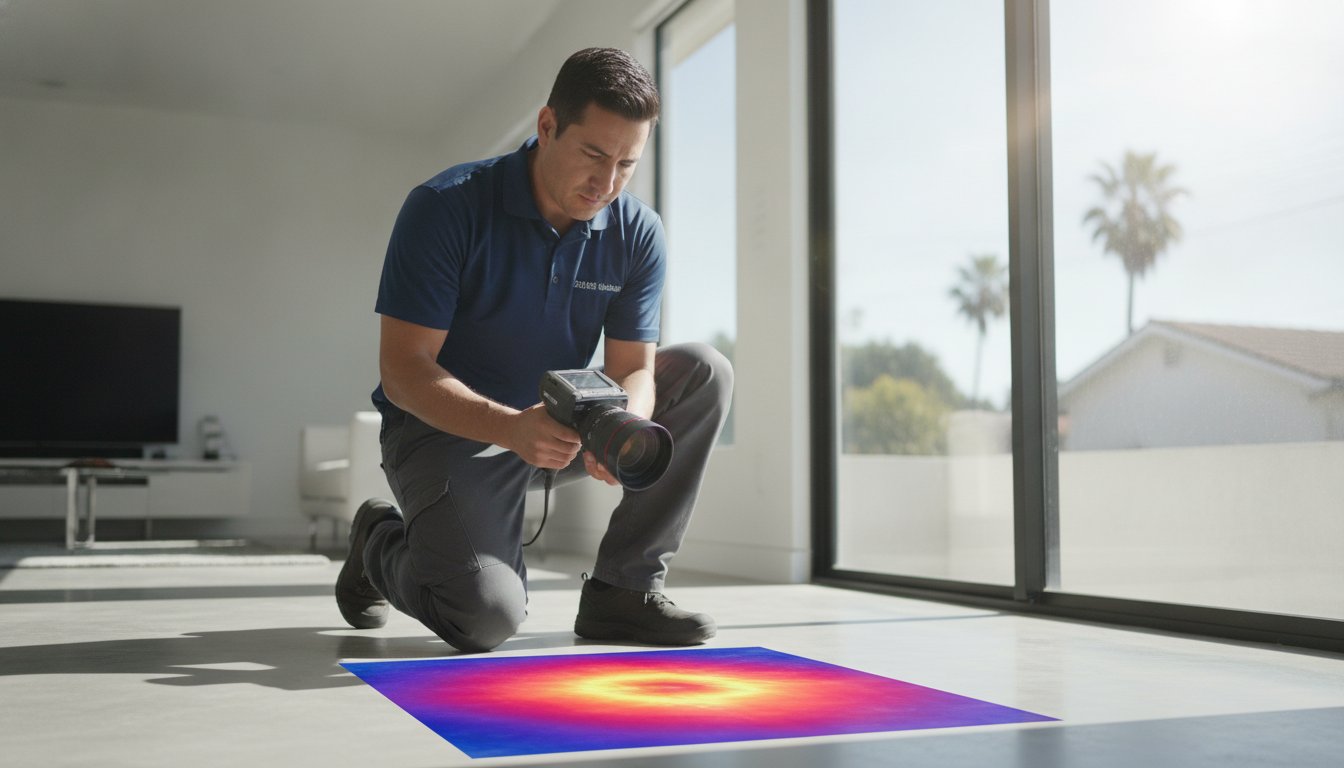
A professional technician begins by using electronic acoustic tools to pinpoint the exact location of the failure. These ultrasonic sensors allow the specialist to “listen” through several inches of concrete, identifying the specific frequency of pressurized water escaping from a pipe. This process is supplemented by thermal imaging cameras, which are particularly effective for hot water line breaches. By detecting the heat signatures radiating through the slab or behind walls, we can map the moisture plume without removing a single piece of flooring. This non-invasive detection is a critical first step. It ensures that any necessary demolition is limited to a very small, targeted area, saving you significant costs in floor restoration and reducing the overall stress of the project.
Comparing Repair Strategies: Spot Fix vs. Rerouting
Choosing the right repair method depends on the condition of your existing pipes and your long-term goals for the property. We typically evaluate two primary strategies:
- Spot Repair: This involves jackhammering a small section of the slab to access and replace the leaking segment of the pipe. While this is a direct solution, it can be disruptive and dusty. It is often the best choice if the rest of the plumbing line is in excellent condition and the leak was caused by a specific localized event rather than widespread corrosion.
- Rerouting: This is often the preferred method for older Long Beach homes. Instead of cutting into your foundation, the technician abandons the failing sub-slab pipe entirely. A new line is installed through the attic or behind the walls. This approach bypasses the corrosive soil altogether and prevents the “patchwork” risk where a repaired line simply fails in a different spot a few months later.
If your home has experienced multiple failures, a full repipe using modern PEX materials may be the most reliable way to secure your foundation. If you suspect a breach, our team provides specialized plumbing services to locate and resolve the issue before it escalates into a structural emergency. By choosing a comprehensive repair strategy, you ensure that your home remains dry and stable for years to come.
Beyond the Pipe: Restoring Your Home After a Slab Leak
A successful pipe repair provides immediate relief, yet it represents only the midpoint of a complete recovery. The water that escaped under pressure doesn’t simply disappear once the breach is sealed. It remains trapped within the porous concrete of your foundation and the soil beneath it. For property owners dealing with plumbing leak water damage Long Beach, ignoring this residual moisture is a common mistake that leads to secondary damage. Without a methodical drying process, that trapped water will eventually migrate upward, saturating your subfloor, carpets, and the base of your drywall. If your flooring has been affected, understanding the process of carpet cleaning after water damage Long Beach professionals recommend is essential to determining whether your carpets can be saved or must be replaced.
Concrete acts much like a dense sponge. Even after the source of the leak is stopped, the slab can hold thousands of gallons of water that continues to evaporate into your living space. This elevation in indoor humidity doesn’t just feel uncomfortable; it actively threatens the integrity of your finishing materials. Professional restoration is about more than just aesthetics. It’s a technical requirement to ensure your home’s structural and environmental health is fully restored after a sub-slab crisis.
For property owners seeking to understand the technical standards for addressing these deep-seated moisture issues, you can learn more about the professional methods used in comprehensive leak repair and structural protection.
Preventing Mold Growth Following a Leak
Mold spores are opportunistic and can begin to colonize damp materials within 24 to 48 hours of exposure. When a slab leak occurs, moisture wicks up through the foundation into the wooden framing and wallboard of your home. This hidden dampness creates an ideal environment for fungal growth behind your baseboards where it remains invisible to the naked eye. We use professional moisture mapping to identify these hidden pockets of saturation. If the moisture isn’t addressed immediately, you may eventually require toxic mold remediation to ensure your indoor air quality remains safe for your family. Early intervention with specialized drying equipment is the most effective way to avoid these costly environmental complications.
Comprehensive Property Restoration
The final phase of recovery involves returning your living space to its pre-loss condition. This includes the professional installation of new flooring, drywall replacement, and precision painting. Coastline Environmental Solutions, Inc. offers a distinct advantage by coordinating the initial plumbing fix with expert water damage restoration in Long Beach. This integrated approach eliminates the communication gaps that often occur when hiring multiple contractors. Our team performs final safety inspections and air quality testing to confirm that no structural risks or environmental contaminants remain. You move from a state of chaotic emergency to a fully restored, healthy home with the confidence that the job was handled with meticulous care from the first detection to the final coat of paint.
Securing Your Foundation and Restoring Your Peace of Mind
A slab leak doesn’t have to compromise your home’s long-term stability. By identifying warning signs like floor hot spots or using the meter test early, you take the first vital step toward structural preservation. The unique geological challenges of our coastal area mean that a standard plumbing fix is rarely enough. You need a methodical strategy that addresses both the mechanical failure and the environmental aftermath. Effectively managing plumbing leak water damage Long Beach properties encounter requires a partner who understands the relationship between soil chemistry, foundation integrity, and indoor air quality.
As you plan the final restoration of your property, considering high-performance flooring can prevent future moisture-related issues; for examples of durable industrial and commercial finishes, you may check out Polished Concrete Atlanta.
Coastline Environmental Solutions has served as a dependable local guardian since 1985. Our licensed, bonded, and insured specialists provide a 24/7 emergency response to ensure you aren’t left alone during a property crisis. We don’t just patch a pipe; we provide a meticulous restoration that returns your property to a safe, dry, and healthy state. Take control of your home’s recovery and move forward with confidence.
Request a Professional Slab Leak Inspection and Restoration Plan today. You can protect your investment and return to normalcy with the help of seasoned experts who are as invested in your home as you are.
Frequently Asked Questions
Does homeowners insurance cover slab leak repair in Long Beach?
Most standard homeowners insurance policies cover the water damage restoration and the cost to access the leak, but they often exclude the specific plumbing repair. It’s essential to review your policy’s “dwellings” and “personal property” sections to understand your specific limits. We recommend documenting the entire detection process to support your claim for plumbing leak water damage Long Beach coverage. Each carrier has different requirements for sudden versus gradual damage.
How much does it typically cost to detect a slab leak?
The cost of professional detection depends on the size of the property and the specific technology required, such as electronic acoustic sensors or thermal imaging. While prices vary across the industry, investing in precise detection prevents the much higher expense of unnecessary demolition. Technicians provide a methodical assessment to pinpoint the breach, ensuring that any subsequent repairs are targeted and cost-effective for the property owner.
Can I live in my house during a slab leak repair?
You can typically remain in your home during the repair process, though you should expect temporary water service interruptions. If the technician chooses a “spot repair” involving a jackhammer, the noise and dust can be significant during working hours. However, if the rerouting method is used, the work is mostly confined to the attic or walls, allowing for a much more comfortable and cleaner environment for your family.
Will a slab leak cause my foundation to crack?
Persistent water intrusion beneath your home can lead to significant foundation cracking over time. As water saturates the expansive clay soil common in our region, the ground swells and puts upward pressure on the concrete. Alternatively, if the water erodes the soil, the foundation may settle into the resulting void. This movement causes the rigid concrete to fracture, leading to visible cracks in your floors and walls.
How long does a typical slab leak repair take from start to finish?
A standard plumbing fix usually takes between one and three days to complete, depending on the chosen repair method. Rerouting a single line is often faster than a complex spot repair that requires digging into the foundation. However, the total recovery timeline includes the essential drying and restoration phases. These extra steps ensure that all trapped moisture is removed before new flooring or drywall is installed.
What happens if I ignore a suspected slab leak?
Ignoring a suspected breach leads to escalating utility costs and progressive structural degradation. The constant flow of water weakens the soil’s load-bearing capacity, which can eventually threaten the stability of the entire building. Furthermore, the high humidity levels created by the leak will inevitably lead to plumbing leak water damage Long Beach residents fear most, including widespread mold growth and compromised indoor air quality.
Is a warm spot on the floor always a slab leak?
A localized warm spot on your flooring is a primary indicator of a hot water line breach, though it’s not the only possibility. In some cases, a malfunctioning radiant heating system or a poorly insulated hot water pipe near the surface can cause similar symptoms. However, if the warmth is accompanied by a spinning water meter or a drop in water pressure, you should seek a professional acoustic inspection immediately.
Can a slab leak cause a mold problem in my home?
Mold growth is a common consequence of a slab leak because moisture naturally wicks up through the porous concrete foundation. This dampness enters your drywall, carpeting, and baseboards, providing the perfect environment for spores to colonize within 24 to 48 hours. Because this growth often starts behind walls, it can become a significant health hazard before it’s visible. Professional structural drying is required to stop the mold cycle after the pipe is fixed. For carpeted areas that have been exposed to this moisture, professional carpet cleaning after water damage in Long Beach is a critical step to eliminate contaminants and prevent further fungal growth before reinstallation.