08 Aug Professional Carpet Cleaning After Water Damage in Long Beach: The Restoration Guide
Is that lingering damp smell in your living room just a temporary nuisance, or is it a silent warning of a developing structural health crisis? Most Long Beach homeowners assume that if a carpet feels dry to the touch, the danger has passed, but moisture often remains trapped within the subfloor and padding. You’re likely feeling the stress of potential mold growth and the confusion of navigating insurance requirements while trying to avoid the massive expense of total floor replacement. It’s a high-stakes situation where a simple vacuuming isn’t enough to ensure your family’s safety.
We understand the urgency of returning your property to a state of normalcy. This guide reveals when your flooring can be saved, the health risks associated with inadequate drying, and how professional carpet cleaning after water damage Long Beach protects your investment. By following the ANSI/IICRC S500 Standard for Professional Water Damage Restoration, we move beyond surface-level aesthetics to provide deep, antimicrobial sanitization. You’ll learn about the critical differences between water categories, the technical precision of industrial-grade extraction, and the methodical steps required to eliminate musty odors and hidden pathogens for good.
Key Takeaways
- Identify whether your flooring is salvageable by understanding the critical differences between Category 1 clean water and contaminated Category 2 grey water.
- Learn why professional carpet cleaning after water damage Long Beach requires industrial-grade extraction and EPA-registered antimicrobials to prevent permanent mold growth.
- Utilize a clear decision framework to evaluate if restoration is viable based on the age of your carpet and the extent of moisture penetration.
- Discover why DIY rental machines often fail to reach the padding, potentially triggering secondary damage and lingering musty odors.
- Understand how a meticulous, multi-step restoration process ensures a safe, healthy environment rather than just a cosmetic fix.
The Science of Water Damage: Can Your Carpets Be Saved?
The initial response to a flood determines whether your home remains a safe environment or becomes a breeding ground for allergens. Understanding The Science of Water Damage is the first step in making that determination. Professionals classify water into three distinct categories based on contamination levels, which dictates the safety protocols required for restoration. These classifications help us decide if your flooring is a candidate for recovery or if it poses a health risk to your family.
Category 1, or clean water, comes from sanitary sources like a broken supply pipe or an overflowing sink. If we intervene immediately, these carpets are typically salvageable through advanced drying techniques. Category 2, known as grey water, contains significant chemical or biological contamination from sources like dishwasher discharge or washing machine overflows. This requires more aggressive sanitization to be safe. Finally, Category 3 or black water involves highly unsanitary sources like sewage or rising floodwaters. For health reasons, carpets affected by black water are non-salvageable and require immediate removal.
Regardless of the source, the 48-hour window is your most critical deadline. Mold spores are opportunistic; they begin colonizing damp organic fibers within 24 to 48 hours of exposure. Beyond this point, a standard cleaning often evolves into a more intensive mold remediation project. Acting fast isn’t just about saving the carpet; it’s about stopping a biological chain reaction in its tracks.
Assessing the Type of Water Intrusion
Identifying the exact source of moisture is the primary objective during Long Beach property restoration. A common plumbing leak water damage Long Beach may appear straightforward, but the path the water takes matters. If clean water flows through dusty wall cavities or over soiled subfloors, it quickly degrades into a higher risk category. Because carpet is a porous material, it acts as a trap for pathogens. We use specialized moisture meters to track the intrusion path, ensuring we aren’t just treating the visible spots but addressing the entire affected area.
The Role of Carpet Padding in Restoration
The biggest mistake homeowners make is assuming dry fibers mean a dry floor. Carpet padding is a dense, sponge-like material that serves as a perfect mold incubator when wet. It retains moisture long after the top layer feels dry. In many cases of carpet cleaning after water damage Long Beach, the carpet itself can be saved, but the padding must be discarded and replaced. Failing to address the padding leads to “wicking,” where deep-seated moisture and stains travel back up the fibers as they dry, causing recurring spots and lingering odors. Professional-grade extraction is the only way to pull moisture from these deep layers effectively.
Evaluating Restoration vs. Replacement: A Decision Framework
Deciding whether to salvage flooring or start over is a high-stakes choice for any property owner. It requires a detailed look at the water source, the saturation duration, and the health of the occupants. A systematic approach to carpet cleaning after water damage Long Beach ensures that the decision to restore is based on objective data rather than guesswork. While the surface may look fine, industrial-grade moisture meters and thermal imaging cameras often reveal hidden pockets of liquid trapped against the subfloor. These tools provide the technical insight needed to choose between professional restoration and total removal.
Age and replacement costs are significant factors in this framework. If a carpet is near the end of its typical lifespan, the cost of deep sanitization might not be the most economical choice compared to a fresh installation. However, for newer or high-quality materials, professional intervention is often the most cost-effective path. We also prioritize the health of sensitive occupants. Homes with children, elderly residents, or those with respiratory conditions require a higher standard of decontamination. Following established guidelines for saving carpets ensures that safety remains the primary focus throughout the recovery process.
When to Opt for Professional Cleaning
Restoration is usually the preferred path when the intrusion involves Category 1 or 2 water and is addressed within the first 24 to 48 hours. This timeframe is short enough to prevent microbial growth from taking a permanent hold in the fibers. High-value area rugs or carpets with significant sentimental value also justify the specialized care of professional carpet cleaning after water damage Long Beach. When structural drying equipment can be deployed quickly to stabilize the indoor environment, the chances of a successful recovery increase dramatically. If you’re unsure about the state of your flooring, a professional assessment can clarify your options before you commit to expensive replacements.
When Replacement is the Only Safe Option
There are scenarios where cleaning simply can’t guarantee a safe living environment. Any exposure to Category 3 water, such as sewage backups or contaminated groundwater, makes carpet replacement mandatory due to the biohazard risk. If the materials have remained saturated for more than 72 hours, the likelihood of deep-seated fungal growth is nearly 100%. In these instances, we often find that the subflooring itself requires toxic mold remediation to prevent long-term air quality issues. Prioritizing health over flooring costs is essential when the structural integrity of the home is at risk.
The Professional Carpet Restoration Process in Long Beach
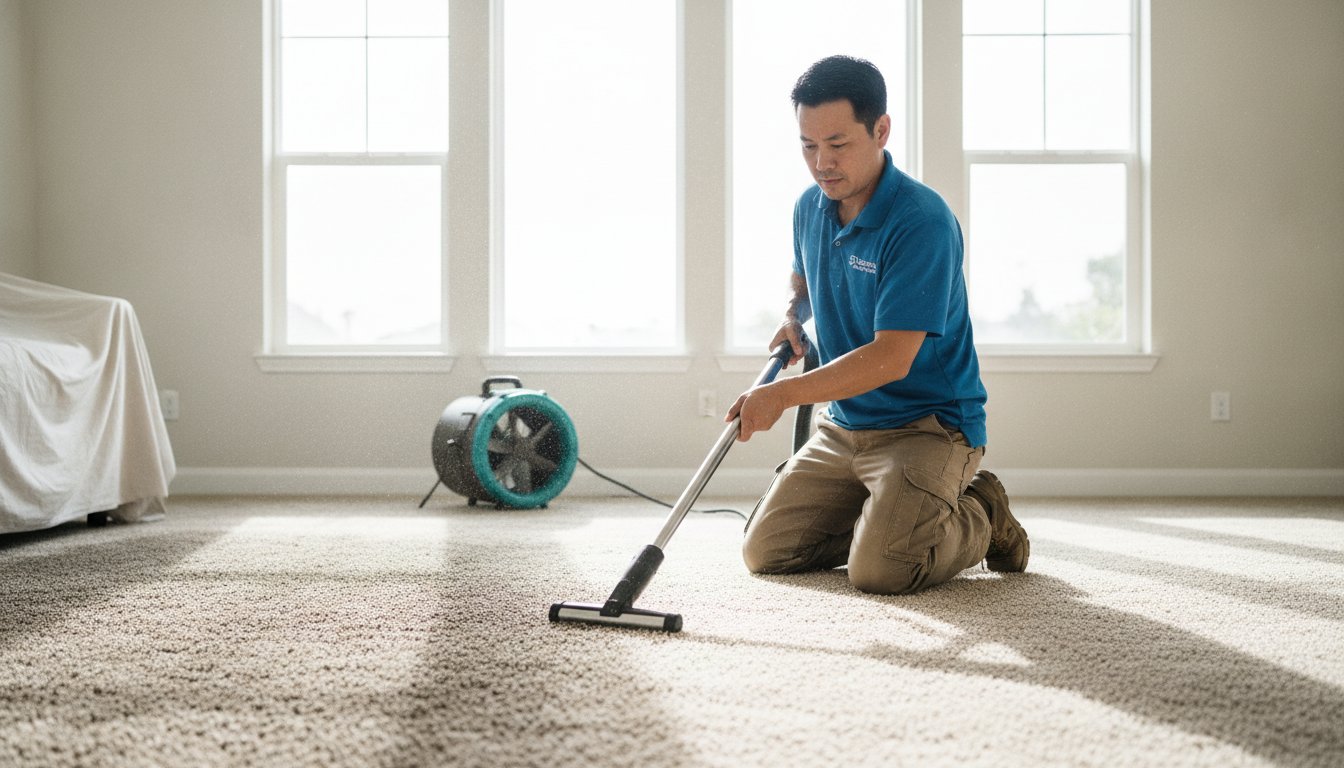
Recovery from an indoor flood requires a technical sequence that goes far beyond surface-level aesthetics. While a homeowner might be tempted to use a shop-vac, professional carpet cleaning after water damage Long Beach utilizes truck-mounted extraction systems. These units provide significantly more lift than portable rentals, allowing us to pull moisture from deep within the carpet backing and the subfloor beneath it. By removing the bulk of the liquid through high-volume suction, we drastically reduce the time the flooring remains in the danger zone for microbial activity.
Once the standing water is removed, the focus shifts to stabilization and sanitization. We apply EPA-registered disinfectants to neutralize bacteria that may have been introduced by the water source. This stage is followed by the strategic deployment of LGR (Low Grain Refrigerant) dehumidifiers and high-velocity air movers. We don’t just leave these machines to run blindly; our technicians use moisture meters and thermal imaging to track the drying goal of the subfloor. This meticulous monitoring ensures that the environment returns to its dry standard according to NC State Extension guidelines, preventing long-term structural issues.
Advanced Extraction and Sanitization
Effective restoration relies on high-heat steam cleaning to neutralize pathogens that thrive in damp environments. It’s vital to distinguish between deodorizing and sanitizing a water-damaged carpet. While deodorizing simply masks unpleasant smells with fragrances, sanitizing actually destroys the biological sources of those odors. Antimicrobial treatment is the application of chemical agents to prevent microbial growth after saturating events. This step is non-negotiable for Category 2 incidents where contaminants are present in the water supply.
Managing Coastal Humidity During the Drying Phase
Long Beach’s unique geography presents specific challenges for property drying. The dense, moisture-laden ocean air can slow down natural evaporation rates, making it difficult to achieve a 100% dry result without specialized intervention. We often utilize closed drying systems, where we seal the affected area from the outside environment to control the internal temperature and humidity levels. This prevents secondary damage, such as the wicking of moisture into drywall or the warping of baseboards. Successful restoration in our coastal climate requires a deep understanding of psychrometry, the study of air-vapor mixtures, to ensure that the air is thirsty enough to pull moisture out of the dense carpet fibers and keep it from resettling elsewhere in your home.

Why DIY Carpet Cleaning Fails After Water Damage
Many homeowners attempt to resolve flood issues using consumer-grade rental equipment. While these machines are suitable for light seasonal maintenance, they lack the industrial suction power needed for effective carpet cleaning after water damage Long Beach. A standard rental unit usually only cleans the top third of the carpet fibers. It leaves the dense padding and the subfloor beneath it saturated. This trapped moisture remains for days, providing the perfect environment for bacteria to flourish.
Over-wetting is another common DIY pitfall. Adding more water and household detergent to an already saturated floor can actually trigger mold growth in previously dry areas of the room. Standard household cleaners aren’t formulated with the necessary biocides to neutralize grey water contamination. If you notice a lingering musty odor after your efforts, it’s a clear warning sign. This scent is caused by microbial volatile organic compounds (mVOCs), which are gases released as mold and bacteria actively colonize your flooring.
The Hidden Danger of Incomplete Drying
A carpet that feels dry to the touch is often a deceptive metric for safety. Moisture frequently remains trapped against the wooden subfloor, leading to silent dry rot and structural instability. This hidden dampness significantly impacts your home’s health, often leading to indoor air quality testing failures even months after the initial event. Without professional moisture mapping, you’re essentially guessing about the state of your home’s foundation.
Risk of Permanent Staining and Fiber Damage
Improper cleaning techniques often cause irreversible damage to the carpet’s physical structure. Using detergents with the wrong pH levels can lead to “browning,” a permanent discoloration of the fibers. Area rugs are particularly vulnerable; they can suffer from “bleeding” where dyes run together if they aren’t dried rapidly with industrial equipment. For delicate textiles like handmade wool or silk rugs, the risk of permanent damage from improper drying underscores the importance of professional area rug cleaning services that use specialized techniques tailored to each material. Professional carpet cleaning after water damage Long Beach protects the long-term warranty of your flooring and ensures that the restoration process doesn’t cause more harm than the water itself. For a thorough, science-based recovery that prioritizes your family’s health, contact Coastline for professional restoration services today.
Coastline: Your Long Beach Partner for Emergency Restoration
Coastline Environmental Solutions, Inc. has served the Long Beach, Lakewood, and Seal Beach communities since 1985. With over 40 years of experience, we’ve mastered the complexities of property recovery, positioning ourselves as a steady hand during your most stressful moments. Our comprehensive care approach distinguishes us from standard cleaners because we address the entire incident from start to finish. We don’t just extract surface water; we identify the plumbing source, perform structural drying, and provide the final specialized carpet cleaning after water damage Long Beach requires to ensure long-term safety.
Our team holds specialized certifications in hazardous material management, including asbestos and lead abatement. This deep technical knowledge is critical when water intrusion affects older Long Beach properties where hidden environmental risks may be present. We also understand that the financial aspect of recovery is a significant burden for most homeowners. That’s why Coastline Environmental Solutions, Inc. provides direct assistance with insurance documentation. We document every step of the process with moisture maps and thermal imaging reports, providing the precise evidence your adjuster needs to streamline your claim and secure the necessary coverage.
A Meticulous Approach to Property Safety
We move from rapid response to a methodical, step-by-step restoration plan designed specifically for your property’s layout and materials. As a local, independent contractor, we’re deeply invested in the health and safety of our neighbors. We don’t provide quick, cosmetic fixes that leave your family vulnerable to secondary mold growth. Instead, our meticulous restorers focus on returning your home to a pre-loss, healthy condition. This process involves advanced detection, containment of affected areas, and high-level sanitization to eliminate the risk of lingering pathogens or musty odors.
Get Started with Expert Restoration
Taking immediate action is the only reliable way to prevent water damage restoration Long Beach from escalating into a full-scale mold crisis. Every hour that moisture remains trapped in your flooring increases the likelihood of permanent structural damage and rising replacement costs. By scheduling a professional moisture assessment today, you gain a clear understanding of the saturation levels and a technical roadmap for recovery. Don’t leave your property’s safety to chance or inadequate rental equipment. Contact Coastline Environmental Solutions, Inc. for immediate carpet restoration in Long Beach to protect your investment and restore your home’s air quality.
Protect Your Property with Expert Restoration Standards
Success in property recovery depends on technical precision and rapid intervention. We’ve explored how identifying water categories and acting within the critical 48-hour window determines whether your flooring is salvageable or a total loss. While surface-level drying might seem sufficient, professional carpet cleaning after water damage Long Beach is essential for reaching the trapped moisture within your padding and subfloor. This meticulous approach prevents the biological chain reaction that leads to mold colonization and structural decay, ensuring that your home remains a healthy environment for your family.
Coastline Environmental Solutions, Inc. has served as a dependable guardian for Southern California properties since 1985. Our IICRC Certified Restoration Technicians provide a 24/7 emergency response for Long Beach and surrounding areas, ensuring that every step of your recovery is documented and scientifically sound. You don’t have to manage the stress of insurance claims and hidden health risks on your own. Restore your home today with Coastline Environmental Solutions, Inc. and our professional carpet cleaning services to ensure a safe, mold-free result. We are ready to guide you back to normalcy with the thorough, long-term care your property deserves.
Frequently Asked Questions
Is it worth cleaning carpet after water damage or should I replace it?
Restoration is typically worth the investment if the intrusion involves Category 1 clean water and is addressed within 48 hours. If the carpet has been saturated for more than 72 hours or was exposed to Category 3 sewage, replacement is the only safe option. We use technical inspections to determine if the fibers and backing can be returned to a sanitary condition or if the health risks require total removal.
How long does it take for mold to grow in wet carpet in Long Beach?
Mold spores typically begin to colonize damp organic fibers within 24 to 48 hours of initial exposure. Long Beach’s coastal humidity can often accelerate this biological process by slowing down natural evaporation rates. Because microbial growth happens so quickly, immediate professional extraction and dehumidification are required to stabilize the indoor environment before permanent damage occurs to the flooring and subfloor.
Will my homeowners insurance cover professional carpet cleaning after a leak?
Most standard homeowners insurance policies cover professional restoration if the water damage resulted from a sudden and accidental internal event, such as a burst pipe or water heater failure. Coverage generally does not extend to gradual leaks caused by poor maintenance or external rising floodwaters. Our team assists with the process by providing the detailed moisture mapping and documentation your insurance adjuster needs to evaluate the claim.
Can sewage-contaminated carpet ever be professionally cleaned?
No, carpets affected by Category 3 black water or sewage backups must be discarded for health and safety reasons. Carpet is a highly porous material that traps pathogens, bacteria, and viruses that cannot be reliably eliminated through standard cleaning methods. The only way to ensure a safe environment is to remove the contaminated materials, replace the padding, and perform professional sanitization on the underlying subfloor.
What is the difference between steam cleaning and professional water restoration?
Steam cleaning is a maintenance service designed to remove surface soils, while professional water restoration is a multi-step mitigation process. For effective carpet cleaning after water damage Long Beach, we utilize industrial truck-mounted extraction and LGR dehumidifiers to pull moisture from the padding and subfloor. This technical approach addresses the deep-seated saturation that a standard consumer-grade steam cleaner simply cannot reach or resolve.
Can I stay in my home while my carpets are being dried and restored?
You can often remain in your home if the damage is limited to a small, localized area and the water source was sanitary. However, the restoration process involves high-velocity air movers and dehumidifiers that generate significant noise and heat. If the intrusion involves Category 2 or 3 water, or if mold growth is already present, we recommend vacating the affected areas to avoid exposure to airborne contaminants.
How do I know if the padding under my carpet is still wet?
You cannot accurately determine moisture levels in padding by touch because the top carpet fibers often dry much faster than the dense foam underneath. We use specialized moisture meters and thermal imaging cameras to “see” through the carpet layers and detect hidden pockets of liquid. These tools provide the precise data required to confirm that the entire flooring system has reached its dry standard.
Does professional carpet cleaning remove the smell of mold after a flood?
Professional restoration removes musty odors by neutralizing the biological source rather than masking it with fragrances. We apply EPA-registered antimicrobial agents that destroy the bacteria and fungi responsible for producing unpleasant gases. When combined with industrial-grade structural drying, this methodical sanitization process eliminates lingering smells and ensures the air quality in your home returns to a safe and healthy level.