
03 Sep Professional Soot Cleanup and Restoration: The Complete Recovery Guide
Most property owners view soot as a simple cleaning challenge, but it’s actually an aggressive, acidic pollutant that begins etching into glass, marble, and metal surfaces within minutes of a fire. If left untreated, these fine particles do more than just stain; they cause permanent corrosion and pose significant respiratory risks. You’re likely exhausted by the lingering smell of smoke and the fear that your indoor air isn’t safe for your family or employees. It’s a heavy burden to carry when you’re already facing the aftermath of a disaster.
Professional soot cleanup and restoration requires a meticulous, scientific approach to neutralize chemical residues and stop the clock on property damage. In this guide, we’ll explain the precise steps needed to remove visible stains and invisible toxins. You’ll learn how specialized equipment and certified techniques restore your environment, ensuring your home or business in Long Beach or the South Bay returns to its pre-loss state. We’ll cover everything from air quality testing to deep-tissue textile cleaning, providing a clear path from chaos to a controlled, healthy recovery.
Key Takeaways
- Understand how the acidic nature of soot causes permanent etching on glass and metal surfaces if it isn’t neutralized immediately.
- Master the methodical stages of soot cleanup and restoration, from initial thermal imaging inspections to the final stages of air quality testing.
- Learn why your HVAC system is a primary target for secondary contamination and how to prevent smoke odors from recirculating through your building.
- Differentiate between dry, oily, and protein-based soot residues to determine the most effective and safe cleaning methodology for your specific loss.
- See how coastal humidity in the South Bay area interacts with fire residues to create corrosive pastes that require specialized local expertise to manage.
What is Soot and Why is Professional Cleanup Essential?
Understanding the chemical profile of fire residue is the first step in a successful recovery. While many assume it is just a layer of ash, What is soot? is actually a complex byproduct of incomplete combustion. It consists of carbon, hazardous chemicals, and sticky resins that bond to surfaces in ways household dust never does. Unlike standard dust, which sits loosely on a shelf, soot is chemically active and often greasy. This composition creates a microscopic bond with the materials it touches, making it incredibly difficult to remove without professional intervention.
The primary danger of soot lies in its pH level. Most soot residues are highly acidic. When these particles settle on surfaces like glass, marble, or metal, they begin a process called etching. This isn’t just a surface stain; it’s a chemical reaction that can permanently pit and cloud mirrors or corrode delicate electronics within minutes of exposure. Without immediate neutralization, the damage becomes structural and permanent.
The Health Risks of DIY Soot Removal
Attempting to clean these residues without industrial equipment often does more harm than good. Soot particles are frequently categorized as PM2.5, meaning they are smaller than 2.5 micrometers in diameter. These microscopic particulates are small enough to bypass the body’s natural filters and penetrate deep into the lungs. Professional soot cleanup and restoration relies on industrial-grade HEPA filtration to capture these particles at the source. Standard household vacuums often lack the filtration necessary to trap soot, meaning they simply exhaust the toxic dust back into the air, spreading the contamination to unaffected rooms. Additionally, common household cleaners rarely possess the chemical properties needed to neutralize the acidic components of smoke, often resulting in smeared, permanent stains.
The 24-Hour Window: Why Timing Matters
Speed is the most critical factor in preventing total property loss in Long Beach and the surrounding coastal communities. Within the first 24 hours, soot causes the permanent yellowing of porous materials like plastics, drywall, and finished wood. Metal fixtures, particularly chrome and brass, will begin to tarnish and corrode if the acidic residue isn’t neutralized immediately. In the restoration industry, we categorize this as secondary damage. Secondary damage is the preventable destruction that occurs to a property’s structure and contents in the hours and days after the fire has been extinguished. Acting quickly with a professional soot cleanup and restoration plan is the only way to halt this progression and ensure a safe return to normalcy.
Identifying the Different Types of Soot Residue
Effective soot cleanup and restoration begins with a technical assessment of the fuel source. Not all smoke is created equal; the substance that burned determines the chemical makeup of the residue left behind. Misidentifying the type of soot can lead to disastrous results, such as using a water-based cleaner on oily residue, which effectively “sets” the stain into the wall. By identifying the fuel source, restorers choose the correct neutralizing agents to break the chemical bond between the soot and the property surface.
Wet soot is a frequent challenge in low-heat, smoldering fires. Because the fire lacks high intensity, the smoke contains more moisture and unburned resins, creating a thick, smeary coating. This type of residue is notoriously difficult to clean because any friction causes it to smudge deeper into porous materials. Understanding these variations is vital due to the documented health risks of soot exposure, which include long-term respiratory issues and cellular damage. Professional identification ensures that the most toxic components are handled with appropriate containment protocols.
Dry Soot vs. Oily Soot
Dry soot typically originates from high-heat fires fueled by wood or paper. It is often powdery and doesn’t smear as easily as other types. Restoration teams usually address this using specialized dry chemical sponges that lift the particles without liquid. Conversely, oily soot comes from burning plastics, rubber, or electronics. This residue is sticky and requires heavy-duty degreasing solvents to dissolve the synthetic resins. If you’re unsure which type of residue has affected your property, consulting a team specialized in fire and smoke damage repair is the safest course of action to prevent permanent staining.
Protein Soot: The Invisible Threat
Protein soot is the most deceptive form of fire damage. It occurs during kitchen fires when grease, oils, or meats burn at low temperatures. Unlike the black streaks seen in wood fires, protein soot is almost invisible, often appearing as a faint yellowish tint on walls or cabinets. However, the odor is pungent and persistent. Many homeowners make the mistake of simply painting over these areas. This is a temporary fix; as soon as the room warms up, the paint pores open, and the foul odor returns. True restoration requires specialized thermal fogging or ozone treatments to chemically neutralize the odor molecules at the source rather than just masking them.
The Methodical Soot Cleanup and Restoration Process
A successful recovery depends on a disciplined, multi-stage protocol that addresses both visible debris and microscopic threats. We begin with a comprehensive fire and smoke damage inspection to map the exact path of the smoke. Smoke behaves much like a fluid; it seeks out cooler areas and hidden voids, including wall cavities, attic spaces, and electrical outlets. Mapping this path ensures that no hidden residues are left behind to cause future structural decay or persistent odors. Our teams use this data to create a tailored restoration plan that prioritizes the most vulnerable materials first.
Containment and Air Filtration
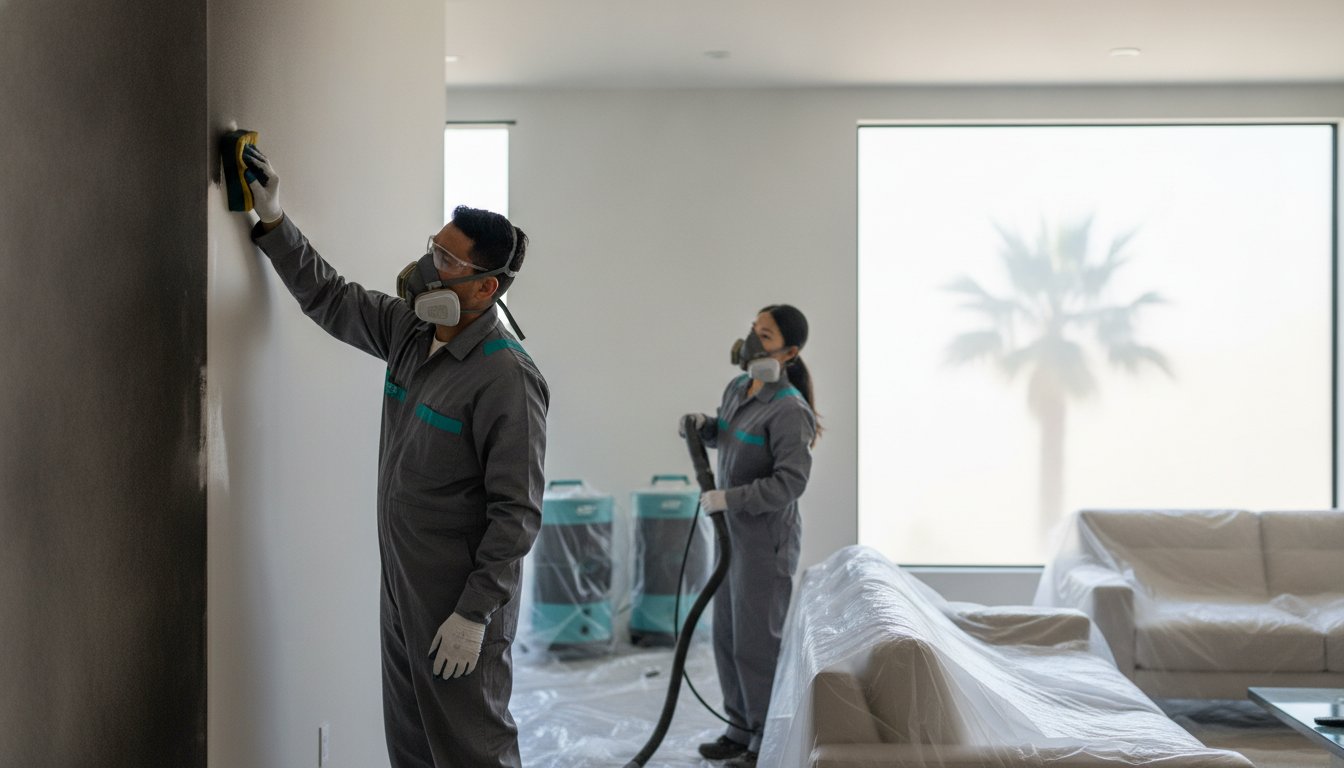
Once we define the scope of the damage, we establish strict containment zones to prevent cross-contamination. Professional soot cleanup and restoration involves setting up negative pressure environments using industrial HEPA-filtered air scrubbers. These machines continuously cycle the indoor air, capturing the microscopic particulates that are inevitably dislodged during the physical cleaning process. This containment is a critical safety measure because of the documented health risks of soot exposure, which can impact anyone entering the site without proper protection. To verify that the environment has returned to a baseline of safety, we often recommend Indoor Air Quality Testing once the physical debris has been removed.
Surface Neutralization Techniques
The physical cleaning phase follows a specific technical hierarchy. We always perform dry-cleaning methods before introducing any liquids to the environment. Using specialized chemical sponges made of vulcanized rubber, we lift dry soot from porous surfaces such as ceilings and drywall. If water or liquid cleaners are applied too early, they can dissolve the soot and drive it deeper into the material’s pores, making it nearly impossible to remove. This careful sequencing is what ultimately prevents long-term property damage like permanent staining or “ghosting” on walls.
After dry-cleaning is complete, we transition to wet-cleaning for non-porous surfaces. We use alkaline-based detergents specifically formulated to neutralize the acidic nature of smoke residues on metal, tile, and glass. For delicate items like electronics or artwork, we employ specialized vacuuming and fine-detail cleaning to remove particulates without damaging sensitive components. The final stage of our process involves molecular deodorization. We utilize advanced hydroxyl generators that produce atmospheric hydroxyl radicals. These radicals react with and break down odor-causing molecules at the chemical level, ensuring that the property isn’t just clean to the eye, but truly restored at a molecular level.

Addressing Secondary Contamination: Air Ducts and Textiles
Visible damage is only one part of the recovery equation. Because soot consists of the microscopic PM2.5 particles mentioned earlier, it travels effortlessly through air currents and settles far beyond the fire’s point of origin. One of the most significant challenges in soot cleanup and restoration is the way your HVAC system acts as a central distribution network. When a fire occurs, the return vents pull fine ash and acidic resins into the ductwork. Every time the air conditioner or furnace activates thereafter, the system redistributes these toxic particles into every room of the property. This cycle makes simple surface wiping entirely insufficient for creating a healthy indoor environment.
Textiles like carpets, area rugs, and upholstery also act as massive filters for the home, trapping heavy soot particles within their fibers. Once these particles settle, they bond with the fabric, creating persistent odors and potential skin irritants. Professional restoration focuses on deep extraction rather than surface cleaning. This approach ensures that the chemical residues are neutralized and removed, preventing the “re-bleeding” of smoke smells that often occurs weeks after a DIY cleaning attempt.
Post-Fire Air Duct Decontamination
Professional decontamination of your ventilation system involves a methodical inspection of the furnace filters and internal HVAC components where soot buildup is most concentrated. We use specialized agitation tools and high-powered HEPA vacuums to clear the entire path of the ductwork. Once the physical debris is removed, we often apply antimicrobial sealants to the interior surfaces. These sealants encapsulate any remaining microscopic residues, effectively preventing recurring smoke smells. This step is vital for protecting long-term respiratory health and ensuring the mechanical systems don’t continue to pollute your living or workspace.
Restoring Carpets and Area Rugs
Standard household vacuuming cannot reach the base of the carpet fibers where acidic residues reside. We utilize specialized hot water extraction and low-moisture cleaning methods to lift soot without pushing it deeper into the backing. For high-value or delicate pieces, our Professional Area Rug Cleaning Services provide the precise chemical balance needed to neutralize odors without causing water-related mold growth. This deep-tissue cleaning is the only reliable way to eliminate trapped smoke odors and fine ash from your home’s most absorbent surfaces. If you suspect smoke has compromised your ventilation or textiles, contact Coastline Environmental Solutions, Inc. for expert Air Duct Cleaning and textile restoration.
Emergency Soot Restoration in Long Beach and Southern California
Long Beach and Huntington Beach present unique challenges for soot cleanup and restoration due to high coastal humidity. When acidic soot particles encounter the moist air characteristic of the South Bay, they don’t just sit on surfaces; they absorb that moisture and transform into a thick, corrosive paste. This sludge is far more aggressive than dry ash because it effectively activates the chemical acids, allowing them to eat through paint, metal, and stone at an accelerated rate. For property owners in Lakewood or Cerritos, this means the window for successful restoration is significantly shorter than in drier inland climates. A 24-hour emergency response is the only way to halt this chemical reaction before it results in permanent etching.
Dedicated to restoring Southern California communities since 1985, Coastline Environmental Solutions, Inc. remains a steady hand for local property owners. We’ve built long-standing relationships with local insurance adjusters in San Pedro and the surrounding areas, which streamlines the documentation and approval process during a crisis. Our teams don’t just focus on the immediate mess; we look at the long-term integrity of your structure. We understand how the local climate influences the behavior of smoke, and we use that specialized knowledge to ensure your home or business is returned to a safe, pre-loss condition.
Coastal Considerations for Fire Damage
Beachfront properties in Seal Beach and Huntington Beach face a double threat following a fire. The salt-laden air is already naturally corrosive to metal fixtures and electronics. When soot is added to this environment, the chloride ions in the salt air act as a catalyst for the acidic soot, leading to rapid pitting and structural degradation of window frames, appliances, and decorative hardware. This synergy of salt and soot can ruin high-value oceanfront assets in a matter of days. Immediate neutralization of these surfaces is critical to prevent the accelerated degradation that occurs when coastal moisture meets fire residue.
Choosing a Certified Local Expert
There is a distinct value in choosing a local, independent contractor over a national franchise. Coastline Environmental Solutions, Inc. possesses specialized knowledge of Southern California’s specific building codes and strict environmental standards, which often differ from national averages. We are deeply invested in the health of our local neighborhoods and provide a level of meticulous care that a large-scale franchise simply cannot match. Our technical expertise in hazardous material management ensures that every stage of the recovery process is handled with precision and safety. If you’ve experienced fire or smoke damage, Contact Coastline Environmental Solutions, Inc. for a professional soot damage assessment. Our team is ready to act as your dependable local guardian, guiding you from the initial emergency to a fully restored, healthy environment.
Secure Your Property’s Future with Expert Restoration
Recovering from fire and smoke damage is a complex journey that extends far beyond the visible ash. You now understand that soot is a chemically active pollutant that requires precise neutralization to prevent permanent etching and secondary contamination. By addressing the specific fuel sources and ensuring your HVAC system is decontaminated, you protect both your property’s value and your family’s respiratory health. In the coastal environments of Long Beach and the South Bay, acting within the first 24 hours is the most effective way to halt the corrosive effects of humidity and salt air. Professional soot cleanup and restoration is a specialized science that ensures your environment is truly safe for occupancy.
Since 1985, Coastline Environmental Solutions, Inc. has stood as a dependable local guardian for Southern California. As certified fire and smoke damage experts, we provide a methodical 24/7 emergency response to handle even the most challenging recovery scenarios. Don’t let acidic residues cause lasting damage to your home or business. Get Professional Soot Restoration Help Now and take the first step toward a safe, thorough return to normalcy. We’re here to help you navigate this crisis with technical precision and reliable care.
Frequently Asked Questions
Can I use a regular vacuum to clean up soot residue?
No, you should never use a standard household vacuum to clean soot residue. Most consumer vacuums lack the filtration level necessary to trap microscopic soot particles, meaning they’ll simply exhaust these toxic particulates back into your indoor air. This process spreads contamination to unaffected areas of your property. Professional soot cleanup and restoration requires industrial HEPA-filtered vacuums that capture 99.97% of particles down to 0.3 microns, ensuring the air remains safe for your family.
How long does the soot restoration process typically take?
The duration of the restoration process varies significantly based on the severity of the smoke damage and the size of the property. A single-room kitchen fire in a Long Beach home might be fully restored within three to five days. However, a whole-house event requiring duct cleaning and textile restoration can take several weeks. Our team provides a specific timeline after the initial inspection to help you plan your return to normalcy.
Will my homeowners insurance cover the cost of professional soot cleanup?
Most standard homeowners insurance policies cover the cost of professional soot removal if the damage resulted from a covered peril, such as an accidental fire. Coastline Environmental Solutions has worked directly with local insurance adjusters in Lakewood and San Pedro since 1985 to streamline this process. We provide the detailed documentation and thermal imaging reports required by carriers to justify the necessity of specialized cleaning and air quality testing during your recovery.
Is it safe to stay in my home while soot cleanup is being performed?
It’s generally not recommended to stay in the property until the air quality has been professionally cleared. Soot particles are microscopic and can be inhaled deep into the lungs, posing serious health risks. During the soot cleanup and restoration process, our teams use industrial air scrubbers to remove these airborne toxins. Staying elsewhere during the initial containment and heavy cleaning phases ensures your safety and allows our technicians to work more efficiently.
Can soot damage be removed from clothes and curtains?
Yes, soot damage can often be removed from fabrics through specialized textile restoration techniques. Standard home laundering is usually insufficient because it can set the smoke odors and stains permanently. We utilize professional-grade extraction and ozone treatments to lift fine ash and neutralize odors from curtains, upholstery, and area rugs. Our process is designed to restore high-value items to their pre-loss condition without damaging delicate fibers or causing water-related mold growth.
Why does the smoke smell come back even after I cleaned the walls?
Smoke odors often return because the source of the smell is hidden within porous materials or structural voids. If you only clean the surface of the walls, soot trapped inside electrical outlets, wall cavities, or your HVAC ductwork will continue to off-gas. In coastal areas like Huntington Beach, humidity can also cause these hidden residues to react and release odors. True deodorization requires molecular-level treatments, such as hydroxyl generators, to break down the odor-causing particles.
What happens if soot damage is left untreated for more than a week?
Leaving soot untreated for more than a week often results in permanent property damage. Within days, the acidic nature of the residue begins to etch into glass and metal, causing irreversible pitting and clouding. Porous materials like plastics and drywall will experience deep yellowing that cannot be cleaned away. In our local coastal climate, the interaction between salt air and soot accelerates this corrosion, making immediate intervention essential to prevent the total loss of fixtures and electronics.
Do I need air quality testing after a fire even if I don’t see soot?
You should always perform indoor air quality testing after a fire, even if no soot is visible to the naked eye. The most dangerous soot particles are microscopic (PM2.5) and remain suspended in the air or hidden inside your ventilation system long after the flames are out. Testing provides scientific verification that your home in Seal Beach or Wilmington is safe for occupancy. It identifies invisible chemical residues and ensures that the restoration process was truly successful.