
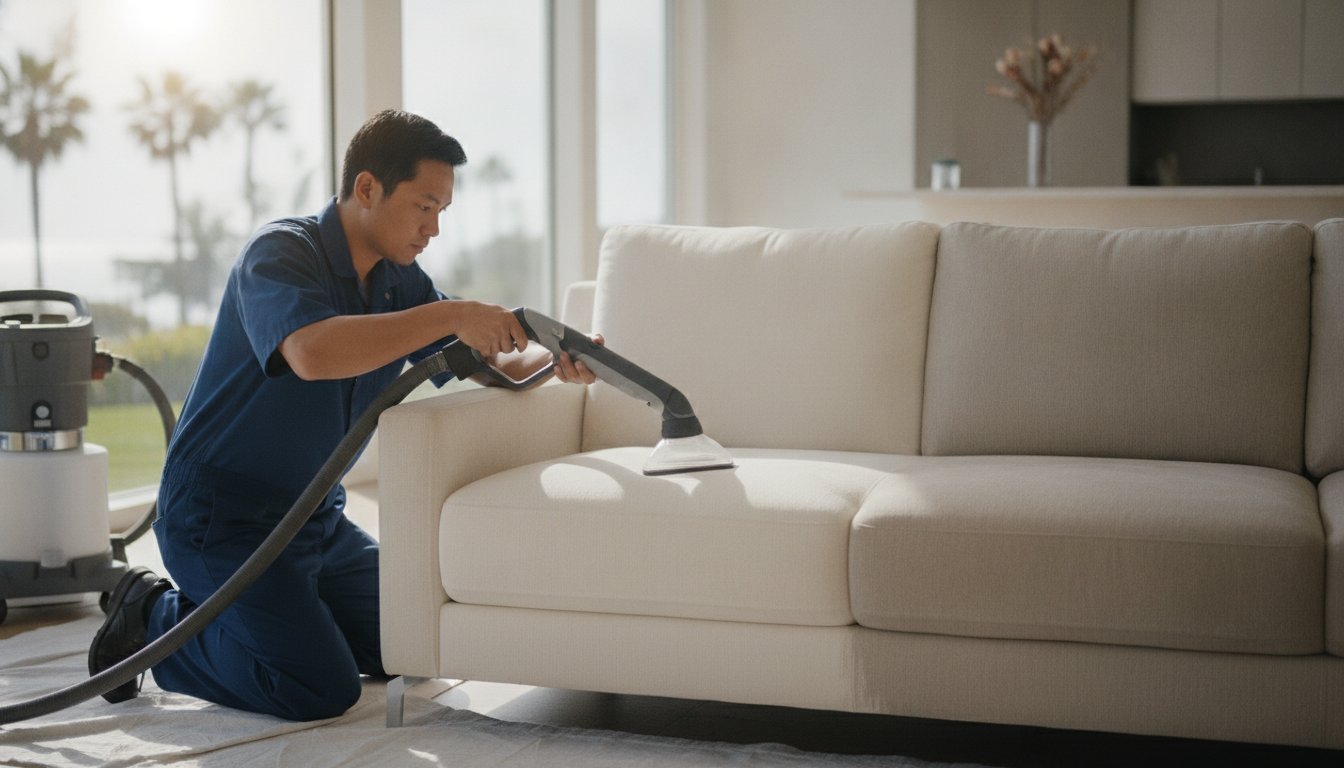
15 Sep Upholstery Cleaning in Signal Hill: Professional Fabric Restoration & Indoor Air Quality
What if your favorite sofa is actually functioning as a secondary air filter, silently trapping years of microscopic pollutants and allergens deep within its fibers? For many homeowners, the realization that furniture affects respiratory health comes only after persistent pet odors and visible staining become impossible to ignore. When standard retail sprays fail to reach the source of the problem, it’s time to consider the technical benefits of professional upholstery cleaning in Signal Hill. You deserve a home environment that feels as clean as it looks, free from the hidden particulates that compromise your indoor air quality.
We understand the frustration of seeing high-end furniture lose its luster to daily wear and accidental spills. This article will show you how restoration-grade cleaning methods protect your family’s health while significantly extending the lifespan of your investment. You’ll learn about the methodical approach required for deep fabric restoration, the importance of fast drying times, and how specialized extraction technology removes the contaminants that DIY methods leave behind. By the end, you’ll have a clear roadmap for returning your home to a state of organized, fresh-smelling normalcy.
Key Takeaways
- Understand why customized cleaning protocols are essential for different fabric types to prevent irreversible damage like shrinking, browning, or fiber distortion.
- Learn how professional upholstery cleaning in Signal Hill removes the industrial particulates and allergens that turn your furniture into a saturated air filter.
- Discover the technical superiority of restoration-grade extraction, which provides deep sanitization and faster drying times than standard cleaning methods.
- Identify the specific certifications and local standards you should verify to ensure your furniture is handled by a qualified environmental restoration specialist.
Upholstery Cleaning in Signal Hill: Why Your Furniture is an Air Filter
Your sofa does more than provide comfort; it serves as a massive, passive environmental filter for your home. Upholstery fibers are naturally porous, which allows them to trap dust, pollen, and microscopic industrial particulates that drift through your living spaces. This “filter effect” is a silent process that continues until the fabric reaches its saturation point. Once the fibers are full, they can no longer hold new particles. Instead, every movement on the cushions releases a concentrated cloud of trapped pollutants back into your immediate breathing zone. This cycle makes professional upholstery cleaning signal hill essential for maintaining a healthy home, as the link between fabric hygiene and indoor air quality testing is a critical factor in modern property maintenance.
The Signal Hill Environmental Factor
Signal Hill properties face environmental challenges that differ significantly from surrounding coastal communities. The city’s unique history with the oil industry and its elevated hilltop geography mean that indoor dust often contains a higher concentration of heavy particulates and wind-blown outdoor pollutants. These aren’t just surface-level issues. Standard household vacuuming lacks the specific suction power and lift required to reach the core of dense upholstery fibers. Professional upholstery cleaning signal hill utilizes high-grade extraction technology to remove these deep-seated contaminants. This methodical approach is necessary to prevent permanent fabric degradation, which occurs when abrasive particulates rub against fibers during normal use, eventually leading to premature thinning and structural failure of the material.
Health Implications of Neglected Upholstery
When soft surfaces are neglected, they become a primary reservoir for allergens like dust mites, pet dander, and microscopic outdoor pollutants. These contaminants don’t stay settled. They are constantly kicked up by daily activity, creating a persistent cycle of irritation for families and pets. Under 2026 environmental standards, Indoor air quality (IAQ) is defined as the measure of breathable air safety within a structure, directly influenced by the accumulation and release of particulate matter from soft surface reservoirs like upholstery. Professional cleaning provides a technical resolution to this problem by sanitizing the fabric and removing the biological triggers that compromise your home’s safety. By addressing these pollutants through deep restoration, you ensure a return to normalcy for your family’s respiratory health.
Understanding Fabric Science: Why One Method Doesn’t Fit All
Effective upholstery cleaning signal hill requires a deep understanding of textile chemistry. Treating a delicate linen sofa with the same high-heat extraction used for a synthetic polyester sectional is a recipe for disaster. Synthetic fibers, such as microfiber or polyester, are engineered for durability and stain resistance, yet they tend to bond aggressively with body oils. Conversely, natural fibers like wool, cotton, and linen are highly absorbent and sensitive to moisture. If these materials aren’t handled with precision, they are susceptible to cellulosic browning, shrinking, or permanent fiber distortion.
Our technicians prioritize a methodical identification process before any equipment is activated. We strictly adhere to industry fabric codes to determine the safest possible approach:
- W: Water-based cleaning agents are safe for use.
- S: Only water-free, dry-cleaning solvents should be used to avoid damage.
- WS: Either water-based or solvent-based cleaners are acceptable.
- X: Professional vacuuming or light brushing only; no liquid agents should be applied.
Maintaining the correct pH balance is equally vital to the restoration process. Using an overly alkaline cleaner on a natural fiber can strip away protective oils and cause color bleeding. By selecting pH-neutral agents tailored to the specific textile through professional upholstery cleaning signal hill, we preserve the fabric’s structural integrity and aesthetic vibrancy.
The Danger of Chemical Residues
Many “splash and dash” services leave behind a significant amount of detergent in the fabric. This leftover soap acts like a magnet for dust and oils, causing the furniture to re-soil faster than it did before. Our process emphasizes professional-grade rinsing to ensure every trace of surfactant is removed. This is especially important because certain cleaning agents can emit Volatile Organic Compounds (VOCs), which negatively impact your home’s air quality. We offer non-toxic, eco-friendly options that provide a safe environment for children and pets without sacrificing restorative power.
Specialty Care for Delicate and Vintage Pieces
Vintage upholstery and high-value textiles require a specialized touch that goes beyond standard maintenance. For pieces that cannot tolerate water, we utilize advanced dry-solvent cleaning techniques that lift soils without the risk of moisture damage. This level of care is similar to our professional area rug cleaning services, where preservation and hygiene are the primary objectives. Whether you have a family heirloom or a modern designer piece, a specialized cleaning assessment is the best way to ensure your furniture remains a centerpiece of your home for years to come.
Restoration-Grade Extraction vs. Standard Cleaning
Not all cleaning methods provide the same level of hygiene or fabric protection. Many “splash and dash” carpet cleaners treat upholstery as an afterthought, using the same high-pressure wands and aggressive chemicals on a delicate armchair as they do on a durable hallway carpet. In contrast, professional upholstery cleaning signal hill requires restoration-grade extraction. This technical approach utilizes controlled high-heat water to break down complex oily binders and deeply embedded soils without over-wetting the internal padding. It follows the rigorous preservation standards often cited in professional guides like Caring for Textiles, ensuring the fabric’s structural integrity remains intact.
Suction power is the primary differentiator between a surface refresh and a true restoration. Our truck-mounted systems generate significantly more vacuum pressure than portable units, allowing us to pull moisture and particulates from the very base of the fiber. This deep-soil removal is vital for environmental health. Because of our extensive background in water damage restoration, we approach every piece of furniture with a methodical moisture-control protocol. We don’t just clean the surface; we manage the humidity and saturation levels to ensure a safe, thorough result.
The Myth of the Grocery Store Rental
DIY machines are often marketed as a cost-effective alternative, but they frequently lead to long-term furniture damage. These consumer-grade units lack the heating elements necessary for true sanitization and the suction power to remove the water they inject. When too much liquid is left behind, it seeps into the foam and wooden frames. This trapped moisture can cause “wicking,” where stains reappear as the fabric dries, or worse, it can lead to permanent fiber browning. Many homeowners don’t realize that improper DIY cleaning techniques can actually void manufacturer warranties on high-end furniture.
Moisture Control and Mold Prevention
Effective upholstery cleaning signal hill hinges on the “48-hour window.” Industry standards dictate that moisture must be removed within this timeframe to prevent the colonization of fungal spores. If a sofa remains damp for days, it becomes a primary site for microbial growth. We prevent this by deploying high-velocity air movers immediately after extraction to accelerate evaporation. Our expertise in toxic mold remediation informs this process, as we understand exactly how lingering dampness can compromise your home’s safety. We ensure your furniture is dry, sanitized, and ready for use as quickly as possible.

Our Specialized 5-Step Upholstery Restoration Process
A professional restoration is defined by its sequence. We don’t rely on guesswork or generic applications; instead, we follow a rigorous, technical protocol inherited from our decades of experience in environmental remediation. This methodical approach ensures that every fiber is treated with precision, moving your furniture from a state of contamination back to its original condition. When you invest in upholstery cleaning signal hill, you’re receiving a multi-stage service designed to maximize both hygiene and fabric longevity.
- Step 1: Comprehensive Pre-Inspection and Fabric Testing: We begin by identifying the specific textile composition and testing for colorfastness. This step is vital to determine the safest chemical and temperature parameters for your unique piece.
- Step 2: Dry Soil Removal: Before any liquid touches the fabric, we use high-efficiency industrial vacuums to extract loose particulates. Removing dry grit first prevents it from turning into abrasive “mud” during the extraction phase.
- Step 3: Targeted Pre-Treatment: We apply specialized emulsifiers to stubborn stains, body oils, and high-traffic areas. This breaks the molecular bond between the soil and the fiber.
- Step 4: Controlled Extraction and Rinsing: Using professional-grade equipment, we flush out the emulsified contaminants. We use neutralizing agents to ensure no sticky residue remains, leaving the fabric soft and pH-balanced.
- Step 5: Post-Cleaning Inspection and Grooming: Finally, we perform a detailed inspection and groom the fabric pile. This improves the aesthetic finish and promotes faster drying by increasing airflow between the fibers.
Advanced Odor Neutralization
We don’t mask unpleasant smells with heavy perfumes. Our process focuses on molecularly breaking down odor-causing bacteria at the source. Whether you’re dealing with persistent pet urine or the lingering effects of smoke, we use advanced botanical and enzymatic treatments to neutralize the problem. This high-level approach to deodorization mirrors our professional fire and smoke damage repair protocols. It’s a technical resolution that ensures your home smells fresh because it is actually clean, not just scented.
Fabric Protection and Longevity
The final step in environmental maintenance is preservation. We recommend applying a post-cleaning protective barrier that repels liquid spills and oily soils. This barrier prevents contaminants from soaking deep into the fibers, making your routine maintenance more effective and extending the time needed between professional visits. In the unique Signal Hill climate, where wind-blown dust is a constant factor, this added layer of defense is essential for keeping your furniture looking vibrant. You can book your methodical upholstery assessment to see which protection level is right for your home’s specific needs.
Choosing the Right Signal Hill Specialist for Your Home
Selecting a provider for upholstery cleaning signal hill shouldn’t be based on price alone. High-stakes textile care requires a technician who understands the specific chemistry of fibers and the physics of moisture extraction. You should prioritize companies that hold IICRC certification, as this ensures they adhere to internationally recognized standards for inspection and restoration. Additionally, always verify that the provider carries specialized insurance and local licensing specific to the Long Beach and Signal Hill area. A local specialist understands the unique environmental challenges our community faces, from hilltop wind patterns to historic industrial dust, and tailors their approach to meet those specific needs.
There’s a fundamental difference between a general janitorial service and an environmental restoration company. While a standard janitorial crew might focus on surface aesthetics, a restoration specialist maintains a higher standard for upholstery cleaning signal hill by viewing your furniture as a vital component of your home’s environmental health. We apply the same rigorous standards used in mold remediation and lead abatement to our upholstery services. This means we aren’t just removing visible stains; we’re extracting the microscopic particulates that compromise your indoor air quality. When you request an estimate, look for transparency. A professional should provide a clear, no-obligation breakdown based on your specific fabric types and furniture dimensions.
The Coastline Difference
Coastline Environmental Solutions, Inc. has served the Signal Hill community since 1985 with a commitment to technical precision and property safety. Our “calm professional” approach is designed to reduce your stress by providing a steady, methodical hand during the restoration process. We don’t believe in rushed jobs or shortcuts. Instead, we focus on thorough, long-term solutions that prioritize your family’s health. This includes a strict commitment to using non-toxic, eco-friendly cleaning agents that are safe for pets and children. We treat your property with the same care we would our own, ensuring a return to normalcy through meticulous environmental maintenance.
Schedule Your Signal Hill Upholstery Assessment
Booking a professional assessment is the first step toward a healthier home environment. Our process includes a comprehensive fabric check and an optional indoor air quality (IAQ) review to identify hidden respiratory triggers. During your appointment, you can expect a technician to perform a detailed walkthrough, explain the recommended restoration steps, and provide a firm timeline for completion. We ensure that your furniture is dry and ready for use as quickly as possible so your daily life remains uninterrupted. Contact Coastline Environmental Solutions, Inc. for a restoration-grade clean today.
Restoring Your Home’s Environmental Balance
Maintaining the hygiene of your home’s soft surfaces is a critical component of environmental maintenance. We’ve explored how furniture acts as a passive filter, trapping particulates that only professional upholstery cleaning signal hill can effectively remove. By choosing restoration-grade extraction over standard surface cleaning, you ensure that deep-seated allergens are eliminated while protecting the delicate structural integrity of your fabrics. Our methodical five-step process is designed to provide a thorough, long-term solution that standard DIY methods simply cannot match.
Coastline Environmental Solutions, Inc. has served the Signal Hill and Long Beach community since 1985. As certified environmental restoration specialists, we utilize advanced extraction and drying technology to provide deeper cleaning and significantly faster drying times. We act as a steady hand for homeowners, ensuring your living space returns to a state of organized normalcy and safety. Don’t let saturated fibers compromise your indoor air quality. Request Your Professional Upholstery Cleaning Quote in Signal Hill today. We look forward to helping you revitalize your home with precision and care.
Frequently Asked Questions
How long does it take for upholstery to dry after professional cleaning?
Typical drying times range between two and four hours. We utilize high-velocity air movers to accelerate evaporation immediately after extraction. This rapid drying is a core part of our moisture control protocol, which prevents mold growth and allows you to resume normal life quickly. Factors like fabric density and indoor humidity can influence the exact duration; however, our restoration-grade equipment ensures a significantly faster process than standard consumer-grade machines.
Is professional upholstery cleaning safe for my pets and children?
Our cleaning protocols prioritize safety by utilizing non-toxic and eco-friendly cleaning agents. These solutions are specifically selected to be safe for homes with children and sensitive pets. Because we’re certified environmental restoration specialists, we approach every job with a focus on your property’s overall health. We avoid harsh residues that could trigger skin sensitivities or compromise your indoor air quality, ensuring a return to normalcy without chemical concerns.
Can you remove old, set-in pet stains and odors from my sofa?
We use advanced enzymatic treatments to molecularly break down odor-causing bacteria at the source. Standard retail sprays often only mask smells, but our methodical restoration process targets the biological components of pet urine and old stains. While some permanent fiber damage can occur if stains are left for years, our specialized extraction technology is highly effective at removing the deep-seated contaminants that cause persistent odors in Signal Hill homes.
How often should I have my upholstery professionally cleaned in Signal Hill?
Most households benefit from professional upholstery cleaning signal hill every twelve to eighteen months. However, the unique environmental conditions in Signal Hill, such as hilltop winds and industrial dust, may require more frequent maintenance. If your home has pets, small children, or residents with respiratory sensitivities, we recommend a cleaning every six to nine months. Regular maintenance prevents abrasive particulates from degrading fabric fibers and keeps your indoor air filters from becoming saturated.
Will professional cleaning help with my seasonal allergies?
Professional cleaning significantly reduces seasonal allergy triggers by extracting trapped pollen, dust mites, and outdoor pollutants. Upholstery acts as a secondary air filter; once it becomes saturated, it releases allergens back into your breathing zone. Our deep-soil removal process clears these reservoirs, providing a measurable improvement in your home’s environmental health. This is a technical resolution that complements our broader indoor air quality testing services for a truly healthy living space.
Can you clean delicate fabrics like silk, velvet, or linen?
We specialize in the restoration of delicate textiles, including silk, velvet, and linen. Every service begins with a comprehensive pre-inspection and fabric testing phase to identify the correct cleaning code. For fabrics that don’t tolerate water, we utilize specialized dry-solvent cleaning agents that lift soils without risking shrinkage or fiber distortion. This meticulous approach ensures that even your most valuable or vintage pieces are handled with professional authority and care.
What is the difference between steam cleaning and dry upholstery cleaning?
Steam cleaning, or hot water extraction, uses pressurized heated water to flush out soils, while dry cleaning uses specialized solvents for moisture-sensitive fabrics. The choice depends entirely on your furniture’s specific fabric code. While steam cleaning is superior for deep-seated soil removal in synthetic fibers, dry cleaning is a safety requirement for natural materials like wool or silk. Our technicians determine the safest method during the initial assessment to prevent permanent fabric damage.
Do I need to do anything to prepare my home before the cleaners arrive?
You can prepare by clearing a path to the furniture and removing small, breakable items from the immediate area. It’s also helpful to point out specific problem areas or known stain sources to our technicians during the walkthrough. We handle the heavy lifting and technical setup, so you don’t need to perform any pre-vacuuming or deep prep work. Our “calm professional” approach ensures the service is methodical and stress-free from the moment we arrive.