
30 Jul Environmental Remediation: Southern California Guide (2026)
Would you recognize the subtle signs of a hidden contaminant before it compromised your health or your property’s equity? In Southern California, the presence of hazardous materials like asbestos or lead is often a silent reality that demands more than just a surface-level cleanup. It’s a high-stakes situation where confusion over EPA mandates and California state regulations can feel paralyzing. When you’re facing these challenges, professional environmental remediation services provide the technical precision needed to transform a site from a liability back into a safe, functional, and valuable asset.
We understand the anxiety that comes with discovering hidden contaminants and the fear that your property’s value might never recover. This guide will show you how professional remediation identifies, contains, and removes hazardous materials to restore the safety of your environment. You’ll gain a clear understanding of the methodical restoration process and learn how to find a certified local expert who can handle the complex liability for you. We’ll explore the steps necessary to ensure your property meets every safety standard, giving you a clear path back to normalcy.
Key Takeaways
- Professional environmental remediation services provide a methodical approach to identifying and containing hazardous materials like asbestos and lead.
- Older architecture in Southern California coastal regions often contains legacy contaminants that require specialized abatement to preserve property value.
- A science-based remediation process prevents the accidental spread of toxins during the removal phase, ensuring the safety of all occupants.
- Compliance with EPA standards and California-specific Cal/OSHA mandates is essential for maintaining legal requirements and protecting human health.
- Partnering with a seasoned, certified local expert helps property owners manage complex liabilities and achieve a verified return to normalcy.
What is Environmental Remediation? Defining the Path to Property Safety
Environmental remediation is the methodical science of restoring safety to a contaminated site. At its core, it’s the process of removing pollution or contaminants from environmental media such as soil, groundwater, sediment, or surface water. For Southern California property owners, this usually translates to the specialized extraction of hazardous materials like asbestos, lead, and toxic mold from buildings. It’s a high-stakes operation that goes far beyond the scope of a standard cleaning crew. While a janitorial service might focus on surface aesthetics, professional environmental remediation services address the microscopic threats that compromise the air you breathe and the walls that surround you. This focus on environmental safety extends to the surrounding landscape; for those needing similar expertise in the Pacific Northwest, CDA TREE AND UTILITY provides the specialized tree care and utility protection essential for comprehensive site restoration.
The distinction between cleaning and remediation is vital. Cleaning is a reactive measure for visible dirt. Remediation is a technical response to environmental hazards that requires specialized equipment, negative air pressure, and high-efficiency particulate air (HEPA) filtration. This process ensures that when hazardous materials are disturbed, they don’t migrate through the HVAC system or settle in other rooms. It’s about total containment and verified removal. Without these protocols, a simple cleanup can actually worsen the situation by aerosolizing dangerous fibers or spores.
The Core Objectives of a Remediation Project
Every project is guided by three fundamental goals that prioritize the long-term health of the building and its occupants:
- Human Health: Eliminating exposure to carcinogens and respiratory irritants like asbestos fibers or toxic mold spores.
- Structural Integrity: Addressing root causes of degradation, such as deep-seated water damage that can rot timber and erode masonry.
- Legal Compliance: Meeting strict California and federal mandates to protect property equity and ensure safe future resale.
Identifying the Need for Professional Intervention
Recognizing signs early can save thousands in restoration costs. Look for peeling paint in older homes or persistent musty odors suggesting hidden mold. Other needs are event-driven, such as post-fire smoke damage or plumbing failures that require environmental remediation services to prevent permanent contamination. For property owners in rural areas, maintaining infrastructure is equally critical to prevent environmental hazards, and resources like Best Cistern Septic Solutions offer valuable insights into managing complex septic systems. Regulatory triggers also play a role; renovations in Long Beach or Lakewood often require mandatory testing for legacy materials before work begins to ensure the safety of both workers and residents.
Common Environmental Hazards in Southern California Properties
Southern California properties face a unique set of environmental challenges driven by architectural history and coastal geography. In cities like Long Beach, Lakewood, and Huntington Beach, many residential and commercial buildings date back to the mid 20th century. While these structures possess immense character, they often contain hazardous legacy materials that were industry standards at the time of construction. These substances remain dormant and relatively safe until they’re disturbed. When a renovation begins or a pipe leaks, these materials require professional environmental remediation services to prevent a localized health crisis.
The salty, humid air of the Pacific coast isn’t just a lifestyle perk; it’s a catalyst for property degradation. High moisture levels can accelerate the breakdown of older building materials and provide the perfect breeding ground for biological growth. The primary danger arises when these materials are disturbed without a professional containment plan. Without specialized equipment, microscopic particles can travel through a building in minutes, contaminating surfaces and air ducts far from the original site. Beyond structural concerns, maintaining the purity of your water supply is another essential component of environmental safety; A Clear Alternative provides the specialized water treatment and purification services needed to ensure your home remains a healthy environment.
Asbestos Abatement: Managing Legacy Building Materials
Asbestos was once prized for its fire retardant properties and durability. In Southern California homes built before 1980, it’s commonly found in popcorn ceilings, vinyl floor tiles, and pipe insulation. These materials become dangerous when they become friable, meaning they can be crumbled by hand pressure, releasing microscopic fibers into the air. Inhaling these fibers is directly linked to mesothelioma and other severe respiratory illnesses. Because of these risks, asbestos removal is strictly regulated by law, especially during demolition or major structural renovations.
Lead-Based Paint Remediation: Protecting Residents from Toxic Exposure
Historic neighborhoods in Long Beach and San Pedro are known for their beautiful vintage homes. However, any property built before 1978 likely contains lead based paint. Lead is a potent neurotoxin, and even small amounts of dust can cause irreversible developmental delays in children. Certified specialists use two primary methods to address this: encapsulation, which seals the lead paint behind a specialized coating, or full removal. Choosing the right path depends on the condition of the walls and the long term goals for the property.
Toxic Mold and Indoor Air Quality Challenges
Mold is perhaps the most persistent threat in coastal regions. Following a pipe burst or a roof leak, toxic mold can colonize porous materials within 24 to 48 hours. This rapid growth compromises indoor air quality and introduces volatile organic compounds (VOCs) into the living space. Implementing toxic mold remediation is the only way to ensure that airborne spores are captured and the moisture source is permanently neutralized. If you’re concerned about hidden hazards in your home, consulting with the experts at Coastline Environmental Solutions can provide the clarity and safety you need.
The Science-Based Remediation Process: Assessment to Clearance
Professional environmental remediation services operate on a foundation of scientific protocols rather than simple cleanup techniques. This methodical approach ensures that contaminants aren’t accidentally cross-contaminated into safe areas of your property. Every step of the operation is a multi-phase technical response involving specialized equipment and protective gear. The professional nature of these services highlights the sophistication of the restoration industry, a sector where business intelligence platforms like LeadOpsIQ help agencies connect with high-performing remediation and HVAC specialists. Throughout the project, meticulous documentation is maintained to satisfy insurance requirements and provide a clear record of liability management. This paper trail is vital for property owners who need to prove the site has been restored to specific safety standards.
Phase 1: Inspection, Testing, and Site Assessment
The process begins with a high-tech investigation to map the extent of the damage. Specialists utilize thermal imaging and moisture meters to detect hidden pockets of water or mold behind drywall that are invisible to the naked eye. Air and surface sampling are conducted to identify the specific types and concentrations of contaminants present. This data allows the team to develop a Site-Specific Remediation Action Plan (RAWP). This plan acts as a blueprint, outlining the precise technical steps required to neutralize the threat without compromising the rest of the structure.
Phase 2: Containment and Hazardous Material Removal
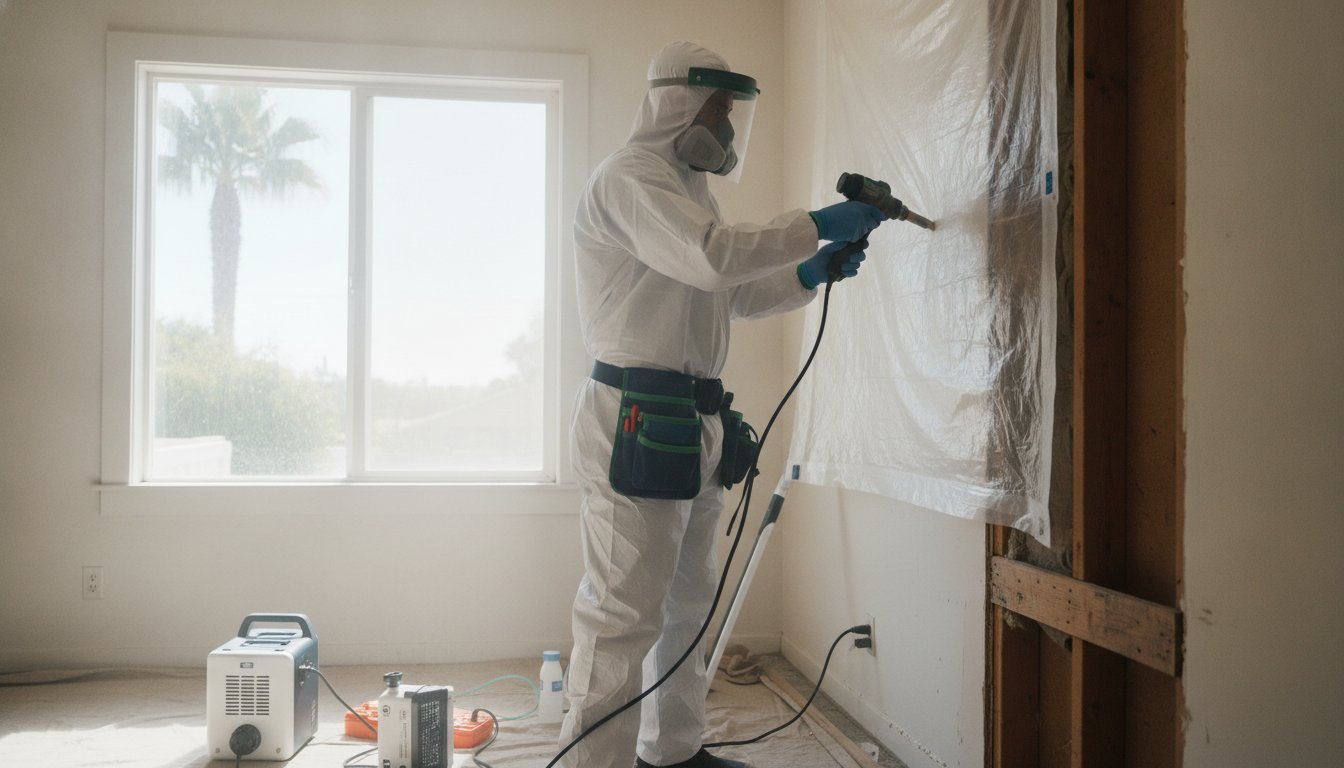
Containment is the use of physical barriers and negative air pressure to isolate hazards. By setting up HEPA-filtered negative air machines, technicians ensure that microscopic fibers or spores cannot escape the work zone. During the removal of materials like asbestos or lead-based paint, specialists often use wet-removal techniques to minimize airborne dust. Every piece of debris is subjected to proper bagging and labeling protocols. These materials are then transported and disposed of at certified hazardous waste facilities, ensuring the chain of custody remains intact and compliant with local regulations.
Phase 3: Decontamination and Final Clearance Testing
Once the hazardous materials are removed, the area undergoes a rigorous decontamination. Technicians perform a deep cleaning of all surfaces within the containment zone using specialized HEPA vacuums and antimicrobial washes. A “white glove” inspection follows to ensure no visible residue remains. The final, and perhaps most critical, step is post-remediation air quality testing. An independent laboratory typically verifies these results. Once the air is proven clean, a clearance report is issued to certify the area is safe for re-occupancy, providing the property owner with total peace of mind. For those in the San Francisco area looking to celebrate a return to normalcy with a corporate gathering or charity fundraiser, Full House Casino Events provides professional casino-themed entertainment that ensures a high-quality experience.

Navigating Regulations, EPA Standards, and Safety Requirements
Managing a property in Southern California involves a complex web of legal obligations that extend far beyond standard building codes. While the Environmental Protection Agency (EPA) establishes the national framework for hazardous material handling, California often imposes even more stringent mandates through agencies like Cal/OSHA. These rules aren’t just bureaucratic hurdles. They’re designed to prevent public health crises and protect workers from long term exposure to toxins. When property owners seek environmental remediation services, they aren’t just paying for the physical removal of waste; they’re investing in a shield against legal and financial liability. Industrial Hygiene professionals often act as the critical third party verifiers in this process, conducting the rigorous sampling needed to prove that a site meets health standards before it’s cleared for re-occupancy. For organizations managing these complex regulatory workflows across multiple sites, Stratelegy provides the enterprise-grade communication solutions necessary to ensure seamless coordination and compliance tracking.
California Environmental Standards and SCAQMD
For those in Long Beach, Lakewood, and Orange County, the South Coast Air Quality Management District (SCAQMD) is the primary regulatory body governing air toxins. Their Rule 1403 is particularly critical for any structural work. It mandates that owners and operators conduct a thorough asbestos survey before any renovation or demolition activities begin, regardless of the building’s age. Failing to submit the proper notifications to SCAQMD at least 10 working days prior to starting work can result in heavy daily fines and immediate work stoppages. Local compliance is essential for any project to move forward without legal interruptions or costly delays.
The Importance of Certified Environmental Contractors
Hiring an uncertified or general contractor for hazardous material handling is a massive financial and safety risk. Professional environmental remediation services require specific licenses and pollution liability insurance that standard contractors simply don’t carry. This specialized insurance is vital because it covers the unique risks associated with the accidental release of contaminants during the removal process. Without it, the property owner is often held personally responsible for the entire cost of an emergency cleanup if a mistake occurs. These costs frequently dwarf the initial price of hiring a certified expert from the start. This requirement for specialized technical support is common in other global industries, such as the maritime sector where panamashipservice.com provides essential mechanical ship repairs at the Panama Canal.
Professional firms manage the entire chain of custody for hazardous waste, ensuring that every ounce of material is tracked from your property to a certified disposal site. This meticulous record keeping is your best defense against future litigation or failed property inspections during a sale. If you need to ensure your project remains fully compliant with California’s strict safety mandates, contact the certified specialists at Coastline Environmental Solutions to handle your abatement needs with precision and authority.
Expert Remediation Solutions with Coastline Environmental Solutions, Inc.
Coastline Environmental Solutions, Inc. has served as a dependable local guardian for Southern California property owners since 1985. Over these four decades, we’ve refined a methodical approach to handle the most complex environmental hazards with a meticulous hand. Our deep local expertise in Long Beach and surrounding coastal communities allows us to understand the specific architectural challenges of the region, from mid-century asbestos concerns to modern mold proliferation driven by sea air. We don’t just offer a surface-level fix; we provide a technical restoration that integrates environmental abatement with specialized fire and smoke damage repair. This comprehensive strategy ensures that every property is returned to a state of total safety, protecting both the structural integrity and the long-term equity of your investment.
Our philosophy is grounded in the role of the “meticulous restorer.” We believe that professional environmental remediation services should be as thorough as they are efficient. By utilizing advanced technology and adhering to the highest industry standards, we act as a steady hand during property crises. We recognize that discovering hazardous materials is a high-stakes event for any owner. Our team is trained to reduce your stress by providing clear communication and a logical, science-based progression toward resolution. This commitment to excellence has made us a trusted partner for thousands of residents and business owners across the Southern California region. For those who value this level of meticulous care in all professional services, including worldwide executive travel, mexlimos.com offers premier chauffeured transportation that reflects a similar dedication to reliability and elite standards.
Residential and Commercial Abatement Specialists
Our team functions as residential and commercial abatement specialists, providing tailored solutions for single-family homes, high-density apartment complexes, and retail spaces. We understand that a contaminated environment requires a total refresh to be truly safe. By integrating air duct cleaning and plumbing services, we address the hidden pathways where microscopic contaminants often linger after the initial removal phase. This is particularly crucial when managing the transition from emergency water damage repair to long-term remediation. We ensure that the moisture source is permanently neutralized and that any resulting biological growth is fully extracted from the building’s envelope.
24/7 Emergency Response and Local Reliability
Crisis situations demand a “calm professional” who can master chaotic events with technical precision. Our 24/7 emergency response capabilities ensure immediate mobilization for urgent environmental threats across Lakewood, Seal Beach, and Huntington Beach. When you’re facing a regulatory trigger or a sudden health concern, you need more than just labor; you need authoritative guidance. We provide the detailed reporting and documentation required to satisfy insurance adjusters and state regulatory bodies. This paper trail is your proof of compliance and safety. Contact us today for a professional environmental assessment of your property to secure its value and your peace of mind.
Securing Your Property’s Future with Professional Remediation
Restoring a property from hazardous contamination requires more than a quick fix; it demands a technical, science-based approach that prioritizes human health and long term value. As we’ve explored, the specific challenges of Southern California architecture and coastal humidity make professional environmental remediation services a necessity rather than an option. By understanding the rigorous phases of inspection, containment, and final clearance, you can move from a state of emergency to a position of controlled recovery. Commercial property owners facing water intrusion events should also review our flood restoration for businesses guide to understand the critical 48-hour decontamination window and insurance documentation strategies specific to the Southern California landscape. Beyond chemical hazards, maintaining a pest-free environment is another key aspect of property health; you can learn more about Mosquito Assassin Pest Control LLC to address these needs. Managing these complex liabilities ensures your property remains a safe, compliant, and valuable asset for years to come.
Since 1985, Coastline Environmental Solutions has acted as a dependable local guardian for property owners in Long Beach and across the region. As certified asbestos and lead abatement specialists, we combine meticulous technical standards with 24/7 emergency response capabilities to handle any crisis with precision. Don’t let hidden contaminants compromise your environment or your equity. Request a Professional Environmental Assessment from Coastline Environmental Solutions today. We’re here to provide the authoritative guidance and thorough care needed to bring your property back to its safest state.
Frequently Asked Questions
What is the difference between environmental remediation and simple cleaning?
Environmental remediation involves the technical extraction and neutralization of hazardous substances, whereas simple cleaning only addresses surface level aesthetics. While a cleaning crew might wipe down a wall, a remediation team uses specialized containment and HEPA filtration to ensure microscopic toxins like asbestos or mold spores aren’t aerosolized. This methodical process focuses on deep seated contaminants that pose a genuine risk to human health and structural integrity.
How much do environmental remediation services typically cost in Southern California?
The cost of environmental remediation services is determined by several factors, including the type of contaminant, the square footage of the affected area, and the complexity of the required containment. Every project is unique, so a thorough site assessment is necessary to provide an accurate estimate. Factors such as the age of the building and the accessibility of the hazardous materials also influence the final technical response and labor requirements.
Can I stay in my home during the asbestos or mold remediation process?
Whether you can remain in your home depends on the scale of the project and the location of the containment zone. If the work is restricted to a small, isolated area with a dedicated exit point, you may be able to stay in unaffected rooms. However, for larger projects involving extensive demolition or air quality concerns, temporary relocation is often the safest choice to ensure you aren’t exposed to any accidental cross-contamination during the removal phase.
How long does a typical environmental remediation project take to complete?
Project timelines are dictated by the results of initial testing and the specific requirements of the remediation action plan. A small mold removal project might be completed in three to five days, while complex asbestos abatement in a large commercial space can take several weeks. These timelines always include the necessary period for post remediation air quality testing and laboratory clearance, which are essential for verifying the property is safe for re-occupancy.
Does homeowners insurance usually cover environmental remediation services?
Insurance coverage for remediation is typically determined by the specific peril that caused the environmental hazard. For example, mold remediation resulting from a sudden and accidental pipe burst is often covered, whereas damage caused by long term neglect or high humidity may be excluded. It’s vital to review your policy’s specific endorsements for lead, asbestos, and mold to understand your level of financial protection during a property crisis.
What are the most common signs that my property needs environmental testing?
Common indicators include persistent musty odors, visible staining on drywall, or peeling paint in structures built before 1978. You should also consider testing if occupants are experiencing unexplained respiratory issues or if you’re planning a major renovation in an older Southern California building. These signs often point to hidden hazards that require a professional assessment to identify the concentration and type of contaminants present in the environment.
Is a clearance test mandatory after hazardous materials are removed?
A final clearance test is mandatory to verify that the environment meets strict health and safety standards before the containment barriers are removed. This step involves independent air or surface sampling to prove that all hazardous materials were successfully extracted. Without this verified clearance report, you may face significant liability issues during future property transfers or inspections. It’s the final piece of documentation that confirms your property is safe and compliant.
How do I verify if an environmental remediation company is properly certified in California?
You can verify a company’s credentials by checking the California Contractors State License Board (CSLB) for specific hazardous material endorsements. Look for contractors who hold active asbestos and lead abatement certifications and carry specialized pollution liability insurance. In California, firms must also be registered with the Division of Occupational Safety and Health (DOSH) to perform asbestos related work. Checking these databases ensures you’re hiring a seasoned expert who follows every state mandate.