
20 Aug Ceiling Water Damage Repair Cost: A 2026 Homeowner’s Guide to Restoration Tiers
What if the small, tea-colored ring on your drywall is actually the visible sign of a much larger structural crisis? It’s natural to feel a sense of dread when you look up and see the first signs of a leak. You likely worry about the total ceiling water damage repair cost or fear that hidden mold is already spreading through your joists. We understand that this uncertainty is often more stressful than the physical damage itself, especially when you aren’t sure if you’re looking at a simple patch job or a full-scale restoration.
In this 2026 guide, you’ll discover the primary factors that determine restoration expenses and how to navigate the financial aspects of recovery. We promise to provide a clear roadmap through the tiers of restoration, moving from simple cosmetic fixes to complex structural drying and professional mitigation. We will also explore how local Southern California safety regulations for older homes, such as asbestos and lead testing, impact your project. You’ll finish this article knowing exactly when to call in a meticulous professional and how to approach your insurance claim with confidence.
Key Takeaways
- Learn why a visible ceiling stain is often just the surface of a deeper structural issue involving saturated insulation and framing.
- Understand how the two-phase restoration process—mitigation and reconstruction—impacts your total ceiling water damage repair cost and prevents long-term mold growth.
- Identify the specific architectural factors, such as ceiling height and material types like plaster or wood paneling, that complicate labor and material requirements.
- Gain clarity on insurance coverage by evaluating the “sudden and accidental” rule and comparing your deductible against restoration estimates.
- Discover the importance of certified asbestos and lead abatement when restoring older Southern California homes to ensure environmental safety and regulatory compliance.
Understanding the Variables of Ceiling Water Damage Repair
Ceiling water damage is rarely a surface-level problem. While homeowners often focus on the unsightly yellow or brown stains appearing on their drywall, these marks represent a multi-layered failure involving the ceiling material, saturated insulation, and the wooden framing above. To understand your potential ceiling water damage repair cost, you must look beyond the aesthetics. A thorough restoration requires addressing every affected component to ensure the home’s structural integrity remains intact. This lack of transparency is why the final ceiling water damage repair cost is often higher than initial DIY estimates suggest; the real damage is frequently hidden from view.
The source of the intrusion must be identified and professionally repaired before any restoration work begins. Whether it’s a pinhole pipe leak or a roofing failure, starting repairs on the ceiling while the source remains active is a futile investment. For a comprehensive overview of water damage classifications, it’s helpful to look at how the industry categorizes the water itself. We identify three primary categories: Clean (Category 1), Gray (Category 2), and Black (Category 3). Clean water from a broken supply line is easier to manage. Gray water may contain chemicals or bio-contaminants, while Black water, containing sewage or environmental toxins, requires intensive decontamination and significantly higher safety protocols.
The Three Tiers of Damage Severity
Damage is typically assessed in three tiers to determine the scope of work. Minor damage involves cosmetic staining where the drywall remains structurally sound and moisture levels are low. Moderate damage presents as sagging drywall or saturated insulation, often requiring targeted removal and the use of industrial structural drying equipment. Major damage involves structural failure or extensive contamination. In these cases, the ceiling may have collapsed, or mold has already colonized the framing, necessitating a full tear-out and reconstruction.
Why Procrastination Increases Restoration Costs
Time is the most critical variable in any water loss. Within a 48-hour window, stagnant moisture creates the ideal environment for mold spores to activate. This shift instantly turns a standard drying project into a more expensive mold remediation job. As water sits, it also weakens the cellulose in drywall and causes wooden joists to swell and warp. Identifying hidden water damage signs early is the most effective way to prevent these costs from escalating. Waiting even a few extra days can turn a localized patch into a whole-room reconstruction project.
Mitigation vs. Reconstruction: The Two-Phase Cost Structure
Many homeowners are surprised to find that a single leak actually triggers two distinct financial and technical phases. The first is mitigation, which focuses on stabilization and moisture removal. The second is reconstruction, which involves the physical “build-back” of the property. Insurance carriers typically treat these as separate components of a single claim; however, they require different skill sets, specialized equipment, and labor rates. Failing to distinguish between these phases often leads to budget surprises, as an initial quote for drying rarely includes the cost of new drywall or paint. Understanding this division is essential for accurately estimating your total ceiling water damage repair cost.
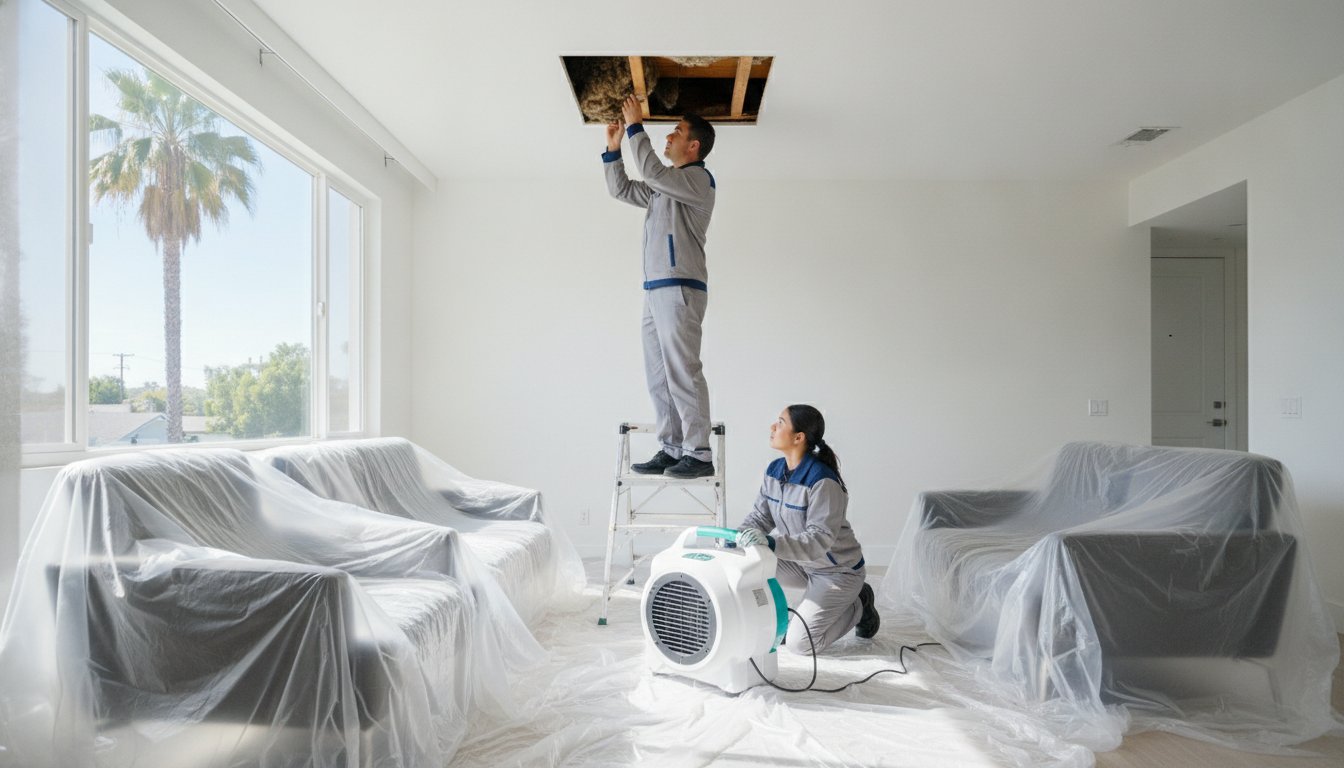
Mitigation is the “Emergency Phase.” It’s a high-stakes race against the clock to prevent the spread of moisture into non-affected areas. During this time, we deploy industrial-grade LGR dehumidifiers and high-velocity air movers to extract humidity from deep within the building’s skeleton. This process prevents the wood from warping and stops rot before it can compromise your home’s framing. Because this phase is about safety and preservation, insurance companies often prioritize these costs to limit the overall size of the claim. If you suspect moisture is trapped in your attic or crawlspace, getting a professional assessment for water damage restoration in Long Beach can prevent a minor leak from becoming a total loss.
Phase 1: Professional Water Mitigation
This phase relies on the science of psychrometry to ensure every drop of water is accounted for. We provide structural drying services that utilize thermal imaging cameras and moisture meters to map the “wet footprint” behind your ceiling. This diagnostic approach allows us to target hidden moisture pockets without unnecessarily tearing down healthy drywall. Professional monitoring is a standard part of this phase; technicians must return daily to adjust equipment and document drying progress. This documentation is vital for insurance approval. For more on the importance of aggressive moisture management, you can consult the EPA guide to mold and moisture control.
Phase 2: Ceiling Reconstruction and Finishing
Once the structure is certified dry, the reconstruction phase begins. This is where the visible components of your ceiling water damage repair cost accumulate. This phase includes the removal of compromised materials and the installation of new, high-quality drywall. It’s a meticulous process that involves hanging boards, taping seams, and applying multiple layers of joint compound to create a seamless surface. Matching existing ceiling textures, such as orange peel or knockdown finishes, requires a high level of craftsmanship to ensure the repair is invisible. Beyond the drywall, this phase also covers the replacement of saturated fiberglass insulation and the inspection of electrical fixtures that may have been exposed to water. For a seamless transition from drying to repair, consider a partner who offers comprehensive water damage restoration services.

Critical Factors That Influence Total Restoration Investment
Calculating the total ceiling water damage repair cost requires more than just measuring the diameter of a water spot. Several technical variables determine the complexity of the project and the specialized labor required. For instance, ceiling height and accessibility play a major role in the final invoice. Vaulted ceilings or multi-story foyers often require the assembly of scaffolding and specialized containment barriers, which increases the labor hours compared to a standard eight-foot bedroom ceiling. Additionally, the material of the ceiling itself changes the restoration path. While modern drywall is relatively straightforward to replace, lath and plaster ceilings found in historic Southern California homes require a more intensive, artisan approach to replicate the original finish.
One of the most misunderstood variables is the “square footage fallacy.” Homeowners often expect to pay only for the exact area of the visible stain. However, professional restoration standards require us to remove materials back to the nearest structural joist to ensure a seamless and safe repair. Furthermore, if the source of the leak is not immediately obvious, we may need to perform “destructive testing,” which involves cutting access holes to allow plumbers to locate and stop the intrusion. Understanding how these factors interact is crucial for managing your insurance coverage for water damage, as carriers often require detailed technical justifications for these complexities.
Environmental Hazards: Mold and Asbestos
In regions like Long Beach and Seal Beach, the age of the property often introduces environmental hurdles that must be cleared before restoration begins. For homes built before the late 1980s, popcorn textures or insulation materials may contain hazardous fibers. In these cases, we must follow strict SCAQMD protocols for certified asbestos removal to ensure the safety of your family and our crew. If moisture is left unaddressed for more than 48 hours, mold remediation becomes a necessary addition to the project. These environmental safeguards include air scrubbing, HEPA vacuuming, and third-party clearance testing, all of which are essential for a safe return to normalcy.
Structural and Material Complications
Beyond the surface, we must evaluate the integrity of the building’s skeleton. Saturated ceiling joists can swell or lose their load-bearing capacity, requiring structural reinforcement or specialized drying techniques. We also account for high-end finishes that complicate the “build-back” phase. Custom crown moldings, recessed lighting, or intricate ceiling fans must be carefully removed, stored, and reinstalled. Because water and electricity are a dangerous combination, every ceiling restoration involving light fixtures should include a safety inspection to prevent future fire hazards. With construction material costs in California currently 25-28% above pre-2020 levels, these meticulous details are what ensure your investment provides a long-term solution rather than a temporary patch. To see how these professional standards are applied to high-quality renovations elsewhere, you can discover HMJ Contracting and their approach to meticulous property restoration.
Deciding whether to file an insurance claim is a strategic financial choice that requires a clear understanding of your policy’s fine print. You should begin by evaluating your deductible against the projected ceiling water damage repair cost. If the restoration estimate only slightly exceeds your deductible, paying out of pocket may be the wiser long-term move to avoid potential premium increases. Most homeowners insurance policies operate under the “Sudden and Accidental” rule. This means coverage typically applies to unexpected events like a burst pipe or a failing water heater. It rarely covers gradual damage caused by unresolved maintenance issues, such as a slow roof leak you’ve ignored for months.
The risks of a DIY “patch and paint” approach are significant and often lead to structural failure. While hardware store kits can hide a stain, they do nothing to address the moisture trapped in the joists or insulation. This hidden water continues to degrade the cellulose in your drywall and provides a breeding ground for microbial growth. Professional restoration ensures that the “dry standard” is met before any cosmetic work begins. Skipping this step might save money today, but it often results in a much higher ceiling water damage repair cost when the hidden rot finally compromises the entire room’s safety.
Working with Your Insurance Adjuster
Professional restoration companies act as your technical advocate during the claims process. We provide the detailed moisture maps and atmospheric logs that adjusters require to approve a claim. It’s essential to understand the difference between Replacement Cost Value (RCV) and Actual Cash Value (ACV). RCV covers the current cost to replace your ceiling with new materials, while ACV only pays for the depreciated value of the old materials. Additionally, keeping your emergency plumbing repair receipt is vital. This document proves you took immediate action to mitigate the loss, which is a mandatory requirement for claim eligibility in most 2026 insurance contracts.
Professional vs. Handyman Services
Hiring an IICRC-certified technician is fundamentally different from hiring a general handyman. Certified restorers use industrial-grade LGR dehumidifiers and high-velocity air movers that a standard contractor simply doesn’t own. A handyman may use basic box fans, which only dry the surface while leaving the structural skeleton damp. Professional firms also carry specialized pollution liability insurance, which protects you if mold is discovered during the project. For a meticulous restoration that meets all local safety standards, you can contact our team for a professional assessment of your property’s needs.
Professional Restoration Solutions in Southern California
Coastline Environmental Solutions has served as a dependable local guardian for property owners since 1985. We understand that a saturated ceiling is more than a maintenance headache; it’s a threat to your home’s safety and indoor air quality. Our methodical approach treats every restoration project with the precision of a technical investigation and the care of a community partner. By acting as a single-source provider for both the emergency drying phase and the final reconstruction, we eliminate the coordination gaps that often drive up the total ceiling water damage repair cost. You won’t have to manage multiple contractors or worry about whether the drying team and the build-back crew are following the same moisture standards.
Our 24-hour emergency response team is equipped for immediate water extraction and structural drying. This rapid intervention is the most effective way to stabilize your property and minimize the eventual ceiling water damage repair cost. Because we’re certified experts in asbestos and lead abatement, we handle the complexities of older homes in Lakewood and Seal Beach with full regulatory compliance. We ensure that every environmental hazard is identified and contained before the first piece of drywall is removed. This protects your family from the secondary risks of restoration while meeting the strict 2026 SCAQMD protocols for residential renovations.
The Coastline Restoration Process
We possess deep expertise in Southern California architectural styles, from mid-century Lakewood ranch homes to modern Long Beach coastal properties. This local knowledge allows us to navigate specific municipal building codes and regional insurance standards with ease. We have spent decades building relationships with local insurance agents and adjusters, which helps streamline the documentation and approval process for our clients. If you’re facing a ceiling crisis, don’t wait for the damage to spread. You can Contact Coastline Environmental Solutions for a Professional Assessment to start your organized recovery today.
Securing Your Home’s Structural Future
Managing the ceiling water damage repair cost effectively requires a strategic understanding of the two-phase restoration process. By prioritizing immediate mitigation and thorough moisture mapping, you can prevent secondary issues like structural rot and mold growth from inflating your budget. It’s essential to remember that environmental safety, particularly certified abatement for older Southern California homes, is a mandatory step for a safe and compliant reconstruction. Small leaks don’t fix themselves; they only become more complex and expensive the longer they remain unaddressed.
Coastline Environmental Solutions has acted as a dependable local guardian for homeowners in Long Beach and Orange County since 1985. We provide 24/7 emergency water extraction and certified asbestos and lead abatement to handle even the most high-stakes property crises with precision. Our methodical approach ensures that your home is returned to its pre-loss condition through a controlled and transparent recovery plan. You can Request a Professional Ceiling Damage Assessment from Coastline today to protect your investment. We’re ready to help you navigate this challenge and restore your peace of mind.
Frequently Asked Questions
What factors determine the cost of ceiling water damage repair?
Several technical variables influence the final invoice, including the ceiling’s height, the category of water involved, and the specific materials affected. Vaulted ceilings require scaffolding and specialized containment, while Category 3 “black” water necessitates intensive decontamination. We also evaluate the extent of structural saturation in the joists and insulation. Every layer of moisture adds to the labor hours and industrial equipment required, which directly impacts the total ceiling water damage repair cost.
Does homeowners insurance typically cover water-damaged ceilings?
Most policies cover repairs if the damage results from a “sudden and accidental” event, such as a burst pipe or a failing water heater. However, insurance companies often deny claims for gradual damage caused by unresolved maintenance issues, like a slow roof leak. To ensure claim approval, you must provide professional documentation, including moisture maps and atmospheric logs, that proves you took immediate steps to mitigate the loss and stabilize the structure.
Can I just paint over a water stain on my ceiling?
You should never simply paint over a water stain without first identifying and drying the source of the moisture. A visible stain is merely a symptom of trapped water in the drywall, insulation, or framing. If you hide the mark with paint, the trapped moisture will continue to degrade the structural integrity of your ceiling and provide a breeding ground for mold. Professional drying is required to ensure the area is stable before any cosmetic work begins.
How much more does it cost to repair a ceiling with asbestos?
Environmental hazards like asbestos significantly increase the ceiling water damage repair cost due to the mandatory safety protocols required by SCAQMD. Certified abatement teams must establish negative pressure containment zones, utilize HEPA air filtration, and wear specialized personal protective equipment. These measures prevent the release of dangerous fibers into your home’s air supply. Additionally, hazardous material disposal fees and third-party clearance testing are necessary components of a safe and compliant restoration project.
How long does the professional ceiling restoration process take?
The restoration process is typically divided into two distinct phases over seven to ten days. The mitigation phase, which involves extraction and structural drying, usually takes three to five days of continuous equipment operation. Once the structure is certified dry, the reconstruction or “build-back” phase begins. This second phase, involving drywall installation, texture matching, and painting, typically requires another three to five days depending on the complexity of the finishes and the area’s size.
Is mold remediation always required for ceiling water damage?
Mold remediation isn’t always necessary if the water is extracted and the structure is professionally dried within a 48-hour window. Microbial growth typically begins after two days of stagnant moisture. If you wait longer than this to call a professional, mold spores may colonize the damp drywall or wooden joists. In these cases, we must implement specialized cleaning protocols and antimicrobial treatments to ensure the environment is safe before reconstruction can proceed.
What is the difference between water mitigation and ceiling repair?
Water mitigation is the emergency stabilization phase focused on stopping the leak, extracting standing water, and drying the structural components. Its goal is to prevent further damage and mold growth. Ceiling repair, or reconstruction, is the subsequent phase where we physically replace the damaged materials. This includes hanging new drywall, taping, mudding, and matching the existing texture and paint. Both phases are essential for a complete return to your home’s pre-loss condition.
When should I call a professional instead of a handyman for a ceiling leak?
You should call a professional restorer whenever water has penetrated the ceiling’s interior layers or if you suspect environmental hazards like asbestos. Handymen often lack the thermal imaging cameras needed to find hidden moisture and the industrial LGR dehumidifiers required for deep structural drying. A professional ensures that the “dry standard” is met throughout the building’s skeleton, which prevents future structural failure and hidden mold growth that a simple patch cannot address.