
01 Aug Certified Lead Abatement Contractors in Long Beach: Your 2026 Hiring Guide
As of early 2026, the EPA increased federal fines for lead safety violations to $49,772 per day, marking a significant shift in how environmental hazards are regulated. For property owners in Long Beach, this change underscores the vital importance of hiring certified lead abatement contractors who understand the latest Cal/OSHA exposure limits. You’re likely concerned about the health of your family or tenants, yet confused by the technical gap between a lead-safe renovation and a permanent abatement solution.
It’s stressful to manage a hazardous material crisis, but you don’t have to navigate the regulatory maze alone. This guide will teach you how to identify, verify, and hire the right professionals to ensure your property meets every current safety standard. We’ll explain the 2026 CDPH requirements, detail the steps to secure a lead-free certification, and provide a clear path to finishing your project with minimal disruption to your timeline. By the end, you’ll have the confidence to move from a state of uncertainty to an organized, permanent resolution.
Key Takeaways
- Learn the critical legal distinction between “Lead-Safe Renovation” and permanent lead abatement to ensure your property meets 2026 California compliance standards.
- Discover the methodical process certified lead abatement contractors use to secure hazardous sites, including negative air pressure zones and HEPA-filtered containment.
- Master the verification steps for checking CDPH certification numbers and specialized pollution liability insurance to protect your financial and physical health.
- Understand how California Title 17 regulations and Long Beach building permits dictate the specific documentation required for a successful hazardous material removal.
- Find out how to achieve a certified lead-free status through a comprehensive strategy that moves from initial industrial hygiene testing to final clearance.
What Defines Certified Lead Abatement Contractors?
A certified lead abatement contractor is a specialized environmental professional licensed to permanently eliminate lead-based paint hazards from a property. This role goes far beyond the scope of a standard painting or renovation firm. These specialists are trained to identify the root cause of lead exposure and implement engineered solutions to remove the threat entirely. Their primary objective is to deliver a property to a “Lead-Free” or “Lead-Safe” status, providing the documentation necessary to satisfy health departments and insurance carriers. In Long Beach, where a significant portion of the housing stock dates back to the pre-1978 era, certified lead abatement contractors serve as essential guardians of public health.
RRP vs. Abatement: Choosing the Right Service
The core difference between Lead-Safe Renovation (RRP) and lead abatement lies in the intent and the outcome. RRP is a set of work practices used during a renovation to minimize the creation of lead dust while completing a separate task, such as installing a new window. In contrast, this Lead abatement process is specifically designed to permanently remove lead hazards. Selecting the wrong service can be a costly mistake. While RRP might suffice for minor aesthetic repairs, full abatement is often a legal requirement for child-occupied facilities or properties undergoing comprehensive remediation. Under the Toxic Substances Control Act, working without the proper EPA and CDPH certifications on a qualifying project can result in federal fines of up to $49,772 per violation, per day.
The Health and Legal Risks of Non-Certified Work
Attempting to handle lead removal through a standard general contractor or a DIY approach often increases toxic dust exposure. When lead-based paint is sanded or scraped without specialized HEPA-filtered containment, it releases microscopic particles that settle into carpets and air ducts. For landlords and property managers, using uncertified labor creates a massive liability loop. If a tenant or worker tests positive for elevated blood lead levels, the lack of a certified abatement plan can lead to litigation and the immediate closure of the property by local health authorities. According to 2026 safety standards, lead-based paint hazards are defined as any lead-contaminated dust, soil, or paint that is deteriorated or present on friction or impact surfaces, particularly when airborne levels meet or exceed the action level of 2 micrograms per cubic meter.
Hiring certified lead abatement contractors ensures that the work is performed under the strictest safety protocols. This methodical approach protects the structural integrity of your building while ensuring that every occupant can breathe clean air. By following CDPH guidelines, these professionals provide a clear path to regulatory compliance and, more importantly, peace of mind for the families and tenants living within those walls.
The Professional Lead Abatement Process: A Methodical Approach
Every successful remediation starts with a rigorous industrial hygiene evaluation. Professional certified lead abatement contractors don’t rely on visual guesses; they use X-ray fluorescence (XRF) analyzers and laboratory soil analysis to map exactly where hazards exist. Following strict EPA lead abatement guidelines, our team identifies specific risk areas before a single square inch of paint is disturbed. This initial data ensures that the removal strategy is tailored to the unique structural needs of your Long Beach property, whether it’s a historic residence or a commercial facility.
Once the assessment is complete, the removal phase utilizes three primary methods: wet scraping, heat stripping, and encapsulation. Wet scraping involves misting the surface with water to prevent toxic dust from becoming airborne. Heat stripping uses specialized tools designed to operate below 1,100 degrees Fahrenheit, which removes paint without vaporizing lead into dangerous fumes. In some scenarios, encapsulation provides a permanent solution by sealing the lead-based paint under a high-performance, impact-resistant coating. For industrial facilities requiring durable floor finishes, you can visit StripeGuys Warhouse Line Striping to discover specialized epoxy and safety marking solutions. These methods are far more effective than standard sanding, which often exacerbates the problem by spreading microscopic particles through the air.
Containment and Safety Protocols
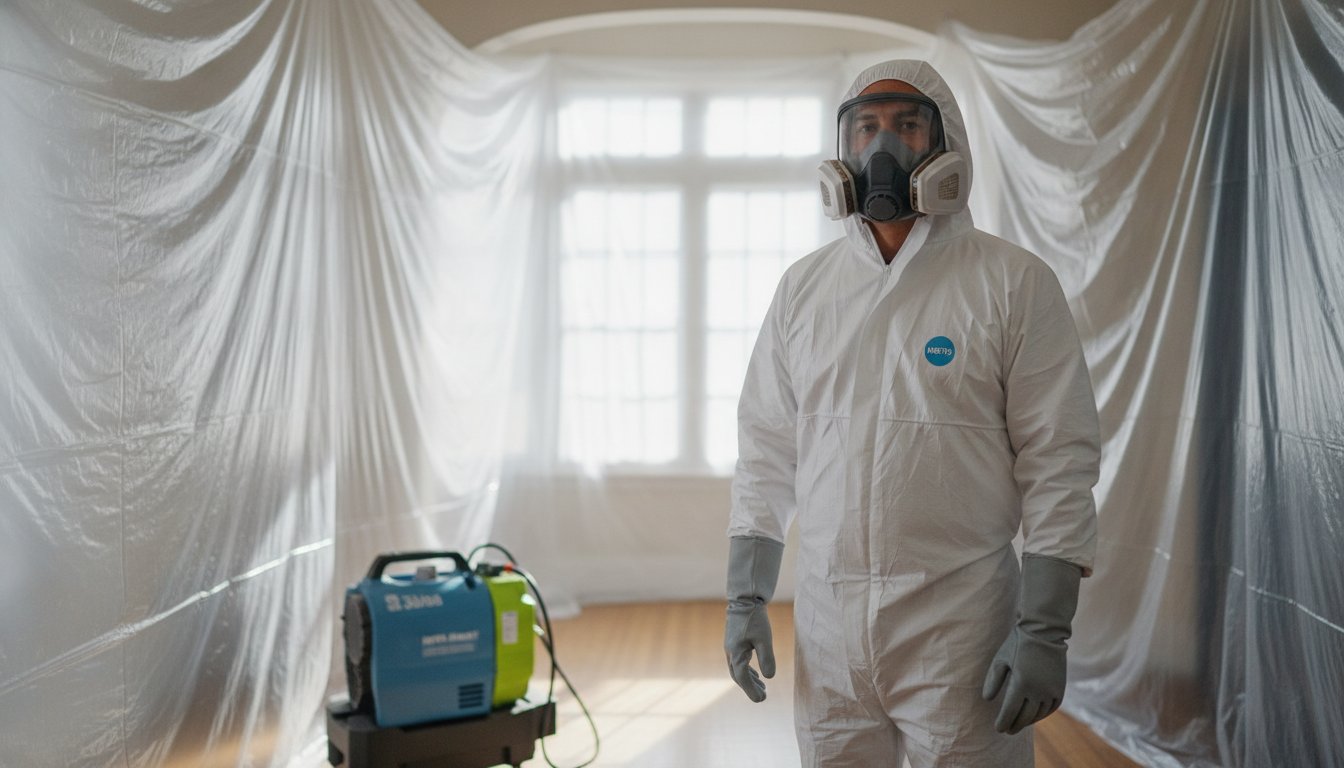
Preventing lead dust from migrating to clean areas requires advanced engineering controls. We establish negative air pressure zones using HEPA-filtered air scrubbers, which ensure that air only flows into the work area and never out into the rest of the building. Workers utilize specialized personal protective equipment (PPE) and pass through multi-stage decontamination units to prevent cross-contamination. We also take extensive measures to seal HVAC registers and protect personal belongings with 6-mil poly sheeting. If you suspect your pre-1978 home contains hazards, reaching out to specialized environmental restorers can help clarify your next steps and protect your indoor air quality.
Disposal and Documentation
The final phase of the process is as critical as the removal itself. California law requires that all lead-contaminated waste be handled, transported, and disposed of at authorized hazardous waste facilities. After the physical removal, we perform a meticulous HEPA-vacuuming and wet-wiping of all surfaces, followed by a final clearance test conducted by an independent third party. This ensures that the dust levels are well below the Cal/OSHA action level of 2 micrograms per cubic meter. You will receive a comprehensive Close-out Report, which is essential for future property sales and insurance requirements. This documentation is as vital as the Asbestos Testing: Homeowner’s Renovation Guide (2026) for ensuring your property’s long-term value and safety compliance.
How to Verify and Select a Certified Lead Company
Selecting a partner for hazardous material removal is a high-stakes decision that requires more than a cursory glance at a business card. You must confirm the firm holds active credentials from the California Department of Public Health (CDPH). It’s also vital to understand the EPA Individual Certification Requirements, which ensure that every supervisor and worker on your site has undergone rigorous training in containment and disposal. In Long Beach, where historic homes are common, certified lead abatement contractors should provide a site-specific plan that addresses the unique layout of your property before work begins.
Insurance is another non-negotiable factor. Standard general liability policies often contain “pollution exclusions” that specifically bar coverage for lead-related incidents. If lead dust migrates to a neighboring property or a worker is exposed, you could be held financially liable. Always request a certificate of insurance that explicitly includes pollution liability coverage. Additionally, ask for a detailed estimate that outlines the specific methods of removal and the cleanup protocols. A professional estimate should look like a technical roadmap, not a simple price quote.
Crucial Questions for Your Lead Contractor
When interviewing potential firms, focus on their technical execution and safety culture. Ask if they’ll perform daily air monitoring to ensure levels stay below the Cal/OSHA action level of 2 micrograms per cubic meter. Inquire about the certification levels of the specific crew members who’ll be on-site; every worker must be CDPH-certified for the tasks they perform. Finally, request references from other Southern California property owners who’ve completed similar abatements. A reputable company will have a documented history of successful clearances and satisfied clients in the local community.
Red Flags: When to Walk Away
Certain behaviors indicate a dangerous lack of professionalism. If a contractor suggests “dry sanding” or mentions using a standard household vacuum, they’re violating federal safety laws. Professional abatement requires HEPA-filtered vacuums and wet-removal techniques to keep dust suppressed. Be wary of contractors who can’t provide written safety protocols or a plan for hazardous waste disposal manifests. Finally, extremely low bids are a major warning sign. The cost of specialized PPE, negative air machines, and legal disposal is significant. A “bargain” price usually means the contractor is cutting corners on the equipment that protects your health.

California Lead Safety Standards and Local Requirements
Compliance in California is strictly governed by Title 17 of the California Code of Regulations. This comprehensive legal framework dictates how certified lead abatement contractors must handle every stage of detection, containment, and removal. In coastal cities like Long Beach and Seal Beach, these standards are non-negotiable for any structure built before 1978. The Southern California climate plays a significant role in property maintenance; high humidity and salt-laden air accelerate the oxidation and peeling of older lead-based coatings. When paint degrades due to these environmental factors, it creates hazardous dust that requires immediate professional intervention to prevent inhalation or ingestion. Properties undergoing renovation in this region may also encounter co-occurring hazards, and understanding the professional asbestos removal process is equally critical for full regulatory compliance under South Coast AQMD Rule 1403. Older properties built before the mid-1980s may also contain textured ceiling finishes that require popcorn ceiling asbestos removal as part of a comprehensive hazardous material remediation plan.
The City of Long Beach requires specific building permits for hazardous material removal based on the project’s valuation. While there isn’t a single line-item fee for lead abatement, the work must be properly documented within the general construction permit framework to ensure the property remains habitable. For child-occupied facilities and rental units, the reporting requirements are even more stringent. Landlords must disclose any known lead hazards and provide proof of professional abatement to maintain their business licenses and protect their tenants from long-term health risks.
The Role of the California Department of Public Health (CDPH)
The CDPH acts as the primary enforcement arm for lead safety across the Long Beach area. They monitor abatement projects to ensure that only CDPH-certified supervisors and workers are present on the job site. In residential rentals, if a hazard is identified, the CDPH often coordinates with local health departments to issue formal notices that mandate remediation. This methodical oversight ensures that lead-contaminated dust is not simply moved around but is permanently removed or sealed according to state law. Our team at Coastline Environmental Solutions, Inc. helps property owners navigate these regulatory pressures with technical precision and methodical care.
Timeline and Preparation for Local Homeowners
For a standard home in Lakewood or Long Beach, the lead abatement process typically lasts between three and seven days. This duration depends on the total square footage and the complexity of the removal methods required. Residents should prepare to vacate the property during the active disturbance phase of the project to ensure total safety. You’ll need to pack essential items, seal food containers, and relocate pets before the containment zones are established. If your lead issues were triggered by a burst pipe or structural flooding, you should also consult our Water Damage Restoration in Long Beach: The Expert Recovery Guide (2026) to address the underlying moisture problems. Moisture often causes lead-based paint to bubble and flake, making the hazard more accessible and dangerous for your family.
Why Coastline is the Trusted Lead Abatement Partner in Long Beach
Since 1985, Coastline Environmental Solutions, Inc. has served as a dependable local guardian for Southern California property owners facing environmental crises. We aren’t just another service provider; we’re meticulous restorers dedicated to creating long-term health solutions. As certified lead abatement contractors, we’ve spent over 40 years mastering the complexities of hazardous material management in Long Beach, Lakewood, and Huntington Beach. Our legacy is built on a foundation of technical precision and a deep commitment to the safety of our community.
Our approach is grounded in professional authority and reassuring empathy. We offer a comprehensive service cycle that begins with rigorous industrial hygiene testing and concludes with a definitive clearance certificate. This end-to-end management reduces the stress often associated with hazardous material removal. Our technicians hold current CDPH certifications and undergo continuous training to stay ahead of the strict regulatory changes implemented in 2026. We prioritize transparent communication, providing you with a detailed Close-out Report that is essential for future property transactions and insurance compliance.
A Meticulous Approach to Property Safety
Historic Long Beach homes demand a sophisticated level of care that standard renovators simply cannot provide. We implement the latest HEPA-filtered air scrubbers and multi-stage containment zones to protect your home’s structural integrity while we eliminate toxic paint. Our team understands the emotional weight of a lead hazard, especially for families with young children. We focus on a methodical return to normalcy, ensuring that every friction surface is treated and every room undergoes a clinical-level cleaning before we hand back the keys. This thoroughness ensures that your indoor air quality is restored to the highest possible standard.
Ready for a Lead-Safe Property?
Achieving a lead-safe property shouldn’t be a source of confusion or worry. The first step is a professional lead inspection and risk assessment to identify the exact scope of the project. We provide transparent, line-item quotes that explain the logic behind every safety measure, from specialized PPE to hazardous waste disposal. Our local expertise ensures your project moves through the Long Beach permitting process without unnecessary delays. Contact Coastline Environmental Solutions, Inc. for Certified Lead Abatement to schedule your assessment and secure the peace of mind that comes with a truly lead-free environment.
Securing Your Property’s Future with Expert Lead Remediation
Navigating the complex 2026 California lead standards requires more than general renovation knowledge; it demands a partner who understands the high stakes of environmental safety. By verifying CDPH credentials and ensuring your provider carries specialized environmental pollution liability insurance, you shield your property from the significant legal and health risks associated with lead exposure. A methodical, multi-step containment and removal process is the only reliable way to achieve a permanent lead-free status for your Long Beach home or commercial building.
Choosing the right team means moving from a state of emergency to a feeling of organized resolution. Since 1985, our team has acted as a dependable local guardian for property owners throughout Long Beach and Orange County. When you’re ready to move forward, hiring certified lead abatement contractors ensures that every safety protocol is followed to the letter, protecting your tenants, your family, and your investment. You don’t have to manage this technical challenge alone.
Secure Your Property with Certified Lead Abatement from Coastline today. We’re here to provide the meticulous care and professional expertise needed to restore your property to a safe, healthy, and compliant condition.
Frequently Asked Questions
How do I know if a lead abatement contractor is truly certified?
Verification begins with requesting the company’s CDPH certification number and verifying it through the state’s online database. Truly certified lead abatement contractors must also have specific EPA-firm certification for work in pre-1978 housing. We recommend asking for proof of current training for each crew member assigned to your site to ensure compliance with 2026 safety standards.
What is the difference between lead-safe renovation and lead abatement?
Lead-safe renovation (RRP) focuses on reducing dust during aesthetic repairs, while lead abatement is a permanent solution designed to eliminate the hazard entirely. Abatement involves a methodical approach to removal, enclosure, or encapsulation that is legally recognized as a long-term fix. Renovation is often sufficient for minor updates, but abatement is required when a property must be certified lead-free.
Is lead abatement mandatory for older homes in Long Beach?
Lead abatement isn’t universally mandatory for every older home, but it becomes a legal requirement under specific conditions. If a child under six resides in the home and elevated blood lead levels are detected, or if you operate a child-occupied facility, remediation is often mandated. Rental property owners in Long Beach must also comply with Title 17 regulations regarding hazardous paint conditions to maintain habitability.
Can I stay in my home during the lead abatement process?
Residents are typically required to vacate the work area during the active disturbance and cleanup phases of the project. To prevent cross-contamination, we establish strict containment zones that often cut off access to kitchens, bathrooms, or bedrooms. Our team works to minimize the displacement timeline, but safety standards mandate that no occupants remain in the property until final clearance testing is successfully completed.
How much does professional lead abatement typically cost?
The total investment for lead abatement depends on the square footage of the affected area, the chosen removal method, and the complexity of the architectural details. Factors like the number of windows, the height of the exterior, and the condition of the substrate all influence the final scope of work; for instance, property owners often explore Window replacement through specialized firms like Metro Reconstruction Services, Inc. to permanently remove lead sashes while upgrading their home’s energy efficiency. We provide transparent, site-specific estimates after a thorough risk assessment to ensure all regulatory requirements are met.
What documents should I receive after a lead abatement project is finished?
Upon completion, you should receive a comprehensive Close-out Report that serves as your legal proof of remediation. This documentation includes independent clearance testing results, waste disposal manifests from authorized facilities, and a summary of the methods used by your certified lead abatement contractors. Keeping these records is vital for future property sales, insurance renewals, and satisfying local health department requirements.
What is the EPA RRP Rule and does it apply to my project?
The EPA’s Renovation, Repair, and Painting (RRP) Rule applies to any project that disturbs more than six square feet of interior paint in homes built before 1978. It mandates that firms be certified and use specific lead-safe work practices to protect occupants from toxic dust. While RRP is focused on safe work during repairs, it is a separate standard from the full abatement protocols required for permanent hazard elimination. If your renovation also uncovers suspected asbestos-containing materials, reviewing a methodical guide to safe asbestos removal will help you understand the additional compliance steps required under California law.
Does insurance cover the cost of lead paint removal?
Most standard homeowner insurance policies contain pollution exclusions that specifically bar coverage for lead paint removal or related damages. However, if the lead hazard is a result of a covered peril, such as significant water damage that causes paint to flake, there may be limited avenues for coverage. We recommend reviewing your specific policy with your agent to determine if environmental remediation is included in your plan.