
05 Aug How to Remove Soot and Smoke Odors After a Fire: A Step-by-Step Guide
Did you know that the physical footprint of smoke damage can exceed the actual fire zone by a factor of three to five? While the flames may have been contained to a single room, the acidic residue left behind is already working to etch your surfaces and compromise your respiratory health. We understand the overwhelming stress of seeing your property covered in a layer of black dust, which is why professional soot damage cleaning requires a precise, technical response. It’s a high-stakes situation where the wrong cleaning product can actually lock in stains forever.
This guide provides a methodical approach to restoration that prioritizes both surface integrity and long-term air quality. You’ll learn the technical steps to safely remove residue without causing further permanent damage to your walls or upholstery. We’ll walk through the essential safety protocols, the specific tools required for various soot types, and the professional techniques used to neutralize odors at a molecular level. By following this structured path, you can move from the chaos of an emergency to a state of organized recovery and safety.
Key Takeaways
- Understand why soot is highly acidic and how it can begin permanently etching your home’s surfaces within hours of a fire.
- Learn to distinguish between dry, oily, and protein residues to ensure your soot damage cleaning efforts don’t lead to permanent smearing.
- Discover why HEPA vacuuming and proper containment are the most critical first steps in lifting particles without damaging underlying materials.
- Identify the specific structural and air quality signs that indicate a need for professional restoration and advanced odor neutralization technology.
What is Soot Damage and Why is it Dangerous?
Soot isn’t just a cosmetic issue; it’s a chemical hazard that begins degrading your property the moment it settles. To understand the necessity of professional soot damage cleaning, one must first ask: What is soot and how does it behave? At its core, soot is a complex mixture of chemicals and carbon. It forms through incomplete combustion, meaning when materials don’t burn entirely, they release tiny, carbon-based particles that carry the chemical signature of whatever fueled the fire.
Because these particles are often highly acidic, they don’t just sit on top of your furniture or walls. They react with the surface. Within just a few hours, soot can begin etching into glass, tarnishing metal fixtures, and permanently discoloring porous plastics or stone. If left unaddressed, this chemical reaction causes pitting and staining that no amount of scrubbing can reverse. This is why the timing of your response is just as critical as the methods used.
Beyond property damage, the most significant risk is to your health. Soot contains ultra-fine particulate matter, often categorized as PM2.5. These particles are so small they can bypass the body’s natural filters in the nose and throat, traveling deep into the lungs and even entering the bloodstream. This can lead to severe respiratory irritation, especially for children, the elderly, or those with pre-existing conditions like asthma.
The Chemistry of Smoke Residue
The composition of the residue depends entirely on the fuel source. A wood-burning fire produces a dry, powdery soot that is relatively straightforward to remove. However, modern homes are filled with synthetic materials like plastics, foam, and electronics. When these burn at lower temperatures, they create a thick, smeary, oily residue that is incredibly difficult to clean. When this oily soot combines with high humidity or moisture from firefighting efforts, it becomes even more corrosive, accelerating the damage to your home’s structural elements.
Immediate Safety Precautions
Before you even consider soot damage cleaning, you must prioritize your physical safety. Never enter a smoke-damaged area without an N95 respirator and heavy-duty gloves. The fine dust can be absorbed through the skin or inhaled easily. It’s also vital to turn off your HVAC system immediately. An open-return HVAC system can distribute smoke and soot throughout 100% of a home’s conditioned space in under 10 minutes, turning a localized kitchen fire into a whole-house restoration project. Don’t touch soot-covered surfaces with your bare hands, as the oils from your skin can react with the acidic particles and lock the stain into the material.
Identifying Your Soot Type: Dry vs. Oily vs. Protein
Successful soot damage cleaning begins with a technical assessment of the residue. Not all soot is created equal. The chemistry of the fire dictates the chemistry of the cleanup, and misidentifying the residue can lead to irreversible property damage. Before you reach for a bucket of water, you must determine if you’re dealing with dry, oily, or protein-based particles. Identifying the specific chemical composition of the residue is the only way to prevent permanent surface etching.
The most common mistake homeowners make is assuming that all black dust can be wiped away with a standard cleaner. In reality, applying “wet cleaning” methods to dry soot is disastrous. Water acts as a carrier, pulling the acidic particles deep into the pores of your drywall or wood. This causes permanent “bleeding” and staining that even professional-grade primers can’t always hide. Understanding these distinctions is the first step in a methodical restoration process.
Characteristics of Dry Soot
Dry soot typically results from fast-burning, high-heat fires fueled by wood or paper, such as a fireplace malfunction or a furnace “puff-back.” It’s powdery, crumbly, and doesn’t smear easily when touched lightly. Because these particles are non-greasy, they don’t bond as tightly to surfaces. However, their light weight means they stay airborne longer and settle into every crevice. A standard household vacuum is insufficient for this task because it will simply exhaust the fine particles back into the air. Instead, restoration professionals use HEPA-filtered extraction and specialized dry chemical sponges. These sponges are designed to lift the powder off the surface without the use of liquids, preserving the integrity of the paint or wallpaper.
Characteristics of Oily and Protein Soot
Oily soot is the byproduct of low-heat, smoldering fires involving plastics, rubber, or synthetic fabrics. It’s thick, black, and incredibly smeary. One tell-tale sign of oily residue is the presence of “soot tags” in the corners of a room. These look like dark spider webs but are actually chains of smoke particles that have become ionically charged and bonded together. Because this residue is water-resistant, it requires heavy-duty degreasers and a methodical wet-cleaning process to break the bond with the surface. If you’re unsure which type you’re facing, a professional evaluation for fire and smoke damage repair can prevent costly mistakes.
Protein residue is perhaps the most deceptive. It’s often invisible to the naked eye, appearing only as a slight yellowish discoloration on walls, yet it carries an incredibly pungent odor. Common in kitchen fires where grease or meat has burned, protein soot requires specialized enzyme cleaners to neutralize the organic compounds causing the smell. Without these specific chemical agents, the odor will persist for years, even after the surfaces look clean. Proper identification ensures that the cleaning agents used are compatible with the specific pollutant, preventing further damage to your property’s air quality.
How to Clean Soot Damage: A Step-by-Step How-To
Restoring your property after a fire requires a disciplined, multi-stage approach. The goal is to remove contaminants without driving them deeper into the building’s substrate. Effective soot damage cleaning follows a specific hierarchy of removal, starting with the least invasive methods before moving to wet cleaning. This sequence ensures you don’t accidentally set a stain that could have been lifted while dry.
Your first priority is ventilation and containment. Open windows to encourage fresh air exchange, but use heavy-duty plastic sheeting and painter’s tape to seal off doorways to unaffected rooms. This prevents fine particulate matter from drifting through the house. Once the area is contained, begin with HEPA vacuuming. Hold the vacuum nozzle about half an inch away from the surface to pull loose particles into the filtration system. Never press the attachment against the wall, as this pressure will grind the acidic soot into the paint or wallpaper.
The Dry Sponge Technique
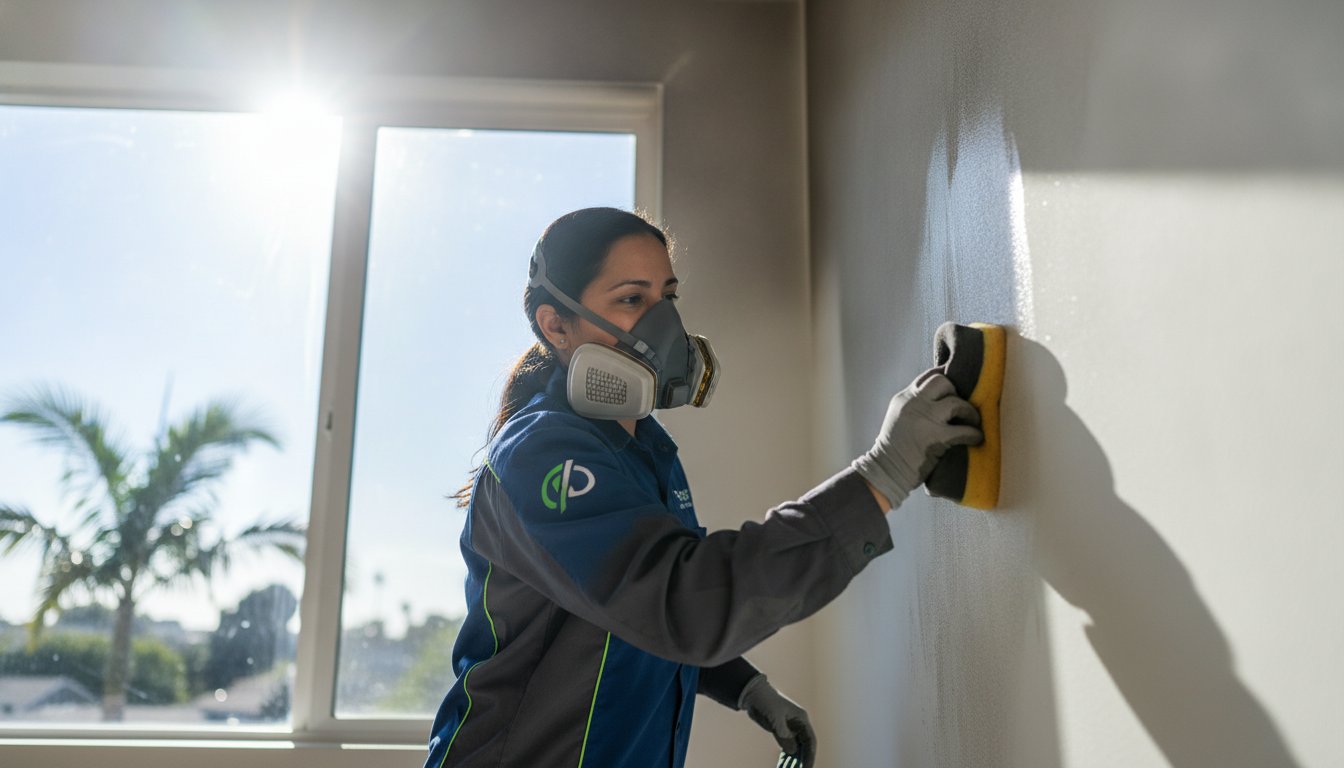
The dry chemical sponge is the secret weapon of professional restorers. These specialized rubber sponges are designed to lift soot through a porous structure without the use of water or detergents. To use them effectively, start at the top of the wall or ceiling and wipe in firm, overlapping strokes in a single direction. Do not scrub back and forth. As the surface of the sponge becomes black and saturated with residue, use a utility knife to slice off the dirty layer or simply flip the sponge to a clean side. Using a soiled sponge will only smear the soot, complicating the restoration process.
Cleaning Hard vs. Soft Surfaces
After dry removal is complete, you can address hard surfaces like glass, metal, and finished wood with a mild degreasing solution. Metal fixtures are particularly vulnerable to the acidic nature of soot and should be cleaned immediately to prevent permanent pitting. For glass, a standard ammonia-based cleaner is often sufficient once the loose dust is gone. However, soft surfaces present a much greater challenge. Upholstery, drapes, and flooring act as filters, trapping smoke deep within their fibers. Because these materials require high-heat extraction and specialized deodorizers, seeking professional carpet cleaning in Long Beach is the most reliable way to ensure the soot is fully removed rather than just hidden. Finally, address lingering odors by placing bowls of white vinegar or activated charcoal in the room, though severe cases may require industrial-grade ozone treatment to fully restore air quality.

When to Call a Professional Restoration Specialist
While minor soot damage cleaning may be manageable for small, localized incidents, certain scenarios require a technical intervention that goes beyond consumer-grade tools. If the fire was hot enough to cause structural warping, charring of support beams, or bubbling of drywall, the integrity of the building is at stake. Superficial cleaning won’t solve these issues. You’re dealing with structural compromises that require specialized engineering oversight and professional-grade stabilization. Similarly, high-value items like family heirlooms, oil paintings, or high-end electronics are incredibly sensitive to the acidic nature of smoke. Amateur cleaning can cause these items to deteriorate faster, so they should be handled only by specialists who use ultrasonic cleaning or controlled chemical baths. For commercial property owners, the stakes are even higher — much like flood restoration for businesses in Southern California, fire damage at a commercial facility demands a dual focus on technical remediation and minimizing operational downtime.
Widespread smoke odor is another clear signal that you’ve reached the limits of DIY methods. If the smell persists after you’ve scrubbed surfaces and ventilated the space, the odor molecules have likely penetrated deep into the building’s “envelope.” Professionals like CRS San Antonio use advanced equipment like hydroxyl generators and thermal foggers to neutralize these odors at a molecular level, rather than just masking them with scents.
The Danger of Hidden Soot in Air Ducts
One of the most deceptive aspects of fire recovery is the HVAC system. Even if the flames were confined to a single room, your air ducts likely acted as a delivery system for microscopic pollutants. If soot has entered your vents, every time the heater or air conditioner turns on, it re-pollutes the entire property with fine particulate matter. This constant re-circulation makes it impossible to achieve a truly clean environment through surface cleaning alone. Professional duct cleaning and indoor air quality testing are essential to ensure the air you breathe is safe. Without a certified assessment, you may be living with invisible respiratory irritants for months after the event.
Insurance and Documentation
Managing an insurance claim in the Long Beach and Huntington Beach areas requires meticulous record-keeping. Before you begin any soot damage cleaning, you must document the scene thoroughly. Take high-resolution photographs of the soot patterns, structural damage, and every affected personal item. In Southern California, insurance adjusters look for professional restoration reports to validate the scope of work. A detailed report from a certified specialist provides the technical evidence needed to support your claim, often making the difference between a partial settlement and a full recovery. Local environmental regulations also dictate how certain hazardous residues must be handled, so having a professional partner ensures you remain compliant with municipal codes.
If you’re facing widespread damage or persistent odors, don’t risk your property’s long-term value. Contact Coastline Environmental Solutions, Inc. for expert fire and smoke damage repair to ensure a thorough and safe restoration.
Coastline’s Professional Fire and Smoke Restoration
Coastline Environmental Solutions, Inc. has been a dependable local guardian for residents in Lakewood, Cerritos, and the greater Long Beach area since 1985. We approach every project with a meticulous “challenge-action-resolution” flow, ensuring that no detail is overlooked. Our team specializes in soot damage cleaning, recognizing that the chemical composition of smoke requires a highly technical response. By integrating our deep community roots with advanced industry standards, we provide a level of care that prioritizes both structural integrity and your family’s health. Our methodical strategy for fire and smoke damage repair is designed to stop acidic etching in its tracks before it causes permanent staining.
We utilize advanced technology to address the complex nature of fire residue. Thermal fogging and ozone treatments are essential tools in our arsenal, allowing us to neutralize pungent odors at a molecular level. These processes don’t just mask the smell; they chemically alter the smoke molecules to eliminate them entirely. This commitment to thoroughness extends to our environmental remediation services, where we address the full spectrum of pollutants left behind by a fire. We understand that a successful recovery requires more than just surface cleaning; it requires a complete restoration of your property’s safety and air quality.
Restoring Your Peace of Mind
In the chaos following a property fire, you need a steady hand and a clear plan. We act as your meticulous restorer, navigating the high-stakes environment of hazardous material management with professional authority. Many Southern California homes contain legacy materials like asbestos or lead, which can be disturbed during a fire or the subsequent cleanup. Our certified experts manage these risks with precise containment and abatement, ensuring your return to normalcy isn’t compromised by invisible health threats. We’re dedicated to returning your property to its pre-loss condition through a logical, step-by-step restoration sequence that reduces your stress and protects your investment.
Get a Professional Assessment Today
Delaying soot damage cleaning allows acidic particles to bond permanently with your home’s surfaces. To prevent this, we maintain a 24-hour emergency response for our local community, ensuring technical help is available the moment you need it. Our professional assessments provide the documentation and technical clarity required for both insurance claims and effective cleaning. Contact Coastline Environmental Solutions, Inc. for a soot damage assessment to secure your property’s future and restore your indoor air quality today.
Restoring Safety and Value to Your Property
Recovering from a fire is about more than just the immediate cleanup; it’s about restoring the long-term integrity and safety of your living space. By identifying the specific chemistry of the residue and applying the methodical steps for soot damage cleaning, you prevent the permanent etching that can devalue your property over time. This structured approach moves you away from the immediate stress of a crisis and toward a permanent, safe return to normalcy.
Coastline Environmental Solutions, Inc. has served Southern California as a dependable local guardian since 1985. As Certified Environmental Specialists, we bring a meticulous eye to every restoration project, offering the 24/7 emergency restoration support necessary for a rapid and thorough recovery. We don’t just look for a quick fix; we’re dedicated to a long-term solution that protects your family’s health and your home’s future value.
Request a Professional Soot Damage Inspection today to ensure your property is restored with technical precision and care. You don’t have to navigate the complexities of fire recovery alone.
Frequently Asked Questions
Can I use a regular vacuum to clean up soot?
No, you shouldn’t use a standard household vacuum for soot removal. Most consumer vacuums lack the HEPA filtration required to trap ultra-fine soot particles, meaning the machine will simply exhaust the contaminants back into your breathing air. Additionally, the pressure from the vacuum’s brush roll can grind the acidic residue into your carpet or upholstery, turning a removable powder into a permanent stain.
Will soot damage go away on its own over time?
Soot damage is a permanent chemical issue that won’t dissipate without intervention. Because soot is highly acidic, it begins a process of chemical etching on surfaces like glass, metal, and plastic within hours of settling. Over time, these particles will bond more deeply with the substrate, leading to irreversible pitting and yellowing that requires costly surface replacement rather than a simple cleaning.
How do I get the smoke smell out of my clothes and furniture?
Eliminating smoke odor requires neutralizing the molecules rather than just masking them. For clothing, look for professional restorers who use specialized ozone or hydroxyl treatments before laundering. Furniture usually requires deep, high-heat extraction with industrial-grade deodorizers. DIY attempts with standard laundry detergent often fail because they don’t break the chemical bond between the smoke particles and the fabric fibers.
Is it safe to stay in a house with soot damage?
Staying in a home with significant soot damage is generally not recommended until a professional assessment is performed. The fine particulate matter can cause severe respiratory irritation and long-term health complications if inhaled. Since soot can also be absorbed through the skin, living in an environment where surfaces are coated in acidic residue presents a continuous risk to all occupants, especially children and pets.
What is the best cleaner for oily soot on kitchen walls?
The most effective cleaners for oily soot are industrial-grade degreasers or alkaline-based solutions specifically formulated for fire restoration. These products are designed to break down the complex carbon bonds found in grease-based fires. Before applying any liquid cleaner, you must perform dry soot damage cleaning with a chemical sponge to remove loose particles, as jumping straight to wet cleaning can cause the oils to smear.
How much does professional soot damage cleaning cost?
The cost of professional restoration varies based on the square footage of the affected area and the specific type of soot present. Oily or protein-based residues typically require more intensive labor and specialized chemical agents than dry soot from a wood fire. While we don’t provide flat-rate pricing without an on-site inspection, factors like the need for HVAC duct cleaning or high-value item restoration will influence the total scope of work.
Can soot cause permanent damage to my electronic devices?
Yes, soot can cause catastrophic and permanent failure in electronic devices. The particles are not only acidic, which leads to the corrosion of delicate circuit boards, but they are also ionically charged and conductive. This can cause short circuits the moment a device is powered on. If your electronics have been exposed to smoke, they should be professionally cleaned and tested before you attempt to use them.
Does insurance typically cover soot and smoke damage cleaning?
Most standard homeowner and commercial insurance policies provide coverage for fire and smoke damage. This usually includes the cost of professional soot damage cleaning, deodorization, and the restoration of structural elements. It’s vital to review your specific policy and document all damage with photographs before the cleanup begins. Working with a certified restoration specialist can help provide the technical reports your adjuster needs to process the claim.