
21 Aug Asbestos in Walls: Identify Home Risks (2026)
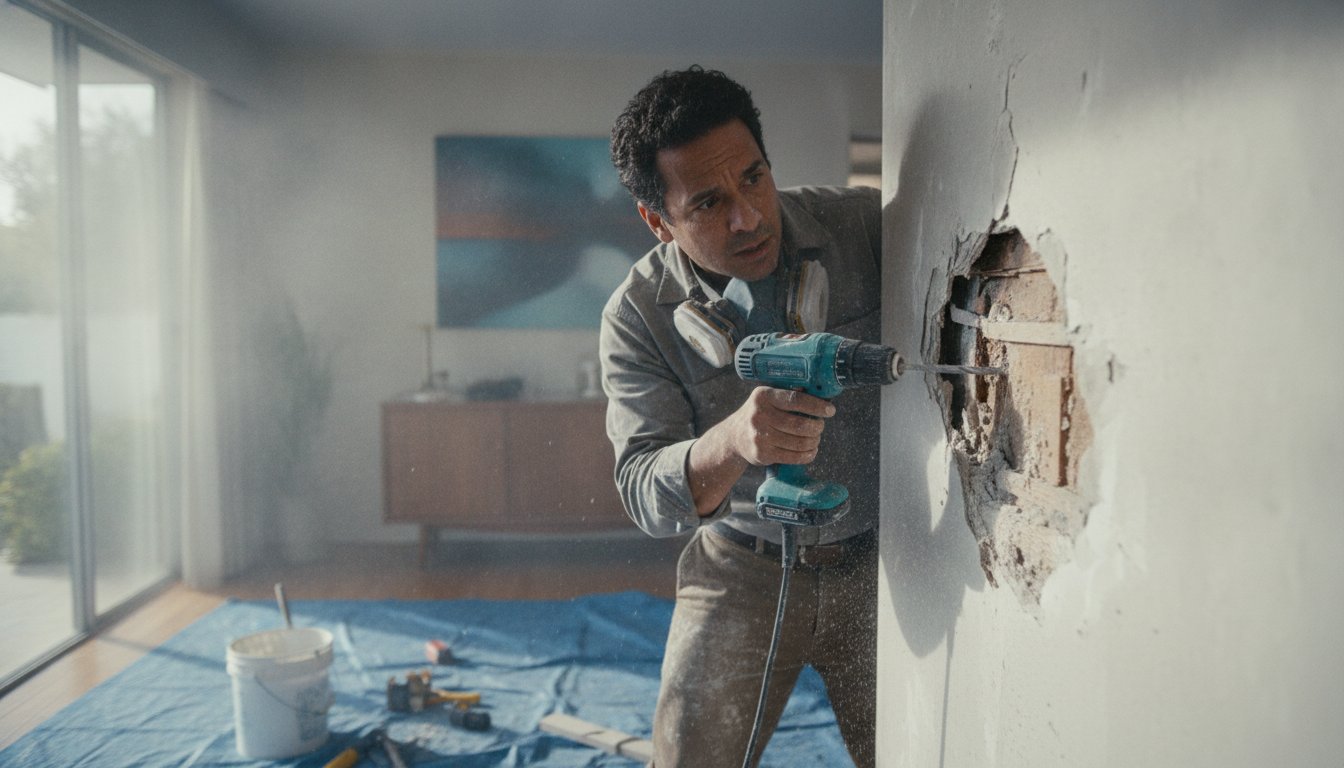
You have finally decided to update that outdated guest room, but as the drill bit hits the plaster, a nagging question stops you cold. You find yourself staring at the fine grey dust and wondering: is asbestos in my walls? It’s a heavy realization that can instantly turn a home improvement project into a source of deep anxiety. You want to protect your family from toxic fibers, yet the conflicting information about construction dates and federal bans makes it hard to know if you’re truly at risk.
It is completely normal to feel overwhelmed by the technicalities of hazardous materials. We understand that your home should be a sanctuary, not a source of health concerns. This guide provides the clarity you need to move from uncertainty to a controlled resolution. You’ll learn how to assess your property risk based on its construction era, identify suspicious material types, and follow the professional testing protocols required by Southern California regulations like SCAQMD Rule 1403.
We will walk you through the visual red flags that require professional attention and the reality of modern exposure risks. By the end, you will have a methodical plan to ensure your renovation is both beautiful and safe.
Key Takeaways
- Understand why your home’s construction date is the most reliable indicator of risk, particularly for Southern California properties built during the mid-20th century.
- Determine if the question “is asbestos in my walls” applies to your project by identifying hidden high-risk materials like joint compounds and textured coatings.
- Learn why visual inspections are scientifically unreliable and why microscopic analysis is the only definitive way to confirm the presence of hazardous fibers.
- Discover the immediate containment steps to take if you suspect a disturbance, including how to isolate the area and deactivate HVAC systems to prevent fiber migration.
- Navigate specific regional compliance requirements, such as SCAQMD Rule 1403, which mandates professional surveys for renovations and demolitions regardless of building age.
Understanding the Risk: The History of Asbestos in Residential Walls
Asbestos refers to a group of six naturally occurring silicate minerals prized for their extraordinary tensile strength and resistance to heat, chemicals, and fire. Throughout the 20th century, these fibers were integrated into thousands of building products to enhance structural integrity and safety. The History of asbestos in construction reveals that it was once considered a “miracle mineral” because it did not rot, rust, or burn. In Southern California cities like Long Beach and Lakewood, where massive housing tracts were developed between the 1940s and 1970s, asbestos was a standard additive in wall systems and insulation.
Many homeowners assume that if their house was built after 1980, they are safe from exposure. This is a dangerous misconception. While the EPA began phasing out certain products in the late 1970s, manufacturers were permitted to sell through existing inventories. This means legacy materials often appeared in residential projects well into the late 1980s. When asking “is asbestos in my walls,” the specific year of construction is a reliable guide, but it isn’t a definitive guarantee of safety.
The Era of Construction: When Was Your Home Built?
Risk levels vary significantly based on the decade your home was constructed. Identifying the era of your property helps establish a baseline for potential hazards:
- 1940s (High Risk): Homes built during and immediately after World War II frequently used asbestos in plaster, siding, and early drywall versions.
- 1950s–1960s (Peak Usage): This was the “golden age” of asbestos. In the iconic mid-century tracts of Long Beach, asbestos was used in nearly every phase of wall construction, from the “mud” between drywall sheets to the textured finishes on the surface.
- 1970s (The Phase-Out): Usage began to decline as health concerns grew. The 1978 EPA ban on spray-applied surfacing materials was a major milestone, but it did not apply to all wall components.
Because of the “sell-through” period, homes built as late as 1989 should still be approached with caution before any wall disturbance occurs.
Friable vs. Non-Friable: Why Wall Materials Are Particularly Dangerous
The danger of asbestos is directly linked to its “friability.” A material is considered friable if it can be easily crumbled or reduced to powder by hand pressure. This is why wall components are so hazardous. While exterior cement siding is often non-friable and safe if left alone, the joint compound used to seal drywall seams is highly friable. Many homeowners find themselves wondering is asbestos in my walls only after they have sanded these surfaces, unknowingly releasing millions of microscopic fibers into the air. Once airborne, these fibers can linger for hours, creating a significant inhalation risk for everyone in the home.
Identifying High-Risk Wall Materials in Your Home
Identifying a hazardous material by sight is an exercise in futility. Because asbestos fibers are microscopic, they remain invisible to the naked eye even when they are floating in the air. When homeowners ask is asbestos in my walls, they often look for discoloration or strange textures. However, the risk is usually embedded within the structural layers or hidden behind the surface. A methodical approach to identifying these materials is the only way to ensure your safety during a renovation.
Drywall and Joint Compound (The “Mud”)
In modern drywall systems, the gypsum board itself rarely contains asbestos in its paper backing. Instead, the danger lies in the joint compound, often referred to as “mud,” used to tape seams and fill screw holes. Joint compound manufactured before 1977 often contains chrysotile asbestos fibers to prevent cracking and improve workability. In some cases, contractors applied a “skim coat” across the entire wall surface to create a smooth finish, effectively wrapping the room in a thin layer of asbestos. This material becomes extremely dangerous when sanded, as it releases fine dust into the breathing zone.
Plaster and Lath Systems
Older homes built before the 1950s typically feature plaster and lath construction. While many believe only “horsehair” plaster is safe, builders frequently added asbestos to base coats to increase fire resistance. This was particularly common in “wet areas” like bathrooms and kitchens, where high-performance, moisture-resistant materials were required. If moisture intrusion has caused these walls to crumble or crack, it may be necessary to consult a professional regarding Toxic Mold Remediation alongside asbestos testing to address the full scope of property damage. These compromised surfaces can easily shed fibers into the air.
Textured Wall Coatings and Popcorn Finishes
Decorative textures were a staple of mid-century design. “Stipple,” “knockdown,” and heavy trowel finishes often utilized asbestos in textured paint and patching compounds to achieve specific aesthetic effects. These materials are highly friable when disturbed. The transition points where walls meet the ceiling are especially high-risk, particularly if the home features a textured overhead finish. For more details on these overhead risks, see our guide on Popcorn Ceiling Asbestos Removal.
Beyond the surface materials, hazardous fibers often hide within the wall cavities. Loose-fill vermiculite insulation or asbestos-wrapped plumbing pipes can release dust through electrical outlets or baseboard gaps. If you’re planning a renovation, having a professional perform Indoor Air Quality Testing is the most reliable way to confirm your home is clear of these hidden threats before you begin demolition. This step provides the technical data needed to proceed with confidence.
Visual Clues vs. Scientific Reality: Can You Really See Asbestos?
Many homeowners believe they can identify hazardous materials simply by looking for “fuzzy” or “hairy” textures within their drywall. This is a dangerous misconception that often leads to accidental exposure. If you are asking is asbestos in my walls, you must understand that individual fibers are far too small for the human eye to detect. By the time you can see actual “fibers” without a microscope, you are likely looking at a massive contamination event or a severe structural failure where the material has been pulverized into a visible dust cloud.
The “Invisible” Threat: Why Microscopic Matters
Asbestos fibers are approximately 1,200 times thinner than a human hair. Their microscopic size and unique aerodynamic properties allow them to remain airborne for hours or even days once they are disturbed. Because of this, a wall can look perfectly safe and intact while still harboring millions of respirable fibers within its joint compound or plaster. To move from uncertainty to a controlled resolution, laboratory analysis is required. Polarized Light Microscopy is the standard laboratory method used to identify specific asbestos mineral types within bulk building samples. This technical process uses specialized light filters to reveal the unique crystalline structures of the fibers.
Instead of searching for the fibers themselves, look for the “roadmap” of your home’s construction. In unfinished areas like attics, garages, or basements, you might find manufacturer stamps on the back of drywall panels. Historical brand names from the mid-20th century are often linked to specific asbestos-containing production runs. Documenting these details provides a much more accurate risk profile than any visual inspection could offer.
Warning Signs of Disturbed Asbestos
While the fibers are invisible, the physical degradation of the material that houses them is often quite apparent. Chalking or flaking of old joint compound along wall seams is a significant red flag. If you notice a fine, white powder accumulating near baseboards or outlets in a home built before 1989, the materials may be losing their structural integrity. Knowing What to do if you suspect asbestos is in this fragile state is critical: you should stop all activity, close off the room, and avoid using any fans or vacuums that could spread the dust.
Water damage frequently acts as a catalyst for this type of hazardous material release. When moisture penetrates plaster or drywall, it weakens the chemical binders that keep the asbestos fibers encapsulated. If your property has experienced a leak or flood, you may require professional Water Damage Restoration in Long Beach to address the moisture and the potential for fiber migration simultaneously. In these high-stakes situations, a methodical approach ensures that the drying process doesn’t inadvertently contaminate the rest of your living space.

What to Do If You Suspect Asbestos in Your Walls
If a drill bit just pierced a suspicious layer or a hammer blow released a cloud of white dust, your immediate actions determine the level of risk to your household. The question of is asbestos in my walls is no longer theoretical once the material is disturbed; it is now a matter of containment and professional resolution. You must transition from active renovation to a methodical safety protocol to prevent microscopic fibers from migrating throughout your home.
The first and most critical step is to stop all work immediately and evacuate the room. Do not attempt to clean up the debris, as traditional cleaning methods often exacerbate the problem. Follow this controlled sequence to stabilize the environment:
- Isolate the Area: Close all doors leading to the affected room. If the disturbance is significant, use painter’s tape and plastic sheeting to seal doorways.
- Deactivate Climate Control: Turn off your HVAC system, including central air and heating. Forced air systems are the primary drivers of cross-contamination, as they pull airborne fibers into the ductwork and redistribute them to every room.
- Seal Vents: Cover any return or supply vents within the room with plastic and tape to ensure the air remains stagnant.
- Limit Access: Keep children and pets away from the area until a certified professional provides clearance.
Do not attempt to vacuum or sweep the dust. Standard household vacuums, even those labeled with HEPA filters, often lack the specialized seals required to contain asbestos. These machines will simply capture the heavy dust while exhausting the smallest, most dangerous fibers back into the air at head height.
The Dangers of DIY “Exploring”
Many homeowners feel tempted to cut out a small piece of the wall to send to a lab themselves. This “exploring” is hazardous without a fitted P100 respirator and specific wetting agents to suppress dust. In California, there are strict legal implications for disturbing asbestos-containing materials. Regulations often mandate that only registered contractors handle hazardous substances to prevent public health risks. For a safer approach to the discovery phase, consult our Asbestos Testing: Homeowner’s Renovation Guide.
Emergency Response: If the Wall is Already Damaged
If a wall has been severely damaged by impact or a plumbing failure, you can temporarily stabilize the fibers by using a fine mist of water mixed with a few drops of dish soap. This “amended water” acts as a surfactant, weighing down the fibers so they cannot become airborne. However, this is only a temporary measure. Because of the technical complexity involved in hazardous material cleanup, you should contact a specialist for Asbestos Abatement to ensure the room is restored to a safe, breathable state using industrial-grade negative air machines and decontamination showers.
Professional Asbestos Testing and Abatement in Long Beach
Confirming the presence of hazardous fibers requires more than a visual inspection; it demands a scientific assessment. When you ask is asbestos in my walls, a professional response involves two distinct technical protocols. Bulk sampling involves taking a physical piece of the material to identify the percentage of asbestos present. In contrast, indoor air quality testing measures the concentration of respirable fibers currently circulating in your environment. Both methods provide the empirical data needed to design an effective remediation strategy.
It is reassuring to know that professional abatement doesn’t always require the total demolition of your property. In many cases, encapsulation is a viable and cost-effective alternative. This process involves sealing the asbestos-containing material with a specialized high-solids coating that prevents fibers from becoming airborne. Our team evaluates the structural integrity of your walls to determine if encapsulation or full removal is the safest long-term solution for your specific situation.
Navigating Local California Regulations
Homeowners in Long Beach and Huntington Beach must navigate a complex landscape of environmental laws. In Southern California, the South Coast Air Quality Management District (SCAQMD) Rule 1403 is the primary regulation governing asbestos. This rule mandates a thorough asbestos survey by a certified consultant before any renovation or demolition begins, regardless of the building’s age. For projects involving more than 100 square feet of material, specific notification and disposal protocols must be followed to avoid significant fines.
Because many mid-century homes in our area also contain lead-based paint, we often manage dual-hazard environments. If your property was built before 1978, you should consult our guide on Certified Lead Abatement Contractors in Long Beach to ensure all hazardous materials are handled simultaneously. Following these guidelines protects both your family’s health and your legal liability as a property owner.
The Coastline Method: Safety, Precision, and Peace of Mind
Coastline Environmental Solutions has served the Long Beach and Signal Hill communities since 1985. We approach every project with the meticulous care of a seasoned restorer. Our process begins with the establishment of high-efficiency containment zones and the use of industrial negative air pressure systems. These systems ensure that air only flows into the work area, preventing any potential cross-contamination of your living spaces during the removal process.
The final stage of our methodical approach is rigorous clearance testing. We don’t consider a job finished until independent air monitoring confirms that fiber levels are well below safety thresholds. This technical verification provides you with the documented proof that your home is ready for re-occupancy. For a thorough evaluation of your property, Contact Coastline Environmental Solutions for a Professional Assessment and move forward with your renovation with total confidence.
Moving Forward with Safety and Confidence
Your journey from uncertainty to a safe home environment begins with understanding that architectural history is your best guide. While visual inspections fail to detect microscopic fibers, knowing that your Southern California property fits a specific construction era provides the necessary roadmap for risk assessment. Whether you’re dealing with friable joint compound or hidden pipe wrap, the only definitive answer to the question is asbestos in my walls comes from methodical laboratory testing and professional oversight.
Coastline Environmental Solutions has been the steady hand for local property owners during environmental crises since 1985. As certified environmental abatement specialists, we prioritize thoroughness and technical precision to ensure your family’s safety. Our team provides comprehensive indoor air quality testing and follows strict containment protocols to return your home to a state of normalcy. Don’t let the fear of the unknown stall your renovation plans or compromise your health.
Schedule a Professional Asbestos Inspection with Coastline Environmental Solutions today to secure your property. We’re here to act as your dependable local guardian, ensuring every step of your project meets the highest safety standards.
Frequently Asked Questions
Can I tell if there is asbestos in my walls by looking at them?
No, visual identification is impossible because individual asbestos fibers are approximately 1,200 times thinner than a human hair. While you might see “fuzzy” textures in raw mineral form, asbestos in residential walls is typically mixed with gypsum or calcium carbonate. This makes the question “is asbestos in my walls” answerable only through laboratory analysis. Relying on sight alone often leads to accidental exposure during home renovations.
What year did they stop putting asbestos in drywall and joint compound?
While the EPA banned spray-applied surfacing materials in 1978, manufacturers were legally permitted to sell through their existing inventories. This means that joint compound and drywall materials containing asbestos were frequently used in construction throughout the 1980s. Experts generally recommend treating any home built before 1990 with caution. You should always perform a professional survey before disturbing wall surfaces in these older properties to ensure total safety.
Is it safe to live in a house with asbestos in the walls if they are not damaged?
Yes, asbestos-containing materials are generally considered safe as long as they remain in good condition and are not disturbed. The danger arises when the material becomes “friable,” meaning it can be crumbled or reduced to powder by hand. As long as the wall surface is intact and you aren’t drilling, sanding, or cutting into it, the fibers remain encapsulated and do not pose an immediate inhalation risk to your family.
How much does it cost to test walls for asbestos in Long Beach?
Professional asbestos testing typically involves a national average cost of approximately $483, with most homeowners spending between $255 and $779. In Long Beach, these costs can vary based on the number of samples required and the complexity of the lab analysis. It is essential to hire a Cal/OSHA Certified Asbestos Consultant to ensure compliance with local regulations like SCAQMD Rule 1403, which requires thorough surveys for most renovation projects.
What happens if I accidentally drilled a hole into an asbestos wall?
If you accidentally disturb a wall and suspect it contains hazardous fibers, stop work immediately and evacuate the area. Isolate the room by closing doors and turning off your HVAC system to prevent fiber migration through the vents. You can use a fine mist of water to weight down visible dust, but do not attempt to vacuum the debris with a standard household machine. Contact a certified professional to assess the contamination levels.
Does every house built before 1980 have asbestos in the walls?
Not every home built before 1980 contains asbestos, but the probability is high for properties constructed during the mid-century building boom. In cities like Long Beach, massive housing developments from the 1940s through the 1970s used these materials as a standard for fireproofing and durability. Because asbestos occurs naturally in 42 of California’s 58 counties, it was a readily available and inexpensive additive for many local construction suppliers during those decades.
Can I remove asbestos-containing drywall myself in California?
Removing asbestos yourself is highly discouraged and often illegal under California regulations. Cal/OSHA Title 8, Section 1529 mandates that materials containing more than 0.1% asbestos must be handled by registered and trained contractors if the project exceeds 100 square feet. Beyond the legal risks, DIY removal without specialized negative air pressure and decontamination equipment puts your household at significant risk for long-term health complications from fiber inhalation. It’s a high-stakes task best left to specialists.
Does insurance cover asbestos testing or removal after water damage?
Insurance coverage for asbestos depends on the specific language of your policy and the cause of the loss. Most standard homeowners’ policies cover testing and abatement if the asbestos-containing material was disturbed by a “covered peril,” such as a sudden pipe burst or accidental fire. However, insurance rarely covers removal for planned renovations or general maintenance. For homeowners who want to keep their property’s exterior in pristine condition, JBM Custom Contracting provides professional property maintenance services that enhance curb appeal safely. We recommend reviewing your policy with a professional restorer to determine your eligible benefits during a property crisis.
For homeowners who find the remediation process too burdensome, an alternative is to explore Direct residential real estate acquisition for cash.